Astronomers are preparing to harness artificial intelligence and data from the soon-to-launch Rubin Observatory to reexamine Type Ia supernovae, the stellar explosions long used as "standard candles" for measuring cosmic distances. The effort targets a fundamental mystery: dark energy, the invisible force accelerating the universe's expansion.
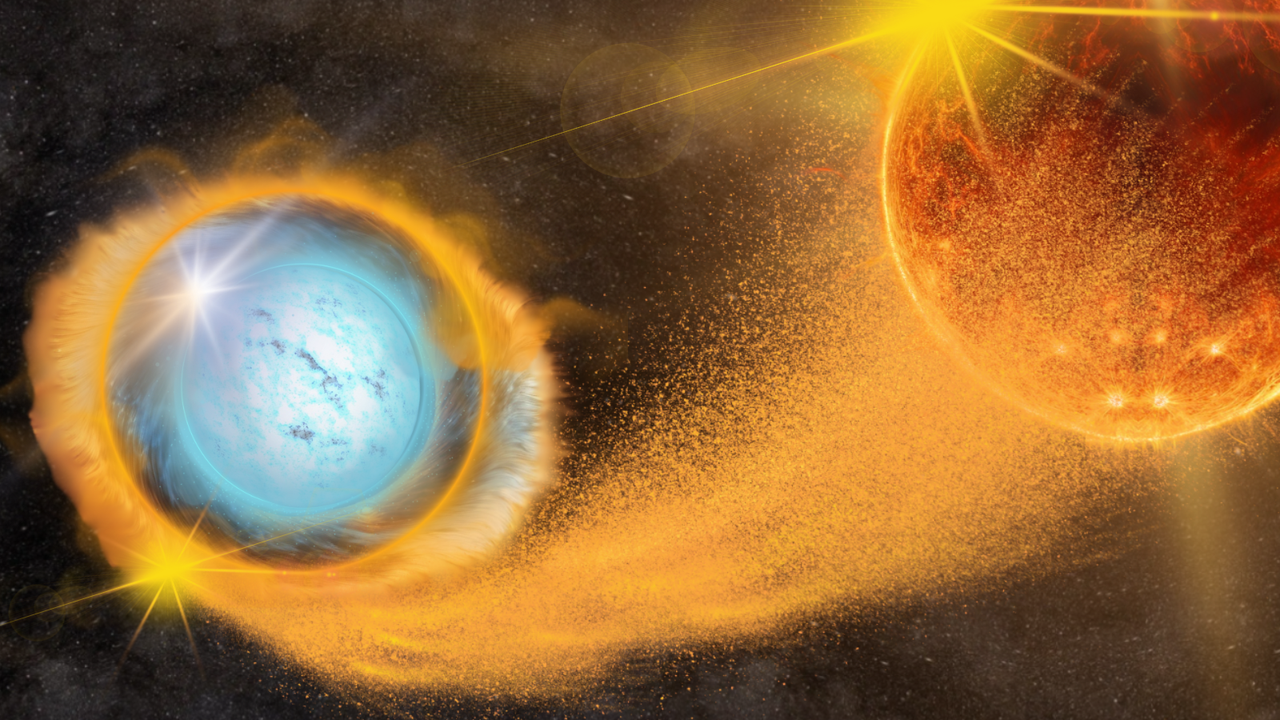
Type Ia supernovae occur when white dwarfs, the dense remnants of dead stars, pull material from companion stars in binary systems. Astronomers nicknamed these events "cannibal stars" because one star consumes the other. Since the 1990s, these explosions have served as distance markers because they produce consistent brightness levels, allowing researchers to map the universe's expansion rate.
However, the standard candle model has limitations. Observations suggest that Type Ia supernovae vary more than the model predicts, and subtle differences in their properties remain poorly understood. AI offers a tool to identify these variations and uncover what researchers call "unknown unknowns"—factors affecting supernova brightness that current models miss entirely.
The Rubin Observatory, under construction in Chile, will survey the night sky repeatedly over ten years. Its unprecedented data volume makes AI analysis essential. Machine learning algorithms can detect patterns in thousands of supernova observations faster than traditional methods, potentially revealing new physics underlying cosmic acceleration.
Dark energy comprises roughly 68 percent of the universe's total mass-energy content, yet remains one of physics' deepest mysteries. Understanding it requires precise distance measurements across cosmic history. If Type Ia supernovae measurements contain systematic errors from unaccounted-for factors, those errors propagate through dark energy calculations, potentially explaining discrepancies in existing estimates.
The research represents a shift toward AI-driven astronomy. Rather than accepting supernovae as perfectly standardized distance markers, scientists now view them as complex phenomena requiring computational power to untangle. This approach