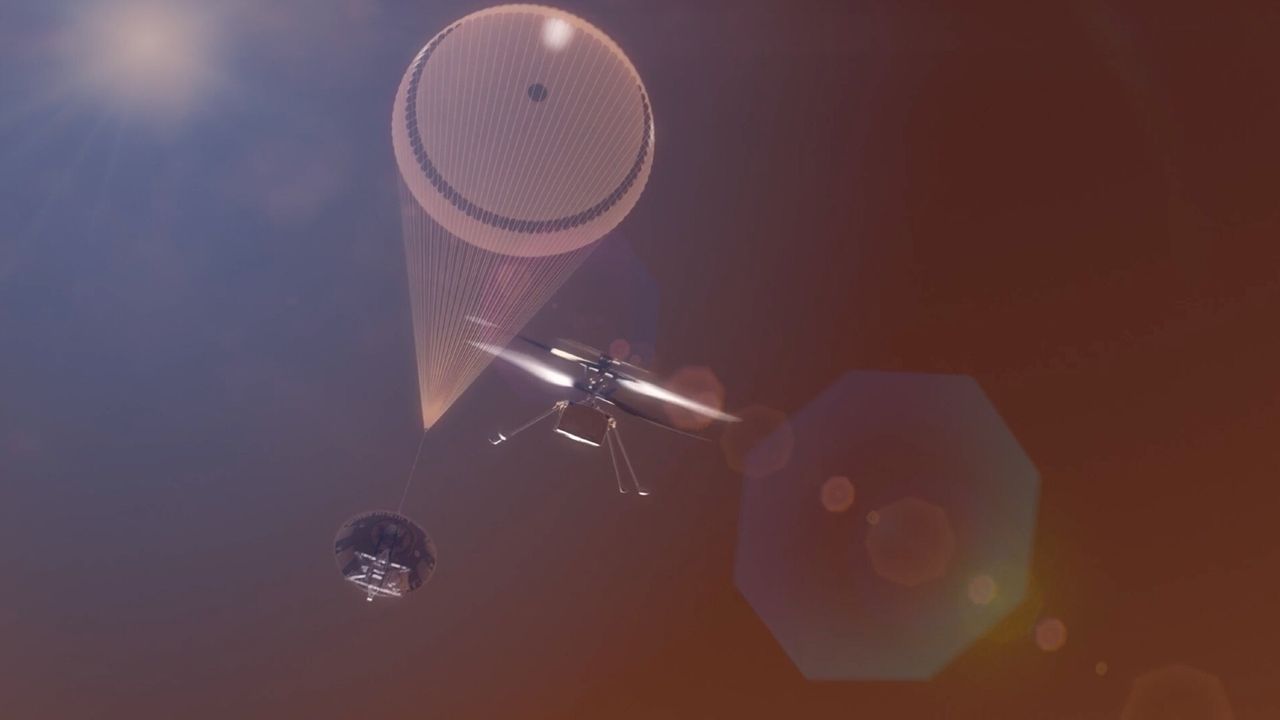
NASA engineers have pushed a Mars helicopter rotor to supersonic speeds during ground testing, demonstrating technology for a planned fleet of next-generation aircraft designed to explore the Red Planet's thin atmosphere.
The rotor blades reached speeds exceeding Mach 1, the speed of sound, as part of ongoing development work to create more capable helicopters than the current Ingenuity aircraft. Ingenuity, which has been operating on Mars since 2021, proved that powered flight is possible in an atmosphere with only 1 percent of Earth's air density. However, its design focused on proof of concept rather than operational capability.
The new rotors must overcome extraordinary engineering challenges. Mars' thin atmosphere requires helicopter blades to spin much faster than Earth counterparts to generate sufficient lift. This creates extreme stresses on materials and demands innovative blade designs that can withstand repeated supersonic operation in conditions no helicopter has encountered before.
NASA's testing program evaluates rotor performance, structural integrity, and aerodynamic efficiency under conditions that simulate Martian flight. Engineers monitor blade response, vibration patterns, and thermal effects as rotors approach and exceed the sound barrier.
The development of next-generation Mars helicopters represents a shift in planetary exploration strategy. Rather than relying solely on rovers constrained to terrain-level views, future missions could deploy fleets of aircraft to scout landing zones, inspect geological formations, and access terrain rovers cannot reach. Multiple helicopters could work together to expand exploration range and gather data more efficiently.
Ingenuity has already exceeded expectations during its Mars mission, completing dozens of flights and flying far beyond its original five-flight design specification. Its success validated helicopter flight on Mars and provided engineers with real-world performance data now informing next-generation designs.
The supersonic rotor testing represents a critical step toward fielding these advanced aircraft. Future Mars missions will likely carry helicopters with greater payload capacity,