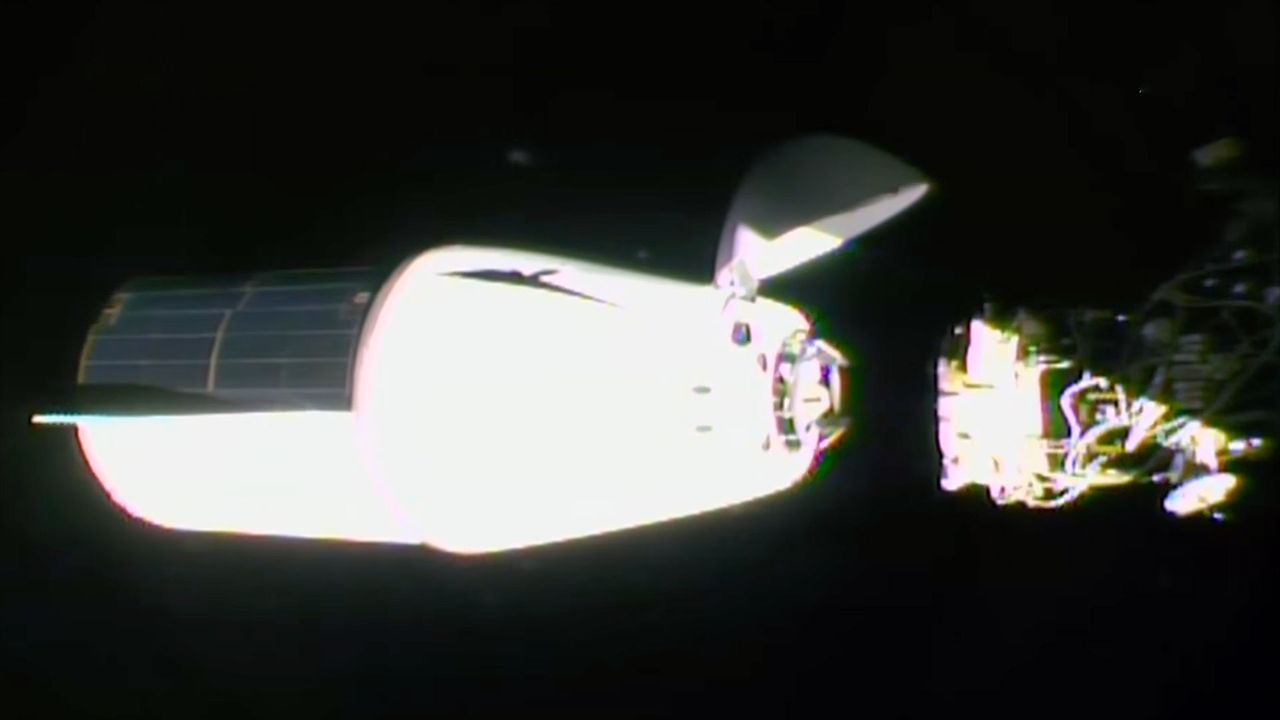
A SpaceX Dragon cargo spacecraft delivered 6,500 pounds of science equipment and supplies to the International Space Station on Sunday, May 17, 2026. The resupply mission represents the continuation of routine cargo operations that support the orbiting laboratory's research activities and crew needs.
Dragon capsules regularly ferry payloads to the station under SpaceX's Commercial Resupply Services contract with NASA. The cargo included experiments, replacement equipment, and provisions for the astronauts stationed aboard the ISS. SpaceX has conducted dozens of these missions since the program began in 2012, establishing the company as a reliable provider of station logistics.
The Dragon spacecraft launches atop a Falcon 9 rocket and autonomously docks with the station. After unloading, the capsule returns to Earth carrying research samples and used equipment. This round-trip capability distinguishes Dragon from other cargo vehicles like Northrop Grumman's Cygnus, which burn up during atmospheric reentry.
The ISS depends on multiple cargo suppliers to maintain operations. Russian Progress spacecraft, Japanese H-II Transfer Vehicles, and European Automated Transfer Vehicles also deliver supplies, though availability has fluctuated due to geopolitical tensions and launch schedules. Dragon missions occur roughly every 4 to 6 weeks, though timing varies based on orbital mechanics and station requirements.
The 6,500-pound payload likely contained a mix of scientific equipment for ongoing experiments in biology, materials science, and Earth observation. The station's research agenda spans diverse fields, from studying protein crystal growth in microgravity to testing new manufacturing techniques and monitoring environmental changes. Each cargo mission represents an investment in maintaining the ISS's research capability.
SpaceX has modernized the cargo resupply industry through reusable rockets and streamlined operations. The company continues developing Dragon XL, a larger pressurized cargo