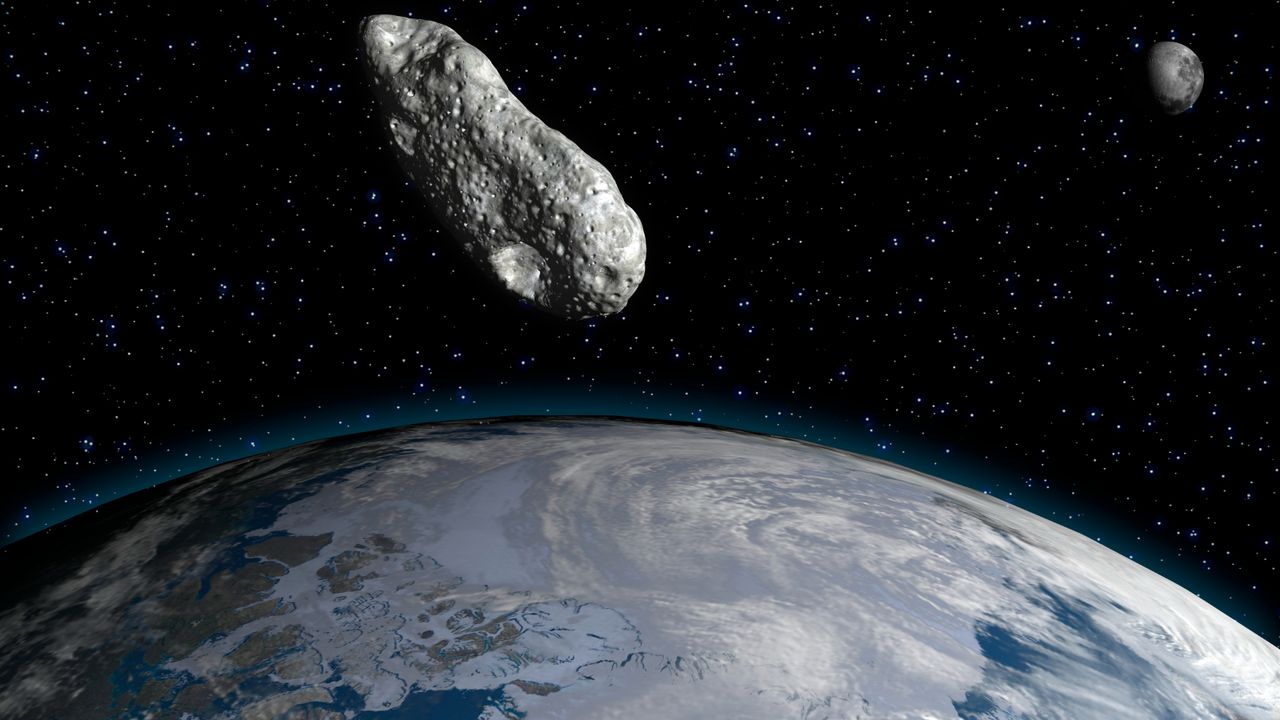
Asteroid 2026 JH2, discovered recently and spanning up to 115 feet in width, will pass Earth on Monday, May 18, traveling closer than numerous orbiting satellites. The space rock presents no collision risk but offers a rare viewing opportunity for amateur astronomers.
The asteroid's close approach brings it within the orbital distance of some geostationary satellites, which sit roughly 22,000 miles from Earth's surface. While researchers have not disclosed the object's exact distance at closest approach, the proximity qualifies it as what astronomers call a near-Earth object. Such encounters occur regularly, with hundreds of asteroids passing Earth at similar distances annually.
The discovery of 2026 JH2 highlights ongoing improvements in planetary defense monitoring systems. Automated survey programs, including those operated by institutions like NASA's Planetary Defense Coordination Office, continuously scan the sky for potentially hazardous objects. The detection of previously unknown asteroids weeks before their closest approach demonstrates the effectiveness of these systems.
Observers with binoculars or small telescopes may spot the asteroid during the May 18 passage, though exact visibility depends on weather conditions and local light pollution. Live Science and other astronomy organizations will stream the event online for those unable to observe directly.
This flyby carries no impact threat. NASA and the European Space Agency regularly assess near-Earth objects for collision potential using orbital calculations that extend decades into the future. Astronomers flag objects only if collision probabilities exceed certain thresholds, which 2026 JH2 does not.
The event serves as a public reminder of Earth's dynamic place within the solar system. While asteroids of this size pose minimal danger individually, detecting and tracking them contributes valuable data to planetary defense preparedness and refines our understanding of the near-Earth asteroid population.