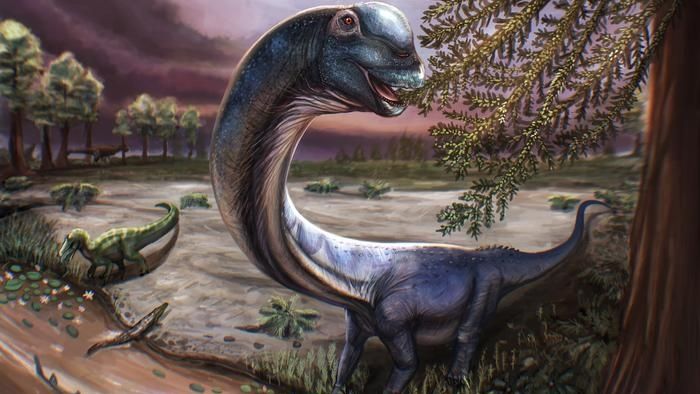
Paleontologists have identified a new species of sauropod dinosaur from Thailand that ranks as the longest-necked dinosaur ever found in Southeast Asia. The specimen lived approximately 120 million years ago during the Early Cretaceous period.
The discovery expands understanding of sauropod diversity in Southeast Asia, a region where fossil records remain sparse compared to other parts of the world. Sauropods, the four-legged herbivores characterized by elongated necks and massive bodies, dominated terrestrial ecosystems for over 100 million years. This Thai specimen represents a particularly large example of the group.
The finding emerges from ongoing paleontological work in Thailand's fossil-rich deposits. Thai formations from the Cretaceous period have yielded sauropod remains before, but this new species stands apart due to its exceptional size and neck length. The precise anatomical measurements and skeletal features that distinguish this specimen from previously known Thai sauropods remain under study by the research team.
Southeast Asia's fossil record for dinosaurs lags behind that of North America, Europe, and Asia's better-studied regions. Thailand specifically has contributed several important dinosaur discoveries in recent decades, including theropod and ornithischian specimens. Adding a record-holding sauropod to this list strengthens the picture of Cretaceous Asia's fauna.
The Early Cretaceous period witnessed significant changes in continental configurations and climates across Asia. Understanding the sauropods that thrived during this time helps paleontologists reconstruct ancient ecosystems and trace how these giant herbivores adapted to their environments. The Thai discovery suggests that Southeast Asian sauropods achieved sizes comparable to their better-known counterparts elsewhere.
Sauropods went extinct 66 million years ago along with other dinosaurs during the Cretaceous-Paleogene mass extinction event. The new Thai species represents a snapshot