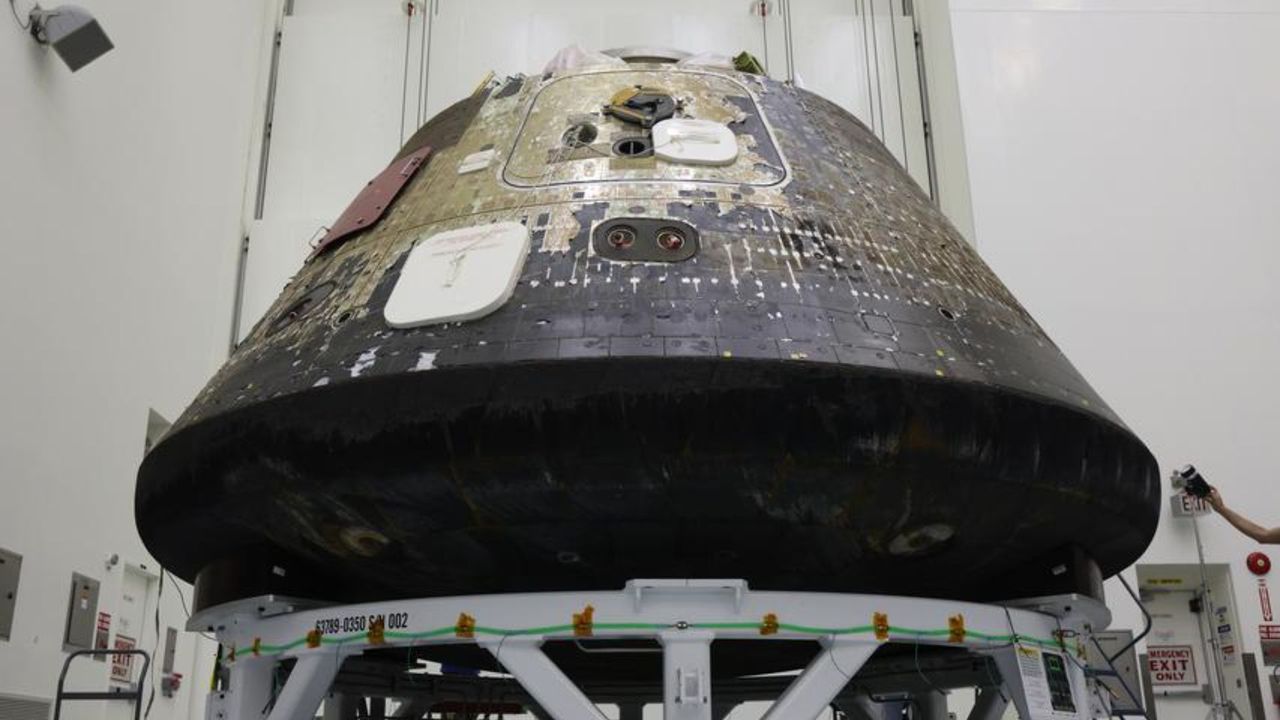
NASA's Artemis 2 Orion capsule completed its lunar mission and returned to Earth, bearing the thermal scars of atmospheric reentry. The spacecraft's heat-blackened exterior reflects the intense temperatures experienced during descent through the atmosphere at speeds exceeding 20,000 miles per hour.
The Artemis 2 mission represents a critical step in NASA's broader lunar exploration program. The uncrewed test flight carried the Orion spacecraft around the moon and back, validating systems designed to protect astronauts during future crewed missions. The charring visible on the hull comes from the ablative heat shield that protected the crew compartment from extreme reentry conditions.
Orion's design incorporates a thermal protection system engineered to withstand temperatures around 5,000 degrees Fahrenheit during reentry. The charred appearance shows the shield performing as intended, burning away in a controlled manner to dissipate heat energy and keep the internal capsule and its systems safe. This same configuration will protect crew members aboard Artemis 3, the first crewed moon landing mission of the program.
The Artemis 2 flight demonstrated key spacecraft capabilities including communications systems, navigation, and structural integrity through a complete lunar mission profile. Engineers examine recovered capsules extensively to gather data on how materials perform under actual spaceflight conditions, which informs design improvements for subsequent vehicles.
The mission occurred within NASA's Artemis program timeline, which aims to establish sustainable human presence on the lunar surface. Each test flight provides data that reduces risks for crewed operations. The Artemis 2 Orion's successful return demonstrated that the spacecraft can reliably bring astronauts home from lunar missions, a fundamental requirement for human deep space exploration.