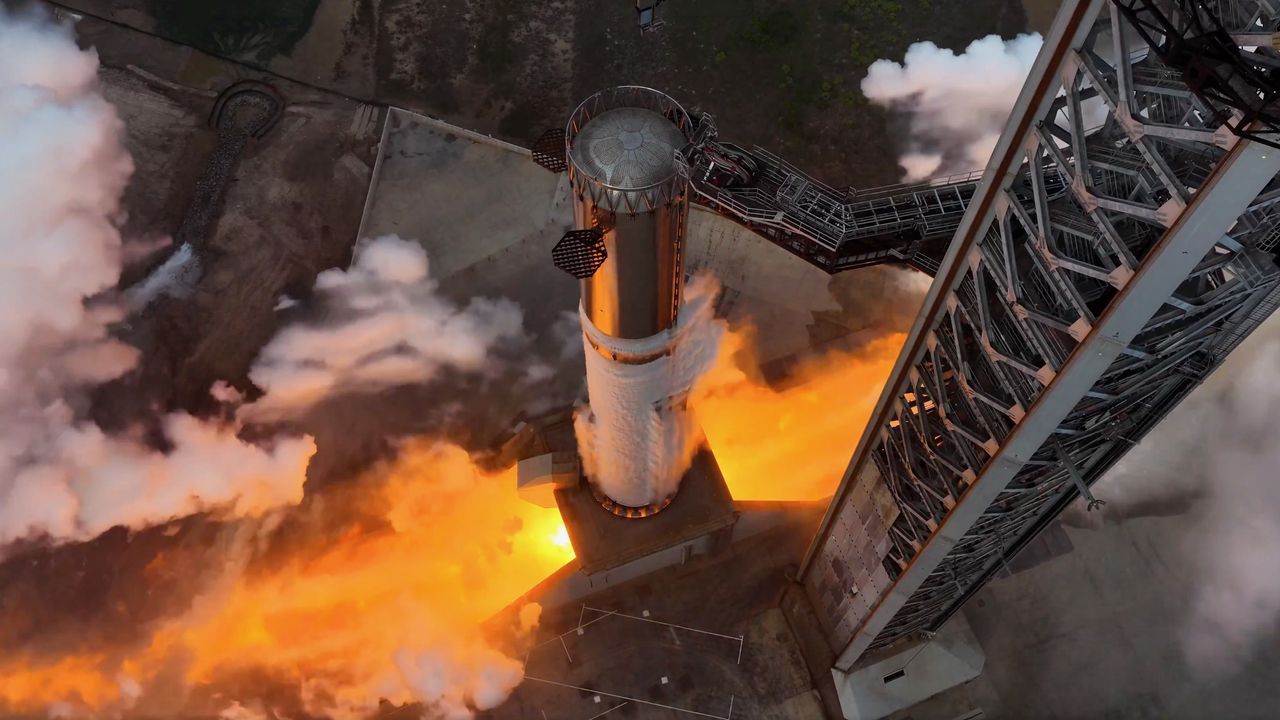
SpaceX conducted a static fire test of the Super Heavy booster, the first stage of its Starship vehicle, igniting all 33 Raptor engines simultaneously at its Starbase facility in Boca Chica, Texas. The test marks progress toward the next integrated flight test of the full Starship stack.
The Super Heavy booster represents the most powerful rocket first stage ever built. Its 33 engines generate approximately 16.7 million pounds of thrust at sea level, exceeding the Saturn V rockets that carried astronauts to the moon. Each Raptor engine burns a methane and liquid oxygen mixture, producing the thrust needed to lift Starship's upper stage into orbit.
Static fire tests validate engine performance and structural integrity without leaving the ground. SpaceX conducts these tests to verify systems before committing to a full launch attempt. The company iterates rapidly through test campaigns, often conducting multiple static fires of successive vehicle iterations before flight.
Previous Starship integrated flight tests have revealed engineering challenges. The third integrated flight test in March 2024 achieved booster catch at the launch tower after stage separation. The fourth test in June 2024 demonstrated improved engine performance and structural durability. Each test generates data that informs design refinements for the next vehicle iteration.
The timeline for the next full Starship launch depends on regulatory approvals and data analysis from this static fire. SpaceX historically conducts static fires within days or weeks before attempting flight, though the Federal Aviation Administration's licensing process can introduce delays. Previous integrated flight tests occurred roughly three to four months apart.
The Super Heavy and Starship upper stage form the foundation of SpaceX's plans for lunar cargo missions under NASA's Artemis program and eventual Mars expeditions. Demonstrating reliable booster and engine performance remains essential for these objectives.