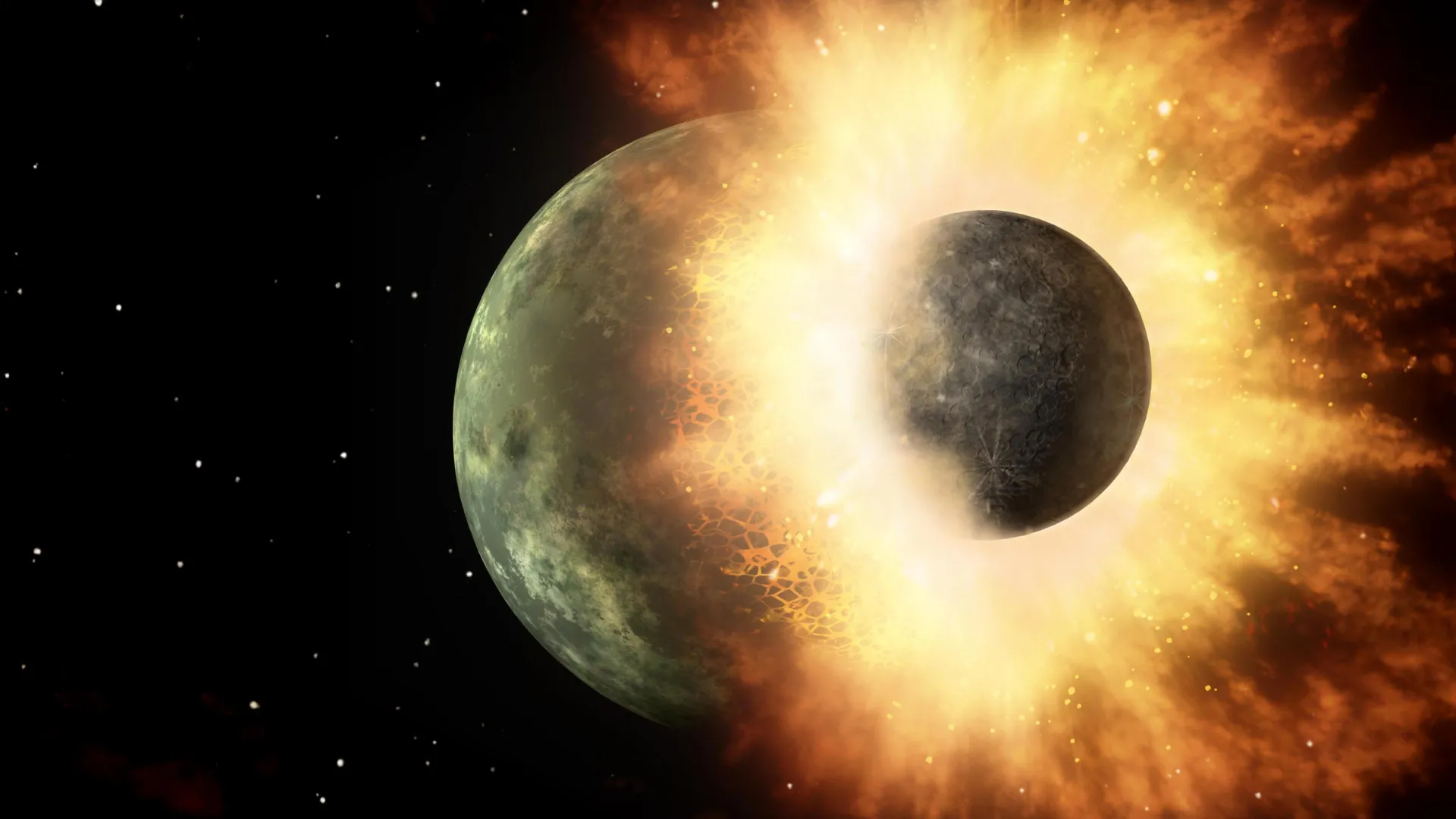
Researchers propose that Dante Alighieri's 14th-century poem "Inferno" contains a remarkably accurate description of a catastrophic asteroid impact, predating modern scientific understanding by centuries. The interpretation suggests that Dante's depiction of Satan crashing into Earth parallels what scientists now know about planetary collision mechanics.
In this reading, Satan's descent through the Southern Hemisphere mirrors an impact trajectory. The resulting blast and geological upheaval allegedly carved out the circles of Hell while simultaneously forcing Mount Purgatory upward on the opposite side of the globe. This inversion reflects principles of planetary physics that wouldn't be formally documented until the modern era.
The research team argues that Dante possessed either remarkable intuitive insight into celestial mechanics or access to historical knowledge about past impacts that shaped Earth's geology. The poem's architectural precision, where the underworld's geometry responds to a massive external force, aligns with how scientists model impact crater formation and subsequent geological reorganization.
This interpretation sits at the intersection of literary analysis and paleontology. It raises questions about how medieval writers conceptualized cosmic phenomena and whether historical records of catastrophic events influenced Renaissance thinking about Earth's structure. Some scholars have long noted that Dante's cosmological framework demonstrated unusual sophistication for its time.
However, the thesis remains speculative. No documentation shows Dante intentionally studied asteroid impacts, and the parallels may reflect coincidental alignment between medieval imagination and modern physics rather than prescient knowledge. Literary scholars generally interpret the poem's cosmic violence as theological allegory about divine punishment and spiritual transformation, not literal planetary catastrophe.
The research demonstrates how classical texts contain layers awaiting reinterpretation through contemporary scientific frameworks. Whether Dante consciously encoded astronomical knowledge or simply created a narrative that accidentally mirrors impact physics remains open for debate. The work illustrates both the enduring relevance of medieval literature and the risks of retrofitting historical texts