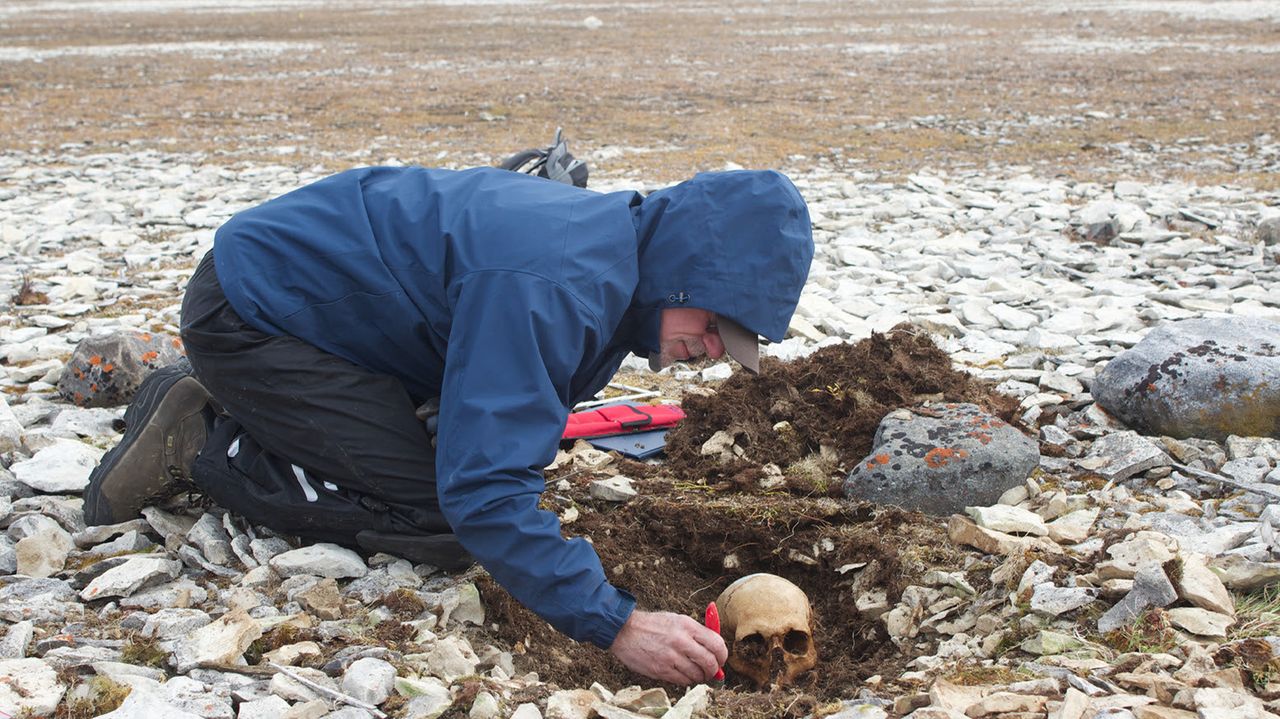
Researchers have identified four additional members of the Franklin expedition using DNA from living descendants, providing fresh insights into how these 19th-century sailors attempted survival after their ships became trapped in Arctic ice.
The Franklin expedition set out in 1845 under the command of Sir John Franklin to navigate the Northwest Passage. All 129 men aboard HMS Erebus and HMS Terror perished in one of history's most catastrophic polar voyages. The ships became locked in pack ice northwest of the Canadian Arctic Archipelago, and the crews abandoned ship around 1848.
The identifications came through mitochondrial DNA analysis, which traces maternal lineages through living relatives of the sailors. This approach proved more effective than previous recovery efforts, as it sidesteps degradation problems that plague nuclear DNA testing in extreme Arctic conditions. Scientists extracted DNA from skeletal remains found during expeditions to the harsh Arctic environment and matched the genetic profiles against family descendants willing to participate in the study.
These four newly identified individuals add to a growing roster of Franklin expedition members whose fates researchers have begun to document through archaeological and genetic evidence. Earlier discoveries revealed details about disease, malnutrition, and lead poisoning from contaminated food supplies that likely hastened the crew's demise. The identification of additional crew members helps historians construct a more complete picture of the expedition's final years.
The findings offer context for understanding how desperate circumstances unfolded on the ice. Journals and artifacts recovered from the Franklin expedition sites suggest sailors established camps and attempted systematic southward marches toward Hudson Bay, a 1,000-mile journey across unforgiving terrain. Evidence indicates they organized supply caches and maintained discipline even as conditions deteriorated catastrophically.
This work demonstrates how modern genetic techniques can unlock historical mysteries from fragmented remains. The collaborative approach involving descendants shows how family participation enables recovery of knowledge about expeditions that occurred nearly two centuries ago. Future DNA analysis of remaining