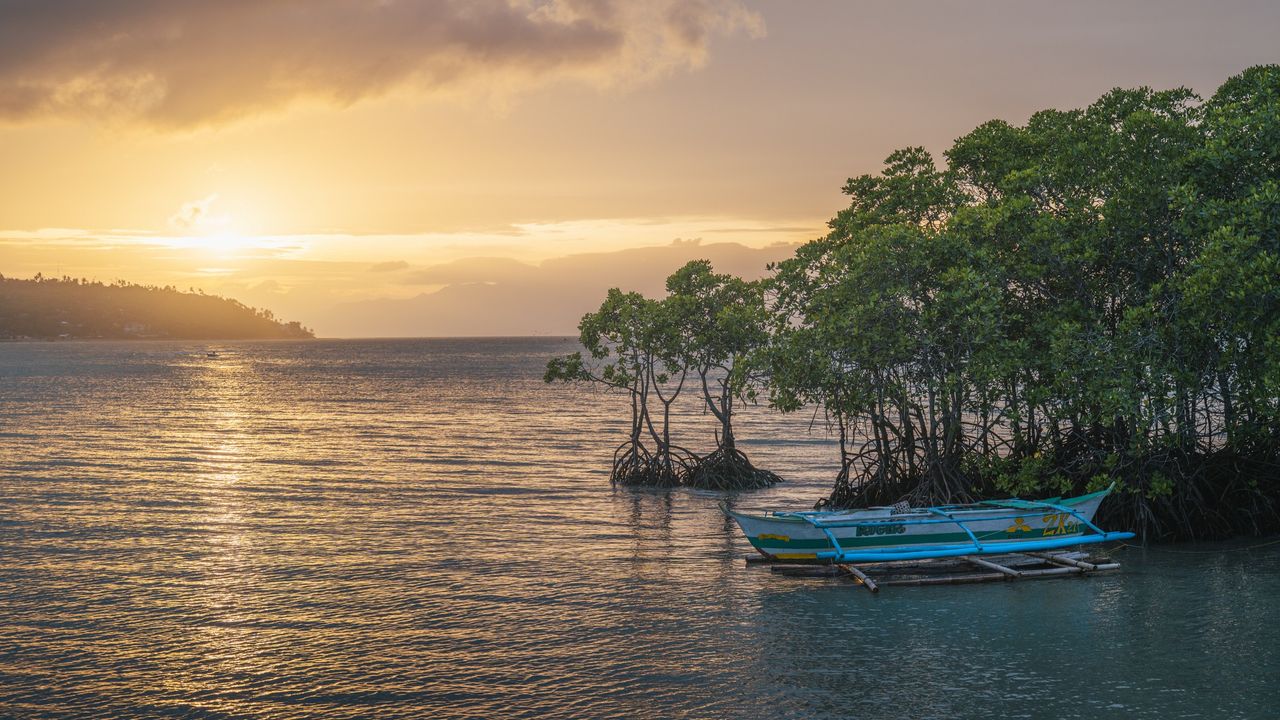
Mangrove forests remove roughly 960,000 tons of nitrogen from global water systems annually, according to new research. Under optimal conditions, these coastal ecosystems could filter more than 5.5 million tons yearly. The study valued this nitrogen removal service at $8.7 billion per year.
Nitrogen pollution causes dead zones in coastal waters, where excess nutrients trigger algal blooms that deplete oxygen and suffocate marine life. Mangroves combat this problem through their dense root systems and sediment-trapping architecture. The plants absorb nitrogen directly and harbor bacteria that convert nitrate into harmless nitrogen gas, a process called denitrification.
The researchers analyzed data across mangrove ecosystems worldwide to quantify this cleansing capacity. Their work reveals mangroves already perform an outsized environmental service despite covering less than 0.5% of the global ocean surface. The gap between current performance (960,000 tons) and potential performance (5.5 million tons) highlights how mangrove restoration could amplify water quality benefits.
Agricultural runoff, wastewater discharge, and fertilizer use drive excess nitrogen into waterways across North America, Europe, Asia, and beyond. Dead zones now cover an area roughly equivalent to New Zealand in the world's oceans. Mangroves function as natural water treatment systems, but their habitat has shrunk by roughly 35% over recent decades due to coastal development, aquaculture expansion, and climate pressures.
The $8.7 billion valuation translates the ecological service into economic terms. This figure underscores mangrove conservation's financial return alongside its biodiversity benefits. Protecting existing mangrove forests and restoring degraded areas could substantially reduce costly nutrient pollution while supporting fisheries and coastal communities that depend on healthy marine ecosystems.
The study demonstrates mangroves deserve recognition as critical nitrogen-