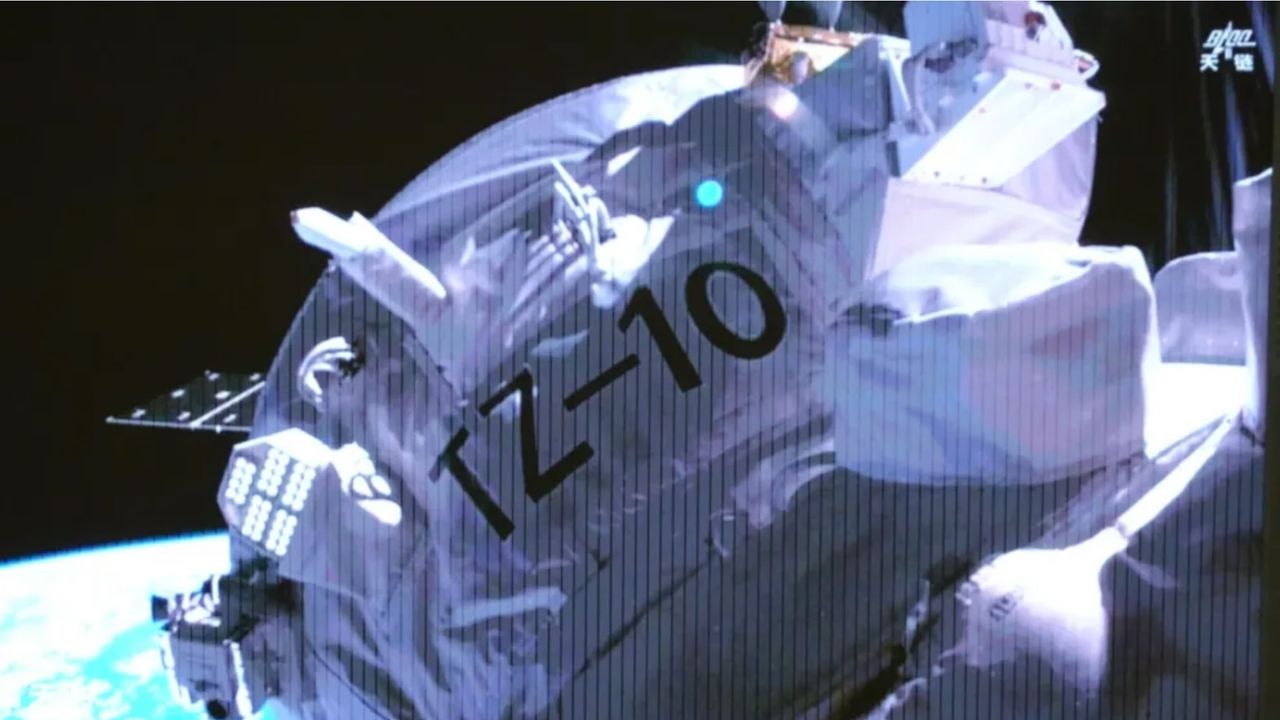
China's Tianzhou 10 cargo spacecraft completed a rapid rendezvous with the Tiangong space station on May 10, delivering nearly seven tons of supplies just five hours after launch. The uncrewed freighter lifted off atop a Long March 7 rocket and executed an automated docking procedure to transfer its payload to the orbiting laboratory.
The quick delivery timeline reflects advances in China's spaceflight capabilities. Tianzhou spacecraft carry provisions, equipment, and experimental materials essential for crew operations and scientific research aboard Tiangong. The station, which China has operated independently since 2022, requires regular resupply missions to sustain its three-person crews and maintain ongoing experiments.
Long March 7 rockets have become the primary heavy-lift vehicle for cargo missions to Tiangong. The vehicle's reliability and lift capacity make it well-suited for launching the multi-ton Tianzhou freighters from the Wenchang Satellite Launch Center on Hainan Island. China has executed numerous successful cargo missions using this combination, with each Tianzhou spacecraft designed for single use before being deorbited.
The five-hour turnaround from launch to docking represents standard performance for China's automated rendezvous system. This rapid timeline reduces the duration crews spend waiting for critical supplies and allows efficient scheduling of multiple resupply missions per year. The docking process occurs without crew involvement, relying on sensors and onboard navigation systems for precise alignment.
Tiangong serves as China's permanent foothold in low Earth orbit. The modular station includes a central hub module connected to laboratory modules for microgravity research in materials science, physics, and biology. Chinese astronauts rotate through multimonth missions, conducting experiments and maintaining station systems between cargo deliveries.
This mission continues China's sustained commitment to developing and operating independent space infrastructure. Regular cargo deliveries demonstrate