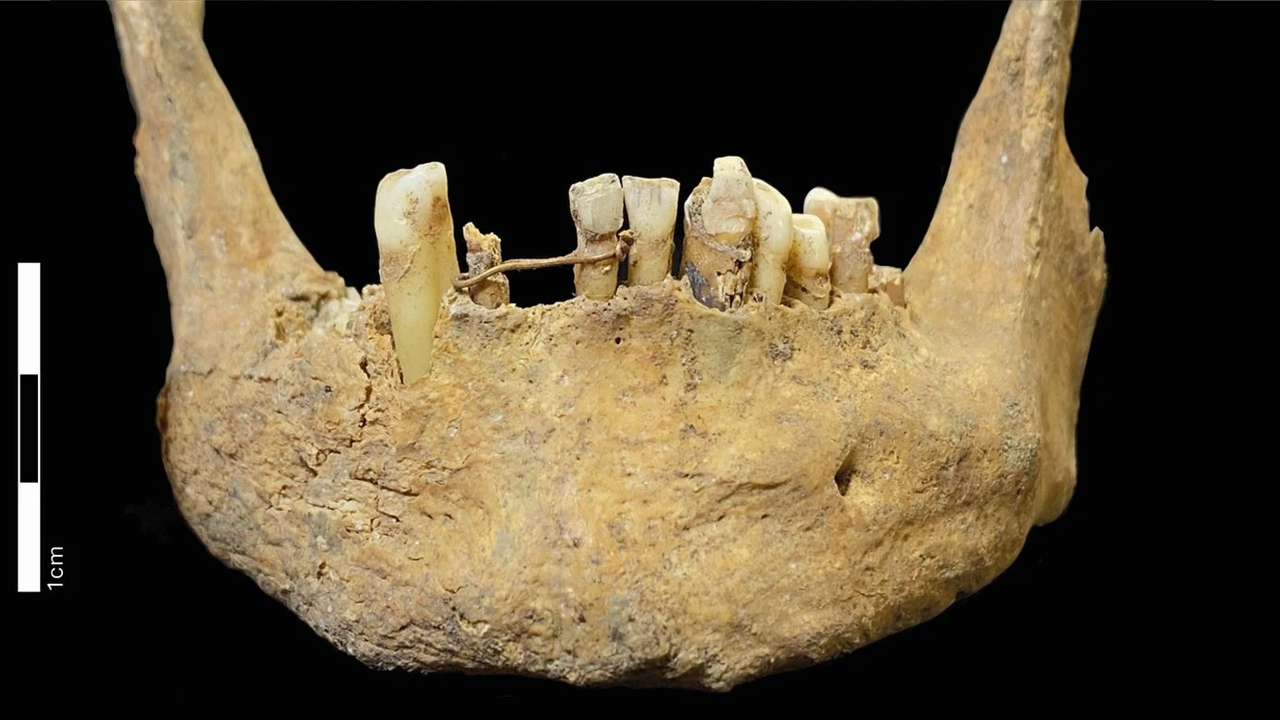
Archaeologists in Scotland have uncovered a 500-year-old gold dental bridge, the earliest known example of sophisticated oral care in the country. The device, crafted from 20-karat gold, was found in the lower jaw of a middle-aged man who lived approximately five centuries ago.
The discovery represents a remarkable window into Renaissance-era dentistry and the social status of its wearer. Gold dental work required significant wealth and access to skilled craftspeople, indicating this individual occupied a privileged position in medieval Scottish society. The bridge likely supported a replacement tooth, demonstrating that dental prosthetics were not a modern innovation.
The 20-karat composition of the gold reveals the metalworker's expertise. Pure gold remains too soft for functional dental work, but the alloy used provided both durability and the workability necessary for fitting such a delicate device. The choice of this premium material underscores the expense and effort invested in creating functional, aesthetically refined oral prosthetics centuries before modern dentistry existed.
This find challenges assumptions about the timeline of advanced dental technology in Britain. While continental European examples of gold dental work exist from earlier periods, Scottish records have yielded few comparable artifacts. The discovery suggests that skilled metalworkers and individuals with resources to commission such work existed in Renaissance Scotland, even as the broader population relied on simpler solutions for tooth loss.
The archaeological team's identification of the prosthetic's function required careful examination of the jaw's bone structure and the gold wire's positioning. Evidence of the attachment method and wear patterns on neighboring teeth confirmed it served as a functional bridge rather than purely decorative jewelry.
Understanding how people managed dental problems across history reveals much about daily life, health, craft traditions, and social inequality. This Scottish artifact adds to a growing body of evidence showing that addressing tooth loss has long been a priority for those with means to do so.