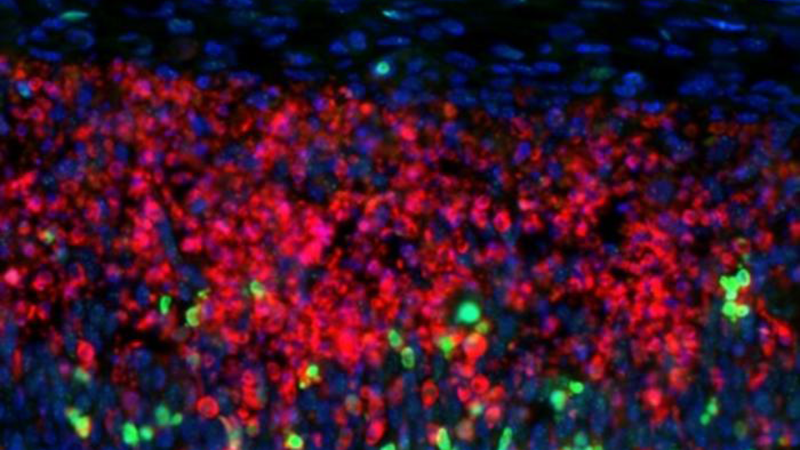
Researchers have identified why certain brain cells succumb more readily to multiple sclerosis. DNA damage from inflammation accumulates faster than these cells can repair it, creating a vulnerability window that MS exploits.
The study examined oligodendrocytes, the cells responsible for insulating nerve fibers in the brain and spinal cord. When MS attacks, the immune system targets these cells, triggering inflammation that damages their DNA. Scientists discovered that oligodendrocytes lack sufficient capacity to manage the pace of damage. Their DNA repair mechanisms simply cannot keep up with the inflammatory onslaught.
Researchers conducted experiments using both cultured human brain cells and mouse models. They exposed oligodendrocytes to inflammatory signals mimicking MS conditions and measured DNA damage accumulation. The cells' repair pathways became overwhelmed as damage accumulated faster than it could be fixed. Other brain cell types showed greater resilience under identical conditions, suggesting oligodendrocytes occupy a unique vulnerability niche.
This finding illuminates a critical gap between cellular damage and repair capacity. During MS inflammation, oligodendrocytes face a mismatch between the injury rate and their restoration ability. When repair cannot match destruction, cells either malfunction or die. Losing these insulation-producing cells leads to nerve signal disruption, causing the movement problems, vision loss, and cognitive symptoms characteristic of MS.
The research opens therapeutic pathways. Rather than only suppressing the immune attack, treatments could boost oligodendrocytes' DNA repair capacity. Enhancing their self-protection mechanisms might help cells survive inflammatory attacks. Alternatively, drugs could stabilize their DNA or reduce inflammation specifically around these vulnerable cells.
MS affects approximately 2.8 million people worldwide. Current treatments primarily target immune suppression, which carries infection risks and variable effectiveness. A repair-focused approach could complement existing therapies or offer new options for patients who don't respond to immunosuppression