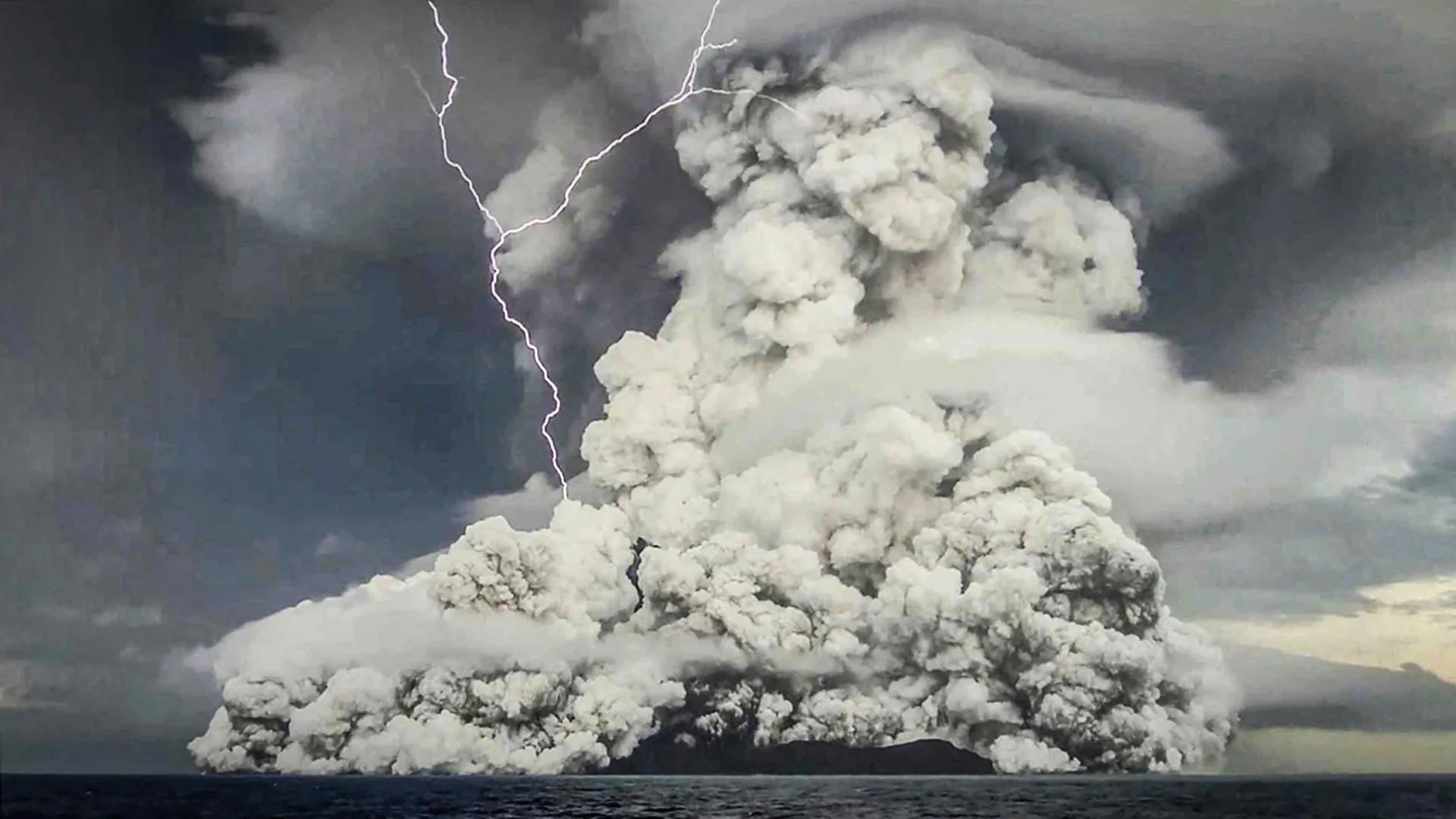
When Hunga Tonga–Hunga Ha'apai erupted violently in January 2022, it sent ash and gases rocketing into the stratosphere. Scientists monitoring the atmosphere detected something unexpected: massive concentrations of formaldehyde appeared in the upper atmosphere following the eruption.
Formaldehyde serves as a chemical fingerprint. Its presence indicates that methane, a greenhouse gas roughly 80 times more potent than carbon dioxide over a 20-year period, had undergone rapid oxidation. Researchers traced the mechanism to a three-part chemical reaction. Volcanic ash particles combined with salt aerosols from the ocean and solar radiation to generate reactive chlorine species. These highly reactive molecules attacked methane molecules in the stratosphere, breaking them apart and converting them into formaldehyde.
The discovery intrigues climate scientists because it reveals a natural process that destroys one of atmosphere's most damaging heat-trapping gases. Methane persists in the atmosphere for roughly a decade, making methane reduction a direct lever for slowing near-term warming. The volcanic mechanism worked locally around the eruption site, oxidizing some of the methane the volcano itself had released.
However, the practical implications remain limited. Volcanic eruptions occur unpredictably and cause severe environmental damage through ash fall, acid rain, and stratospheric cooling. No scientist proposes triggering volcanoes as climate policy. The eruption also released substantial amounts of water vapor and sulfur dioxide, which contributed to temporary global cooling but created other problems for air quality and ecosystems.
The real value lies in understanding atmospheric chemistry. If researchers can identify how natural processes destroy methane, they might develop industrial or engineered approaches to replicate this effect on a controlled scale. Current methane removal strategies focus on preventing emissions through methane capture and leak detection in natural gas infrastructure, rather than destroying atmospheric