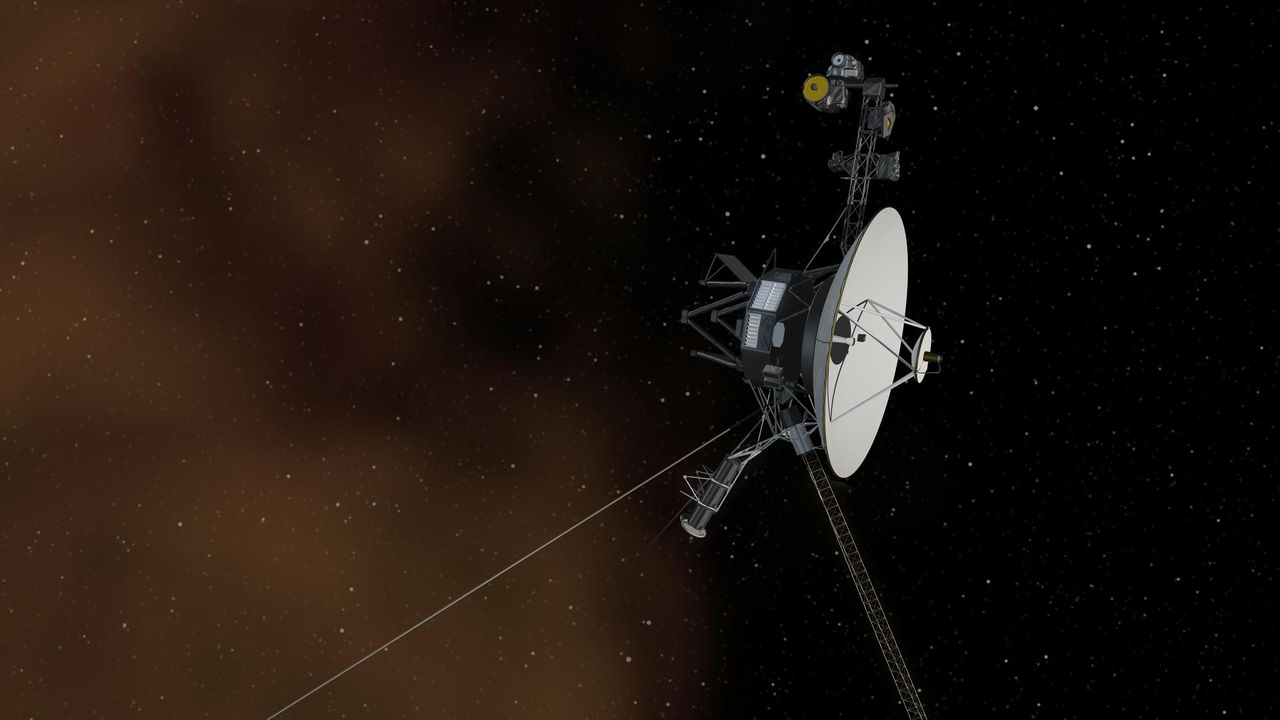
NASA's twin Voyager spacecraft, launched in 1977, continue transmitting data from interstellar space despite severe power constraints that threaten their operations. Both probes have now operated for nearly 50 years, far exceeding their original five-year mission design.
The Voyagers rely on radioisotope thermoelectric generators (RTGs) that convert heat from decaying plutonium-238 into electricity. These power sources degrade predictably over time. Each RTG loses roughly 5 watts of power annually as the plutonium decays, a decline NASA engineers anticipated decades ago. Today, Voyager 1 generates approximately 4.7 watts of power, while Voyager 2 produces roughly 4.8 watts. That matches the power consumption of a hearing aid battery.
Engineers have kept the aging probes functional through aggressive power management. They have systematically deactivated non-essential instruments and heaters to preserve critical systems. The spacecraft still transmit data to Earth's Deep Space Network, though the signal strength has weakened considerably. Each message takes over 22 hours to reach Earth from Voyager 1 and roughly 18 hours from Voyager 2.
The exact timeline for complete failure remains uncertain. NASA engineers estimate the spacecraft could transmit data until around 2025 to 2026, though some systems might fail sooner due to component degradation unrelated to power loss. The heating systems protecting sensitive electronics face particular vulnerability. As power diminishes further, maintaining adequate warmth in the frigid environment of deep space becomes increasingly difficult.
Despite deteriorating conditions, the Voyagers continue delivering unprecedented scientific data about the interstellar medium and the outer reaches of the solar system. Their extended longevity represents one of engineering's greatest achievements, though their inevitable silence approaches.