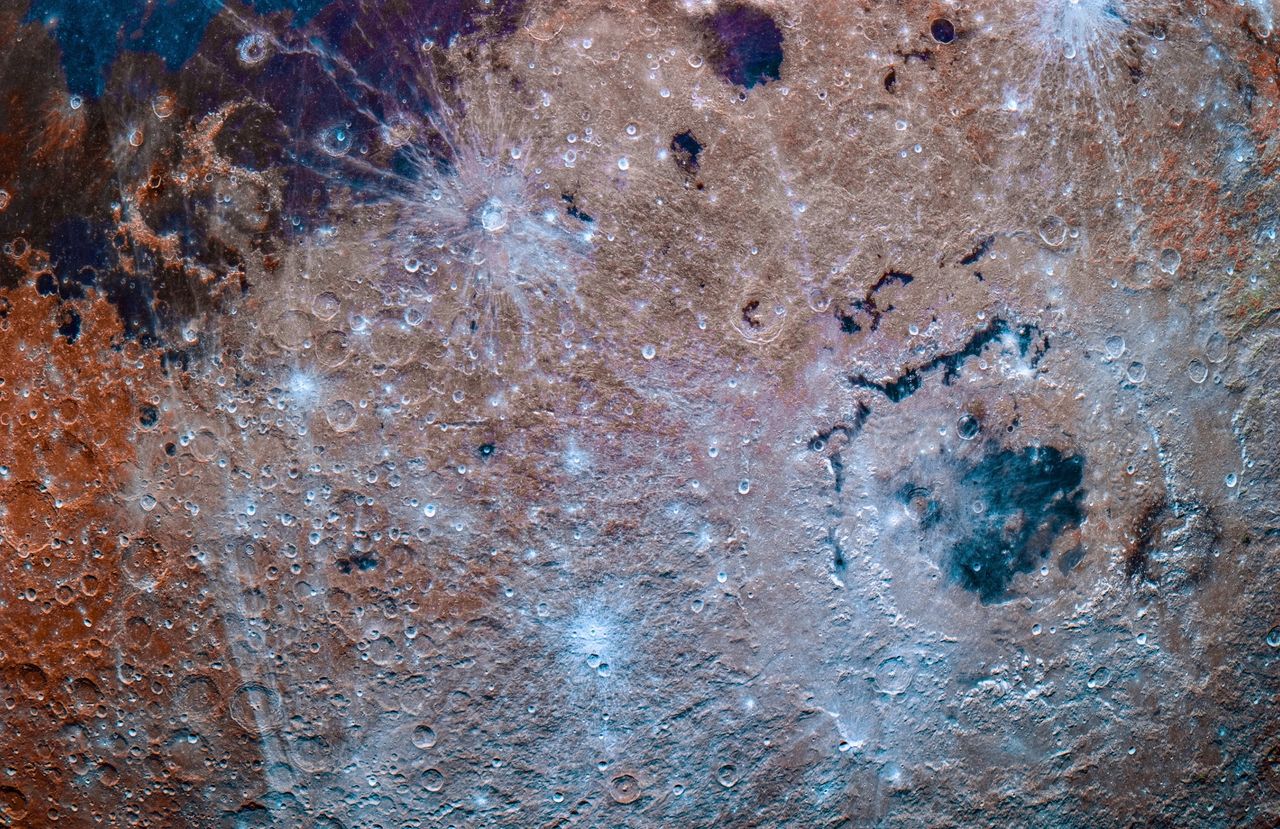
Astrophotographer Andrew McCarthy and NASA Artemis 2 commander Reid Wiseman have partnered to capture unprecedented images of the moon's far side, marking a rare collaboration between professional imaging expertise and space exploration.
McCarthy, known for his detailed lunar and planetary photography, worked with Wiseman to document the lunar surface in ways previous missions have not achieved. The far side of the moon remains largely inaccessible to ground-based observation and receives limited coverage from orbiting spacecraft, making new high-resolution imagery from this perspective valuable for both scientific and public engagement purposes.
Wiseman commands the Artemis 2 mission, NASA's crewed lunar flyby scheduled to carry astronauts closer to the moon than any human since the Apollo era. His position aboard the spacecraft provides a unique vantage point unavailable to standard satellite imagery, allowing McCarthy to obtain views of lunar geology and topography with fresh angles and lighting conditions.
The collaboration leverages McCarthy's technical skills in astrophotography, including image processing and composition, combined with Wiseman's access to spacecraft instrumentation and position in lunar orbit. This partnership exemplifies how space exploration can intersect with artistic documentation to produce images that serve both scientific documentation and public inspiration.
Such images hold value beyond aesthetics. They provide additional reference material for lunar geology studies, help planners assess landing sites for future missions, and demonstrate surface features in contexts that complement data from dedicated scientific instruments. The far side presents distinct geological characteristics compared to the near side, including fewer dark lava plains and different crater distributions.
Previous far-side imaging came primarily from lunar orbiters like NASA's Lunar Reconnaissance Orbiter and China's Chang'e missions. Direct human observation and photography from passing spacecraft adds dimensionality and detail that robotic surveys, while systematic and comprehensive, sometimes cannot capture with the same visual immediacy.