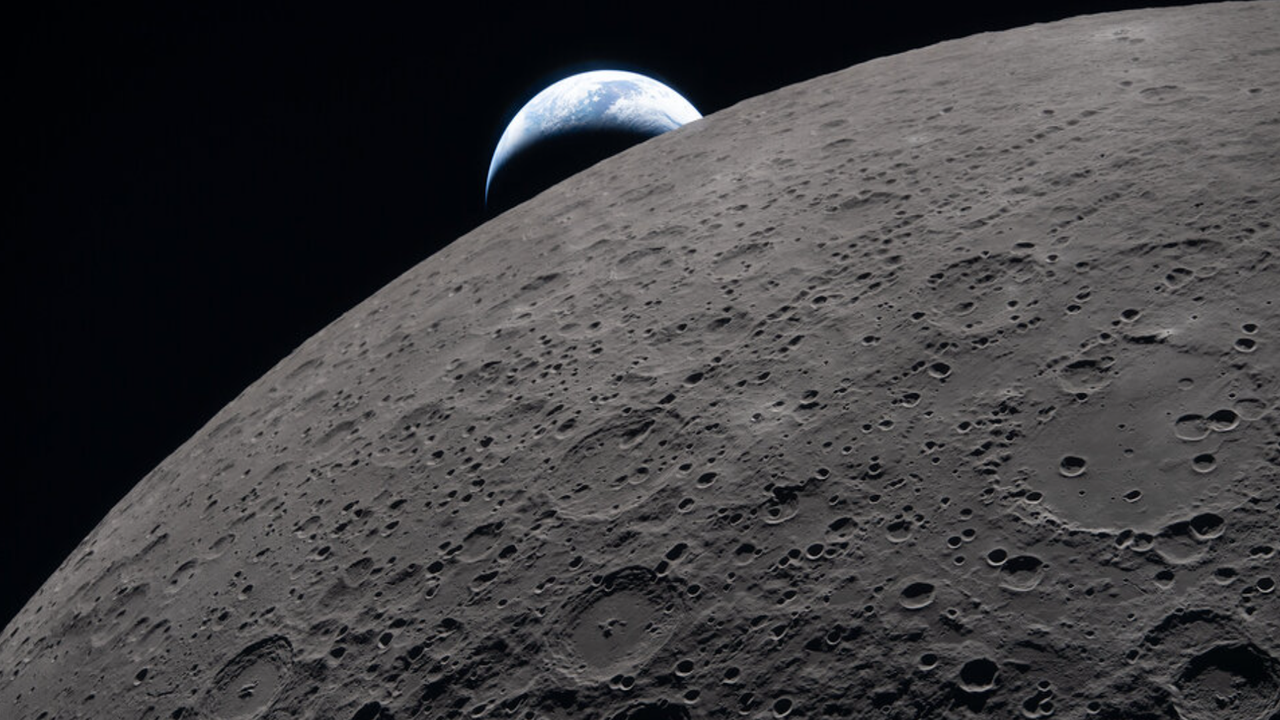
During NASA's Artemis 2 mission flyby on April 6, astronauts detected multiple impact flashes on the moon's far side, observations that researchers find scientifically compelling. The human eye proved more effective than onboard cameras at capturing these brief luminous events caused by meteorites striking the lunar surface.
Impact flashes occur when small asteroids or meteoroids collide with the moon at high velocity, generating sudden bursts of light. These events last only fractions of a second, making them challenging to document with standard camera systems. The Artemis 2 crew's ability to detect them directly demonstrates an advantage of human observation during space exploration.
Scientists value these observations because impact flashes provide data about the moon's current bombardment rate. Understanding how frequently meteorites strike the lunar surface helps researchers assess potential hazards for future lunar bases and assess the moon's geological activity. The timing and location of impacts also inform models of near-Earth object populations.
The far side of the moon presents particular interest. Because it faces away from Earth, direct observation from the ground proves impossible. The Artemis 2 astronauts occupied a unique vantage point during their lunar orbit, allowing them to witness phenomena that ground-based telescopes cannot detect.
Cameras aboard spacecraft typically have fixed exposure settings optimized for daytime imaging. Impact flashes, by contrast, generate brief, intense light against the dark lunar surface. Human observers can adapt their attention and eye sensitivity in ways automated systems cannot, allowing them to notice transient phenomena that equipment might miss.
This observation gap has prompted discussion among mission planners about enhancing detection capabilities on future lunar missions. Improving camera technology or training crew members specifically to monitor and document impact events could yield more systematic data about lunar impacts. Some researchers propose deploying dedicated impact monitoring equipment on the lunar surface itself.
The Artemis 2 findings underscore how crewed