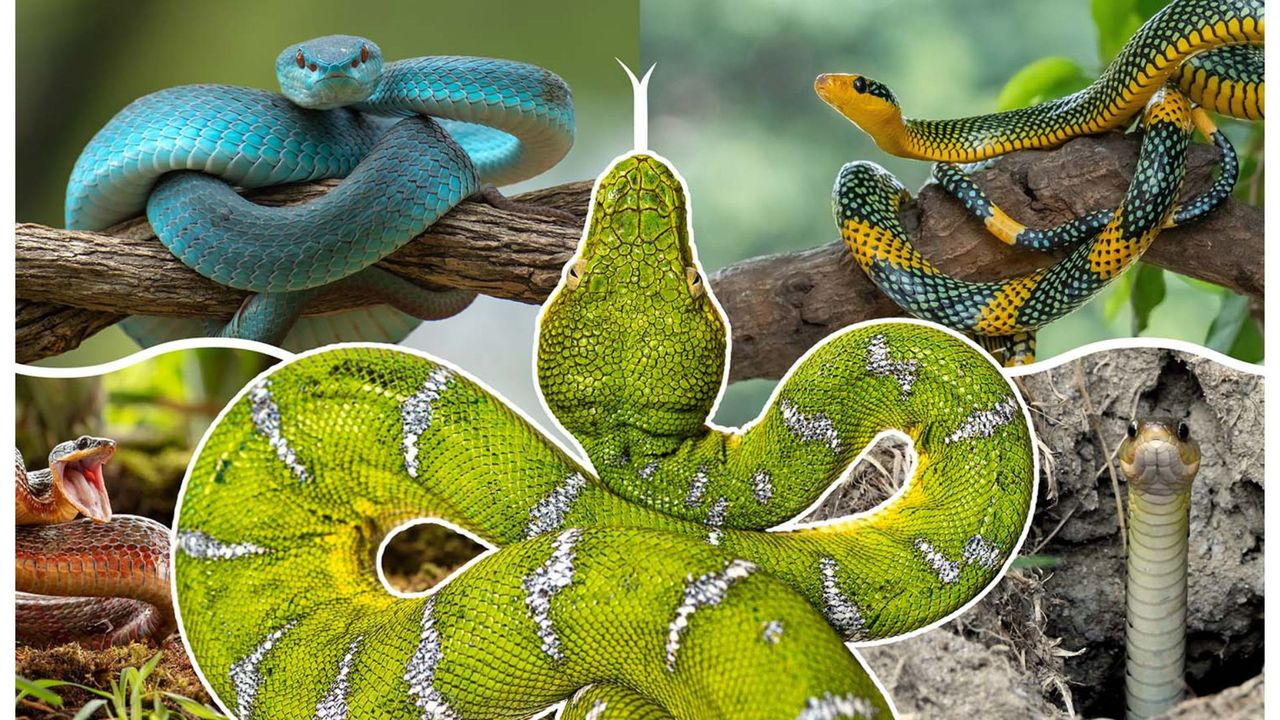
Scientists examining ancient fossils and applying modern genomic techniques have reconstructed how snakes evolved from four-legged ancestors and eventually lost their limbs over more than 100 million years, according to recent research.
The work combines paleontological discoveries with genetic analysis to create a detailed timeline of serpent evolution. Researchers identified transitional fossils showing intermediate stages where ancestors possessed reduced limbs before complete loss occurred. These specimens reveal that the process happened gradually, not abruptly.
The research demonstrates how different snake lineages subsequently diversified into the remarkable variety we observe today. Massive anacondas and ball pythons evolved from the same ancestors as tiny thread snakes and aquatic sea serpents. Genetic studies allowed scientists to date when specific adaptations arose, including the development of venom delivery systems in certain species and the anatomical modifications enabling constriction.
Advanced imaging technology enabled paleontologists to examine internal structures of fossils without damaging specimens. This revealed details about spinal column modifications and how vertebrae reorganized as snakes elongated their bodies and lost paired limbs. The research shows that while snakes lost external legs entirely, vestigial bone remnants persist in some species, particularly pythons and boas, indicating their four-legged heritage.
The evolution of leglessness provided snakes with biomechanical advantages for burrowing, swimming, and navigating dense vegetation. Different snake families adapted these capabilities in distinct ways. Some became highly specialized burrowers with streamlined heads and reduced eyes. Others became powerful swimmers with flattened bodies and paddle-like tails.
The fossil record and genetic data also clarify relationships between snake families and their closest living relatives, which include lizards. Researchers determined that snakes branched from a specific lineage of burrowing lizards approximately 128 million years ago.
This multidisciplinary approach combining paleontology, genetics