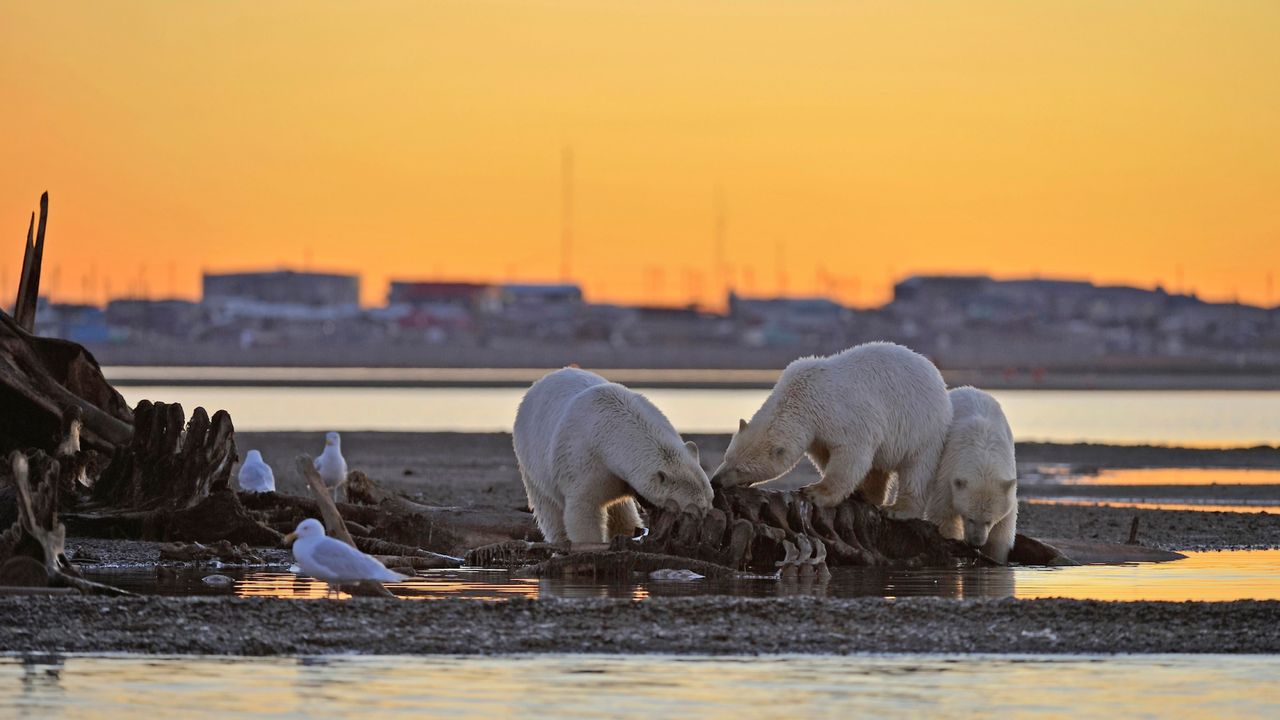
Polar bears across the Arctic are increasingly approaching human settlements and coastal communities as climate warming reduces sea ice. A new analysis shows that bears of all body conditions, not just malnourished individuals, venture toward human sites in search of food and resources.
Researchers documented this behavioral shift by tracking polar bear populations across multiple Arctic regions. The data reveals that as sea ice melts earlier each spring and forms later each fall, bears spend more time on land where they encounter human infrastructure, garbage, and potential prey. Previously, scientists assumed only starving bears would risk human contact. This study demonstrates that well-nourished animals also make these dangerous journeys, suggesting the pattern reflects systematic changes in their habitat rather than individual desperation.
The finding carries serious implications for both bears and Arctic communities. Bears approaching human sites create safety risks for local residents and often result in lethal encounters when authorities must protect settlements. For the bears, contact with humans can prove fatal through defensive kills or relocation efforts. The trend will likely intensify as Arctic temperatures continue climbing, extending the ice-free period each year.
This research underscores how climate change reshapes animal behavior across entire populations, not just vulnerable subgroups. As sea ice shrinks, polar bears lose their primary hunting platform for seals. The alternative, scavenging near human communities, becomes an increasingly viable survival strategy. Arctic communities must now prepare for more frequent bear encounters regardless of the animals' nutritional status.
The study highlights a cascading effect of climate disruption. Warmer oceans and shorter ice seasons force behavioral adaptations that bring apex predators into conflict with human populations. Managers in Arctic nations face pressure to develop coexistence strategies while polar bear populations face mounting stress from habitat loss and human interaction.