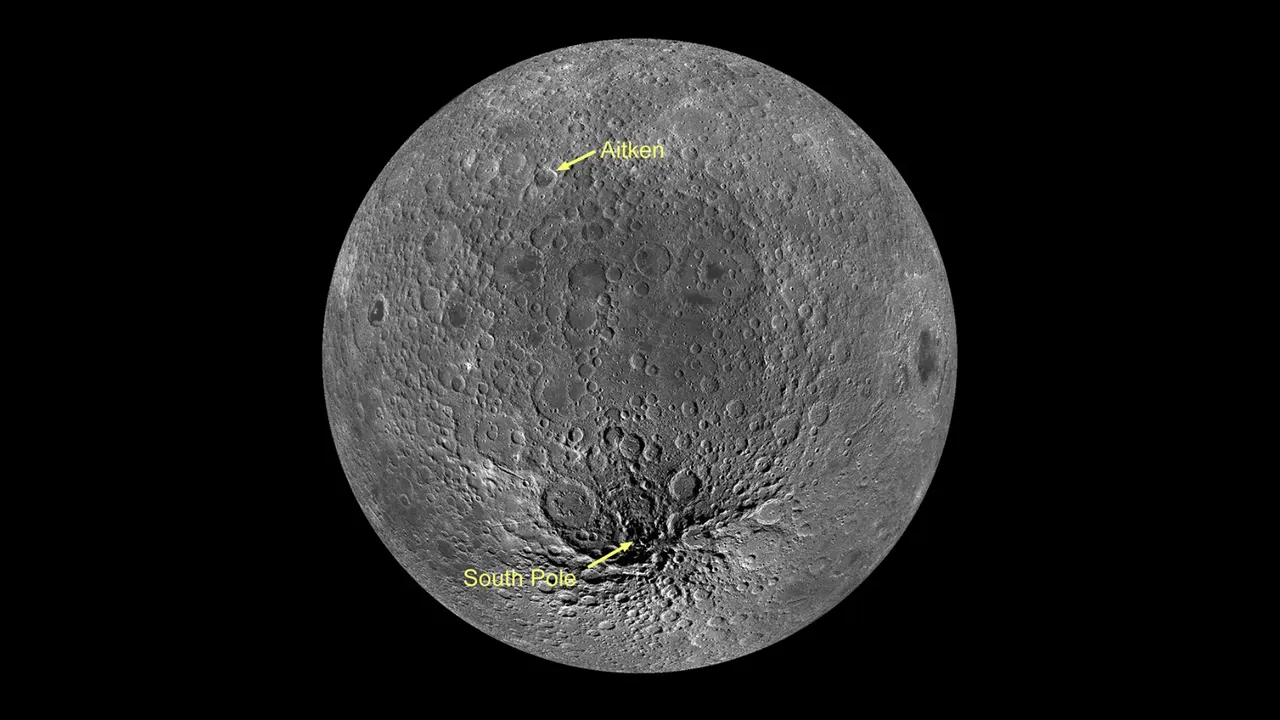
A massive asteroid impact early in lunar history may have excavated material from deep within the moon and deposited it near the Artemis landing sites, according to new research. Scientists believe an ancient collision scattered subsurface lunar material across the south polar region where NASA plans to land astronauts.
The study focuses on what researchers describe as a "decapitated" asteroid, likely a large body that fragmented during its approach to the moon. This impact event, occurring billions of years ago, would have been powerful enough to breach the moon's outer crust and expose pristine material from deeper layers. The energy from such a collision could have ejected this material across significant distances.
The research carries practical implications for the Artemis program. Astronauts landing near the lunar south pole during upcoming missions could potentially access samples that reflect the moon's interior composition without requiring deep drilling. These subsurface materials would offer insights into the moon's geological history and internal structure that surface samples alone cannot provide.
The south polar region also contains permanently shadowed craters where water ice accumulates. Combined with the possibility of accessing deep lunar material through impact debris, this region represents a scientifically rich destination for human exploration. Scientists can study both the moon's volatile inventory and its internal composition through samples available at these landing sites.
The research underscores how ancient impact events continue to shape scientific opportunities on the moon. Understanding which impacts scattered material from which depths helps mission planners identify the most valuable sampling locations. As NASA prepares for Artemis missions, this geological knowledge becomes essential for maximizing the scientific return from human lunar exploration.
The study demonstrates that location selection for lunar bases involves careful analysis of impact geology and subsurface accessibility. The Artemis program will benefit from decades of orbital data and remote sensing that reveal the moon's internal structure and impact history.