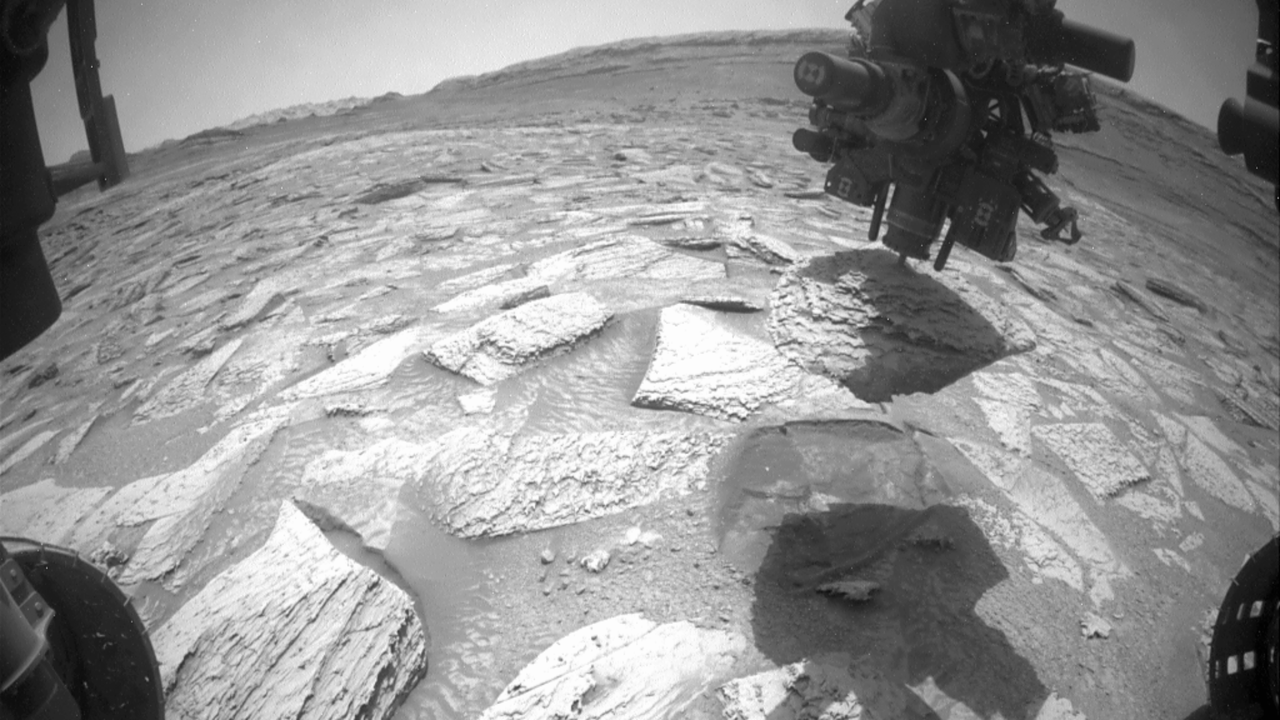
NASA's Curiosity rover encountered an unexpected obstacle on Mars when a 29-pound rock became wedged beneath its chassis, immobilizing the robot for six days.
The rock, nicknamed "Atacama," trapped the rover during operations in Gale Crater. Engineers at NASA's Jet Propulsion Laboratory worked to free the spacecraft by carefully maneuvering it backward and executing precise wheel movements. The rover finally broke loose after the team executed a series of calculated reverse drives and directional adjustments.
Curiosity, which has been exploring Mars since 2012, travels across rocky terrain regularly but occasionally encounters obstacles it cannot overcome independently. The Atacama rock presented a serious problem because the rover's underbody sits relatively close to the ground, leaving little clearance for larger obstacles. Getting stuck threatened to derail the mission's scientific schedule and potentially damage the rover's wheels or suspension system if extracted improperly.
The JPL team's solution required patience and precision. Rather than forcing the rover forward or applying excessive power, engineers issued commands to rock the vehicle side to side while pulling backward incrementally. This gentle approach, tested on Earth using rover duplicates, allowed friction and gravity to shift the rock's position without harming Curiosity's sensitive equipment.
The six-day delay marks one of Curiosity's more dramatic standoffs with Mars geology. The rover's instruments include a drill, spectrometer, and cameras designed to study Martian rocks and soil composition, searching for signs of ancient microbial life. Being immobilized meant the rover could not continue sample collection or traverse to new research sites.
Curiosity resumed normal operations once freed. The incident underscores the challenges of operating robots on another planet where physical intervention by technicians remains impossible. Every solution must originate from commands sent across millions of miles of space, with communication delays of up to 20 minutes one way.