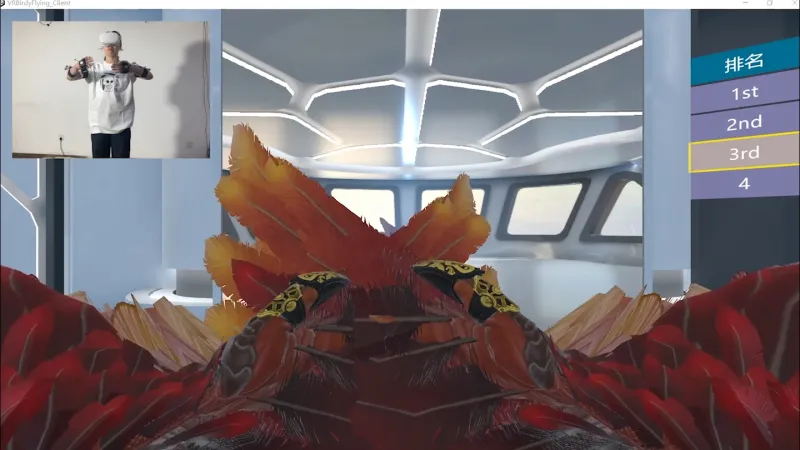
Researchers have discovered that the brain can rapidly incorporate virtual wings as extensions of the body when people learn to fly in immersive virtual reality environments. In a study of 25 participants, scientists found measurable changes in how the brain processes and represents these artificial limbs after training.
The participants completed flight training sessions using virtual reality headsets while controlling wing-like appendages. Brain imaging before and after the training revealed that neural representations of the wings shifted toward regions typically responsible for processing natural body parts. The brain essentially began treating the virtual wings as genuine limbs rather than external tools.
This research demonstrates the remarkable neuroplasticity of the human brain, its ability to reorganize itself in response to new experiences. When people train extensively with external devices, the sensorimotor cortex, the brain region handling movement and sensation, can expand its maps to include those devices. Previous studies showed this effect with prosthetics and instruments like tennis rackets. Virtual wings follow the same pattern.
The findings carry implications for rehabilitation medicine and prosthetic development. If physical prosthetics produce similar neural changes to virtual ones, therapists could test designs and training approaches using VR before investing in expensive customized devices. This could accelerate the development of more natural-feeling prosthetics that integrate better with the user's sense of self.
The study also raises questions about embodiment and consciousness. The rapid neural reorganization suggests the brain doesn't distinguish sharply between "real" and virtual body parts under conditions of consistent sensory feedback and motor control. This blurs traditional definitions of what counts as part of the self.
However, the study involved relatively small sample sizes and short training periods. Whether these neural changes persist long-term or translate to other virtual appendages remains unclear. The research used specific VR systems that may not generalize to other immersive technologies.
The work appears positioned to influence future research on virtual embodiment, extended cogn