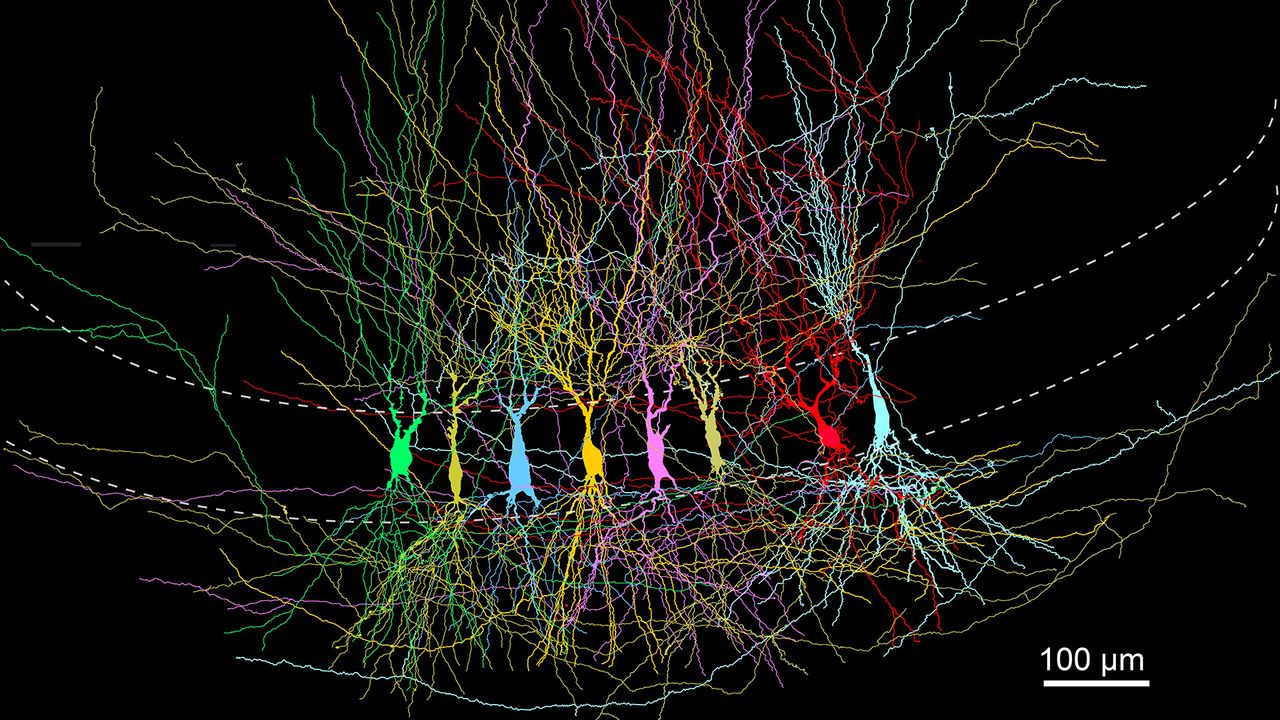
Researchers studying the developing mouse brain have discovered that the hippocampus, the brain's primary memory center, begins life as a densely interconnected neural network rather than a blank slate. Scientists at institutions including the University of California found that early neural connections in this region are far more abundant than previously thought, with synapses forming prolifically during development.
The team used advanced imaging and electrophysiology techniques to map neural circuits in young mice, revealing that the hippocampus starts with widespread, indiscriminate connections between neurons. Over time, these excess connections undergo selective pruning and refinement, allowing precise memory circuits to emerge from the initial tangle of synapses.
This finding challenges the long-held assumption that the developing brain constructs memory circuits through gradual addition of connections. Instead, the hippocampus appears to operate on a "carve out" principle, where the brain builds excess connectivity first, then systematically eliminates unnecessary connections to create efficient, specialized networks.
The researchers observed that this refinement process continues throughout early development and correlates with the animal's growing ability to form and recall memories. Young mice show poor memory performance when the hippocampus remains overconnected, but memory improves as pruning progresses.
The study suggests that disruptions to this normal pruning process could contribute to developmental memory disorders. It also provides insights into how experience shapes the developing brain, since the selective elimination of synapses may depend on neural activity patterns triggered by learning and environmental exposure.
The findings were supported by computational modeling that demonstrated how overconnected networks gradually transform into optimized circuits through activity-dependent pruning. This mechanism appears fundamental to how the brain shifts from a generalist state in early development to specialized networks that support adult cognitive function.
Understanding this developmental process has implications for treating memory-related conditions and understanding how the brain constructs the neural substrates of learning. The research offers a