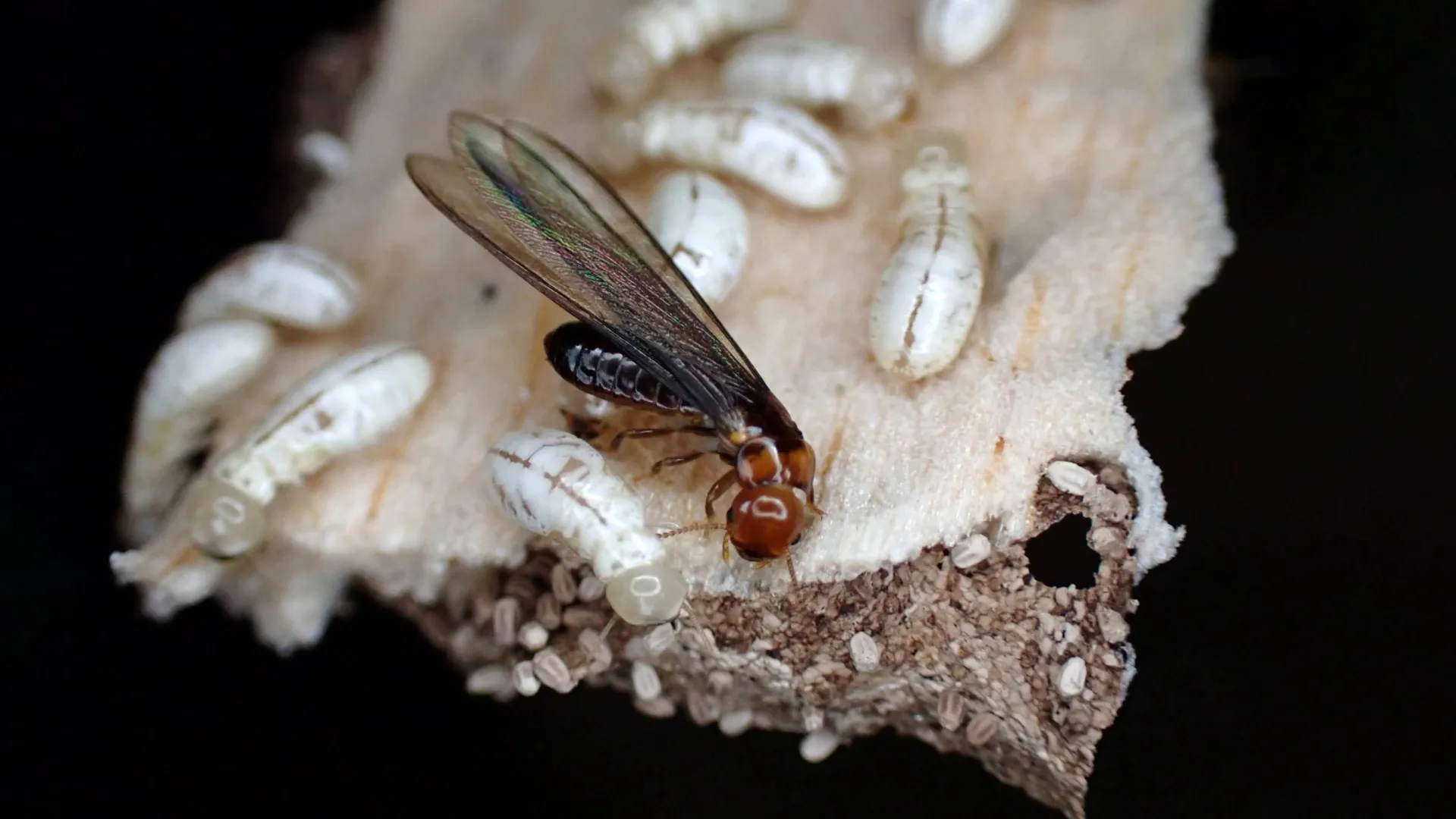
Researchers have identified bistrifluron, a chemical that kills drywood termites by disrupting their molting process, offering a safer alternative to conventional fumigation treatments. The compound prevents termites from developing new exoskeletons during their growth cycles, effectively destroying entire colonies from within.
Laboratory tests showed bistrifluron eliminated approximately 95% of termites in treated areas. Unlike traditional fumigation methods, which use toxic gases that pose risks to human residents and pets, bistrifluron targets termite biology specifically, leaving humans and non-target organisms unharmed. The chemical works by interfering with chitin synthesis, the key structural component of insect exoskeletons.
The timing of this discovery matters. Drywood termite populations are expanding into new geographic regions, driven partly by climate change and global trade. Existing treatment options rely heavily on sulfuryl fluoride fumigation, which requires residents to vacate homes for extended periods and carries environmental concerns. Bistrifluron offers homeowners a less disruptive option.
The research team conducted controlled experiments exposing termite colonies to bistrifluron treatments and monitored survival rates over time. The 95% elimination rate represents performance comparable to or better than current industry standards, while the mechanism of action specifically targets termite physiology without affecting mammalian metabolism. This selectivity reduces collateral damage to beneficial insects and ecosystem health compared to broad-spectrum approaches.
Researchers note that bistrifluron could provide longer-lasting colony suppression because it eliminates reproductive individuals before they can establish new populations. This preventive aspect addresses a persistent problem in termite management: reinfestation from nearby untreated colonies.
Work remains before widespread commercial deployment. Scientists must conduct additional trials evaluating bistrifluron's effectiveness against subterranean termites, which cause more structural damage than drywood species in many regions. Field trials under real-world conditions