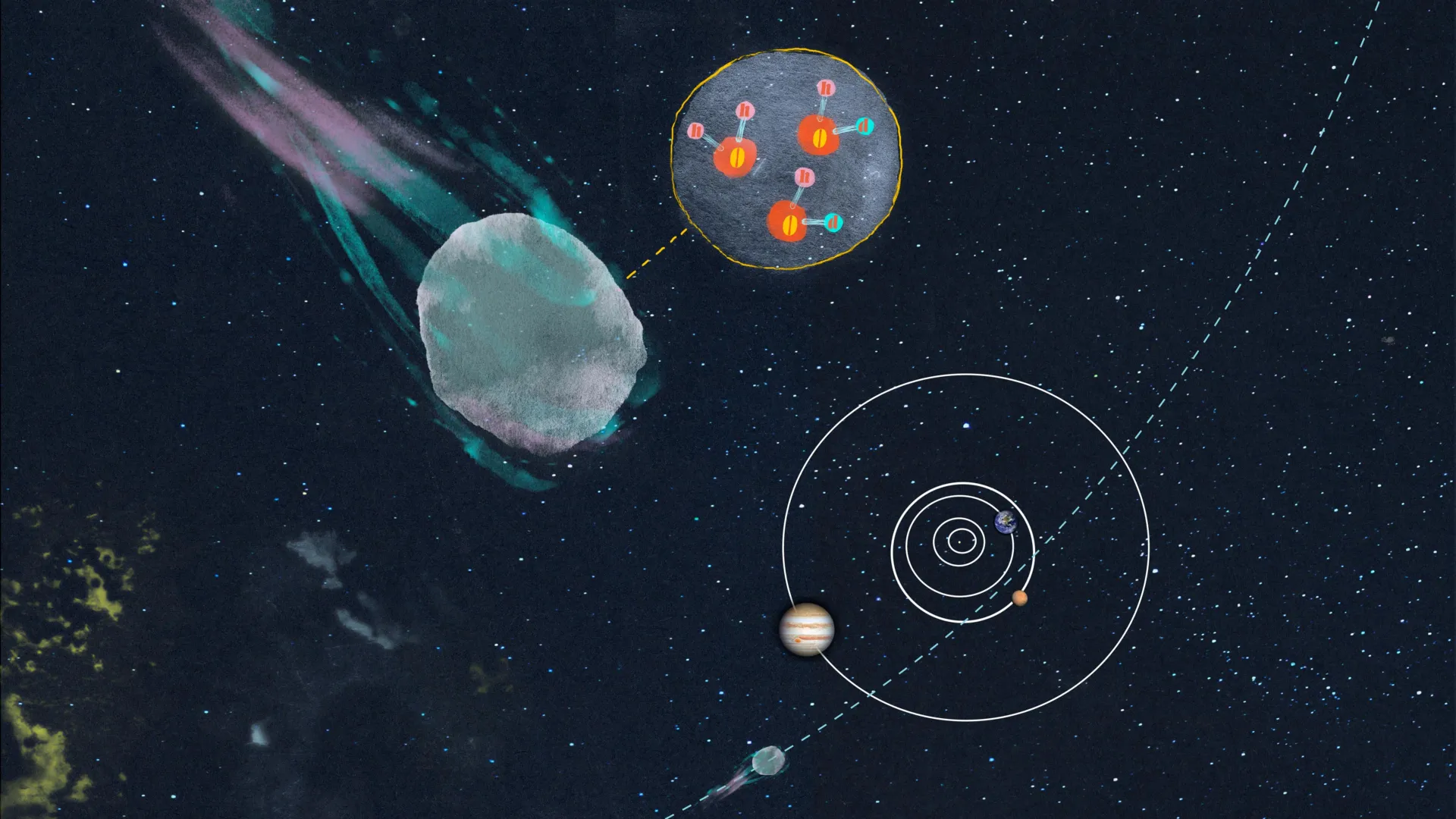
Astronomers have detected an unexpectedly high concentration of heavy water in the interstellar comet 3I/ATLAS, offering rare insight into planetary formation in distant star systems.
Heavy water, chemically known as deuterated water or D2O, contains deuterium atoms instead of ordinary hydrogen. The ratio of deuterium to hydrogen in 3I/ATLAS far surpasses levels found in comets, asteroids, and planetary atmospheres throughout our solar system. This discovery suggests the comet formed in an environment dramatically colder than any region where material in our solar system originated.
The research team used ground-based observations to measure the isotopic composition of water in the comet as it passed through the inner solar system. Their measurements revealed deuterium enrichment approximately two to three times higher than typical solar system values, depending on the specific region being compared.
The high deuterium content points to formation in the coldest parts of a protoplanetary disk orbiting a distant star. In such extreme cold, chemical reactions preferentially incorporate heavier isotopes, gradually concentrating deuterium in ices over millions of years. This process explains why 3I/ATLAS carries such an unusual isotopic fingerprint.
Understanding 3I/ATLAS composition provides astronomers with direct chemical evidence about conditions in other planetary systems. The comet's trajectory suggests it was ejected from its home star system long ago, possibly through gravitational interactions with giant planets during the earliest phases of that system's development.
The discovery has implications for understanding planet formation across the galaxy and the diversity of planetary systems. It also raises questions about whether similar deuterium-rich material exists in the Oort clouds of other stars. Future observations of additional interstellar visitors will test whether 3I/ATLAS represents a unique case or reveals broader patterns in how planetary systems form.
THE TAKEAWAY: Heavy