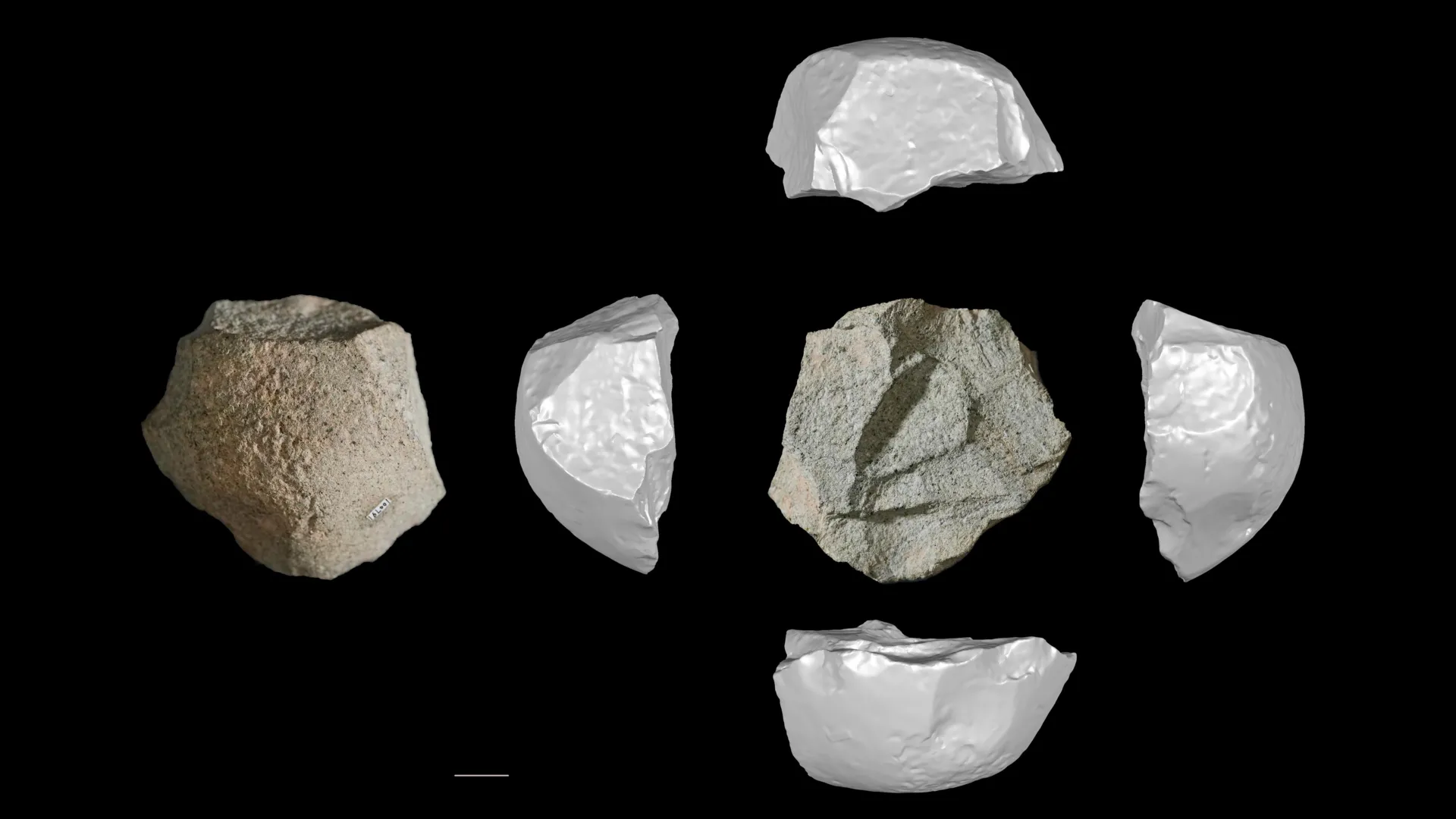
Ancient humans in China crafted surprisingly sophisticated stone tools 146,000 years ago during a brutal ice age, according to new research. Scientists discovered that Homo juluensis, an early human species, deliberately shaped stones with careful planning and deliberate technique rather than crude random chipping.
Researchers dated the tools using calcite crystals embedded in animal bones from the excavation site. This radiometric dating method placed the artifacts at 146,000 years old, much older than previously anticipated for this level of tool complexity in East Asia.
The stone tools show evidence of intentional design and multiple steps in their creation. Rather than simple percussion, makers applied force at precise angles and positions. This suggests advanced cognitive abilities including foresight, problem-solving, and understanding of stone fracture mechanics.
The discovery directly challenges a long-standing assumption in archaeology that human creativity and innovation flourish primarily during favorable environmental conditions. The tools emerged during the Last Glacial Period, when northern China experienced extreme cold, scarce resources, and harsh living conditions. Yet early humans innovated under duress rather than abandoning tool development.
The research team, based at Chinese institutions studying Paleolithic cultures, argues the findings reshape our understanding of cognitive development in early hominins. Rather than viewing innovation as a luxury of abundance, the evidence suggests adversity may have driven technological advancement.
The study adds to growing recognition that Homo juluensis possessed greater mental sophistication than once believed. Previous research on this species showed similar patterns of adaptive behavior despite challenging environments.
The dating technique using calcite crystals provides confidence in the timeline, though researchers acknowledge additional excavations could reveal even older examples elsewhere in Asia.
THE TAKEAWAY: Early humans survived and innovated under extreme ice age conditions, suggesting hardship drove technological progress rather than hindering it.