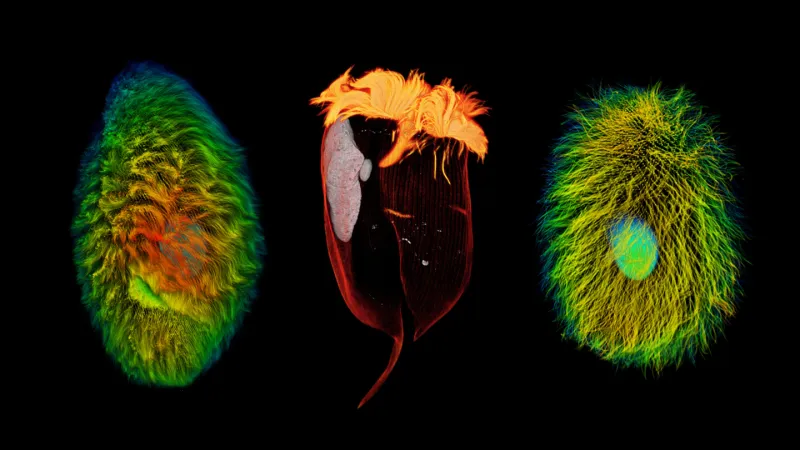
Researchers have discovered a previously unknown organelle in ciliate microbes living in cow stomachs that appears to fuel methane production, according to work published in the microbiological community. The organelle, called a hydrogenobody, could explain how ruminant livestock generate substantial quantities of the greenhouse gas.
Cows emit methane primarily through belching, accounting for roughly 14 percent of global methane emissions. The gas originates from microbial fermentation in their complex stomachs, where ciliates and bacteria break down plant material. Scientists knew methanogens, specialized bacteria, produce the methane, but the precise mechanism remained unclear.
The hydrogenobody operates as a hydrogen-processing compartment within ciliate cells. These microbes consume hydrogen generated during plant digestion, and the hydrogenobody appears to concentrate this hydrogen in ways that enhance methanogen activity. This intimate relationship between ciliates and methanogens essentially creates an efficient methane-production system.
This discovery opens pathways to reduce livestock emissions. By targeting the hydrogenobody or disrupting ciliate-methanogen interactions, researchers could potentially lower methane output from cattle herds without compromising digestion or animal health. Such interventions could include targeted feed additives or selective breeding for animals with less efficient methane-producing microbiota.
The finding holds substantial climate relevance. Livestock accounts for roughly 14.5 percent of global greenhouse gas emissions, with methane representing a major component. Methane traps heat roughly 25 times more effectively than carbon dioxide over a century, making emission reductions from cattle particularly impactful for climate goals.
However, translating this discovery into practical farm-level applications remains challenging. Researchers must determine whether manipulating these organelles affects overall rumen function, nutrient absorption, or animal productivity. Field trials will prove essential before farmers adopt