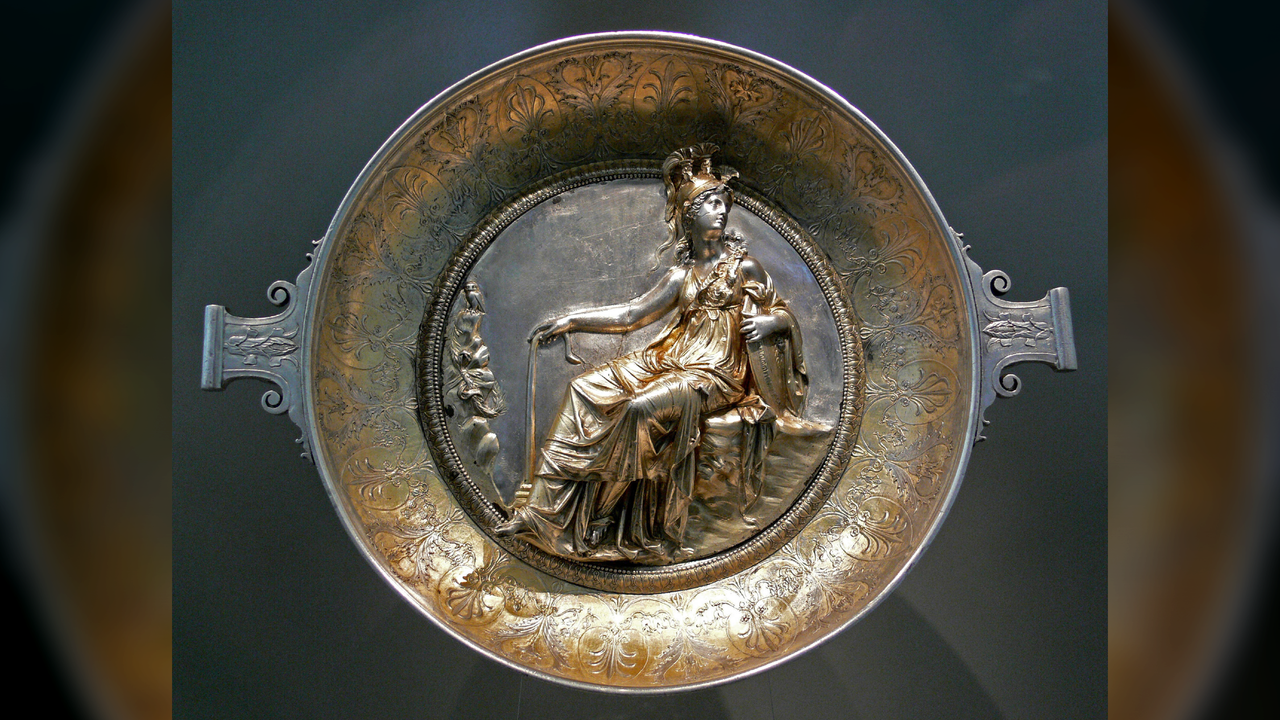
Archaeologists excavating a German forest have uncovered an ornate silver and gold vessel depicting the goddess Athena and her owl, part of a Roman tableware hoard dating back 2,000 years. The bowl represents a rare example of high-quality metalwork from the Roman imperial period.
The vessel features detailed imagery of Athena, the Greek goddess of wisdom, alongside her iconic owl companion. Craftspeople created the piece using both silver and gold, demonstrating the owner's wealth and refined taste. The decoration reflects the syncretism of Roman religious practice, blending Greek mythological iconography with Roman aesthetic preferences.
Archaeologists discovered the bowl as part of a larger hoard containing dozens of pieces of Roman tableware, suggesting it belonged to a prosperous household or was deliberately cached for safekeeping. The burial context indicates either intentional deposition during a time of crisis or loss over centuries of forest growth and soil accumulation.
The find provides insights into trade networks, artistic craftsmanship, and daily life among the Roman elite in Germanic territories during the height of Roman imperial expansion. The presence of such luxury items in this region illustrates Roman economic and cultural influence extending far beyond Italy into the frontier provinces.
Metal hoards from this period frequently offer archaeologists windows into Roman commerce and domestic practices. The survival of such ornate pieces depends heavily on soil chemistry and burial conditions. The German forest environment appears to have preserved these metal items exceptionally well, protecting them from oxidation and degradation.
This discovery contributes to growing evidence of sophisticated settlement and commerce in Roman-occupied Germania. Such finds help scholars understand the material culture accessible to wealthy inhabitants of the frontier provinces during the first and second centuries CE.
WHY IT MATTERS: The hoard demonstrates how Greek and Roman cultural traditions merged in provincial societies, and shows the economic reach of the Roman empire into territories often portrayed as culturally remote.