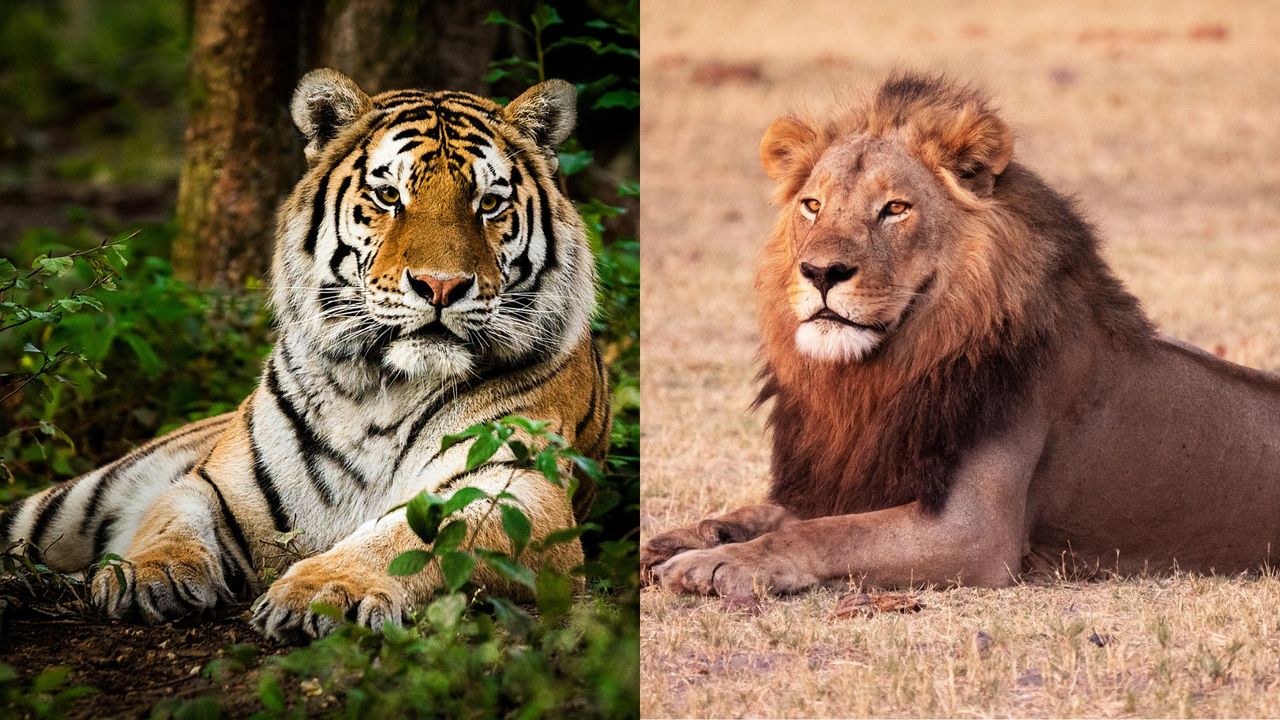
Lions and tigers belong to the same genus, Panthera, yet occupy distinct ecological niches shaped by millions of years of separate evolution. The most visible difference—lions sport tawny coats while tigers display orange fur with black stripes—reflects their divergent habitats. Tigers evolved in forested environments across Asia where striping provides camouflage among trees and tall grasses. Lions adapted to African savannas and sparse woodlands where a uniform coat proved advantageous in open terrain.
Beyond appearance, behavioral differences define these apex predators. Lions are the only truly social cats, living in groups called prides that can reach 30 individuals. This cooperative structure enables lions to hunt large prey through coordinated ambushes. Tigers remain solitary hunters, each maintaining sprawling territories across Asia. A single tiger may patrol 25 to 60 square miles, depending on prey availability.
Physical adaptations reflect their hunting strategies. Lions possess relatively shorter legs and stockier builds optimized for powerful group hunts across grasslands. Tigers stand taller with longer limbs suited for navigating dense vegetation and climbing. Male lions develop elaborate manes, which signal dominance and protect the neck during fights. Tigers lack manes entirely, instead relying on strength and stealth.
Vocalization patterns diverge too. Lions roar to coordinate pride movements and defend territory, with calls audible up to five miles away. Tigers produce roars but supplement communication with chuffs, hisses, and growls specific to different social contexts.
Genetically, lions and tigers share approximately 95 percent of their DNA, yet roughly 5 million years of evolutionary separation created distinct species. Hybrids called ligers and tigons can occur in captivity but remain vanishingly rare in nature due to geographical isolation and behavioral incompatibility.
Both species face extinction pressure. African lion populations have declined by