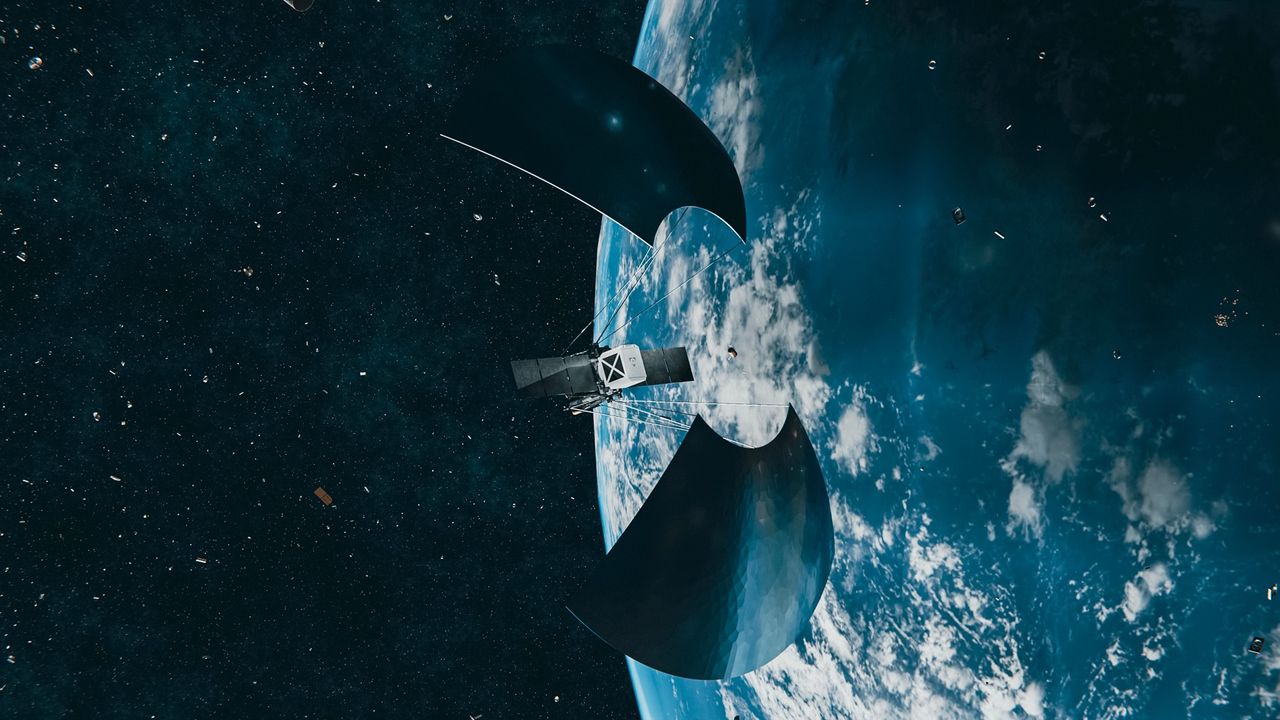
Astroscale and Orbital Debris Removal (ODR) announced a partnership to launch the first operational debris removal service in low Earth orbit by 2027. The collaboration combines Astroscale's end-of-life satellite servicing technology with ODR's space debris removal expertise to create a commercial solution for cleaning up defunct satellites and spent rocket stages cluttering near-Earth space.
Low Earth orbit contains roughly 34,000 pieces of tracked debris larger than 10 centimeters, according to space agencies. Each fragment travels at speeds exceeding 17,500 miles per hour, creating collision hazards for active satellites and crewed spacecraft. A single impact can generate thousands of new fragments, accelerating a cascade effect known as Kessler Syndrome that threatens orbital operations.
Astroscale, a Japanese company founded by Nobuaki Kurita, has developed robotic capture and servicing systems tested through multiple space missions. The company previously demonstrated autonomous proximity operations and grappling techniques. ODR brings specialized debris characterization and removal protocols developed through years of research on orbital mechanics and satellite capture methods.
The partnership targets debris removal as a commercial service rather than a government-only operation. Private companies including Clearspace and CisLunar Industries pursue similar missions, indicating growing market demand for orbital maintenance. This reflects a broader shift toward treating space sustainability as a business opportunity.
The 2027 timeline represents an aggressive but realistic deployment schedule. It assumes successful technology demonstrations and regulatory approval from space authorities. The companies plan a phased approach, beginning with one or two removal missions annually and scaling up capacity afterward.
Success requires solving multiple technical and operational challenges. Debris tracking accuracy must improve to enable safe rendezvous. Removal mechanisms must work reliably on uncooperative targets with unknown configurations and tumbling motion. Launch costs and insurance frameworks for debris removal operations remain under development.