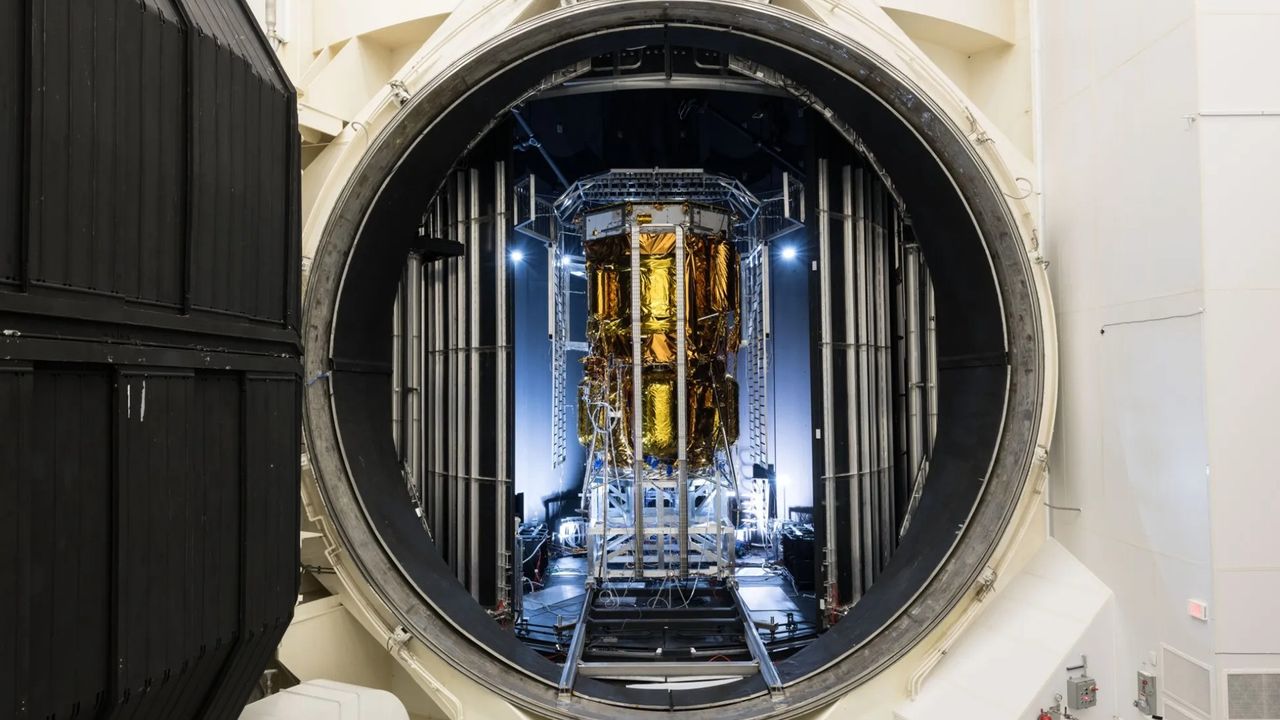
Blue Origin's MK1 lunar lander has completed vacuum chamber testing, marking a critical milestone in NASA's push to return astronauts to the moon. The vehicle passed its trials, validating its readiness for the harsh conditions of the lunar surface.
The MK1 represents Blue Origin's contribution to NASA's Artemis program, which aims to establish sustainable lunar exploration. Vacuum chamber tests simulate the extreme environment astronauts will encounter, checking the lander's life support systems, thermal controls, and structural integrity under conditions matching the airless moon.
Successful completion of these tests clears a major hurdle before hardware reaches the lunar surface. The vacuum chamber environment replicates the temperature extremes, radiation exposure, and absence of atmospheric pressure that will stress every component of the lander. Blue Origin must verify that pressurized cabins maintain breathable air, that electronics function in near-absolute-zero conditions, and that materials don't become brittle or fail unexpectedly.
NASA selected Blue Origin as one of several contractors developing lunar landers through its Human Landing System program. Competition among providers, including SpaceX and Axiom Space, drives innovation while giving NASA multiple options for crew transport. The MK1 represents years of engineering work converting Blue Origin's suborbital New Shepard vehicle design into a cargo and crew transport system capable of reaching lunar orbit and touching down safely.
The Artemis timeline targets the mid-2020s for crewed lunar missions. Multiple test flights precede any astronaut missions, each validating different systems. Vacuum chamber testing confirms the lander performs as designed before progression to integrated tests with other hardware.
Details on specific test results remain limited in public statements. NASA and Blue Origin typically release performance data incrementally as programs advance. Further testing will examine landing systems, abort procedures, and crew egress protocols.
The MK1's progress reflects how the