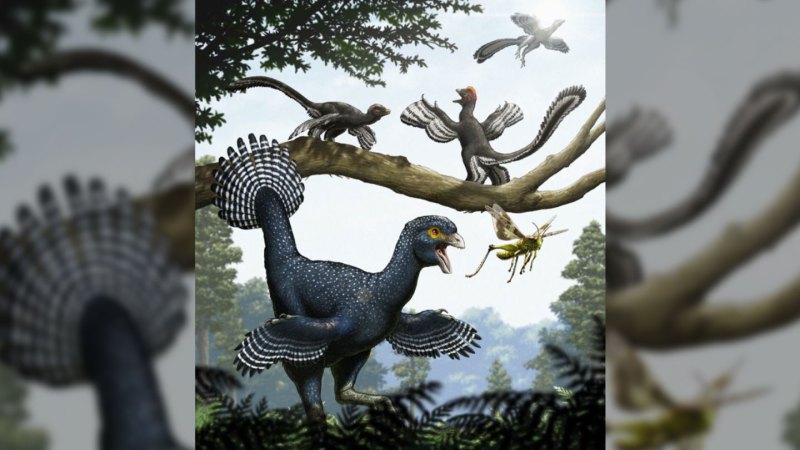
Researchers studying how wings first evolved are using an unconventional approach: simulated dinosaurs and real insect brains. The work addresses a longstanding puzzle in evolutionary biology: if wings preceded flight, what purpose did early wings serve?
A team of scientists conducted experiments pairing computer simulations with neural recordings from insects to understand how ancestral wings might have functioned before becoming sophisticated flight organs. By modeling early wing structures and observing how insect brains respond to visual stimuli mimicking those ancestral forms, researchers gained insight into the original selective pressures that shaped wing development.
The hypothesis under investigation is that wings may have initially served non-flight purposes. Leading theories suggest early wings helped insects regulate body temperature, improved balance during movement, or aided in catching prey through enhanced agility. Some researchers propose wings initially functioned as sensory organs or displays for mating and territorial communication.
The experimental design leverages what we know about insect neurobiology to reverse-engineer evolutionary history. By stimulating neural pathways in modern insects with patterns resembling primitive wing movements, scientists can infer what environmental advantages early wings provided their owners. This bridge between neuroscience and paleontology offers a fresh method for testing evolutionary scenarios that leave no fossil record of soft tissue function.
The research was published in work examining insect sensorimotor responses to visual inputs. This approach sidesteps the limitations of fossilized remains, which reveal structure but not behavior or neural function. The findings suggest that the evolutionary path to flight involved repurposing structures that initially solved different survival problems.
Understanding how complex features like wings evolved addresses fundamental questions about how novel biological structures arise. The work has implications for comprehending any trait that appears overengineered for its current function, suggesting that exaptation, the process by which structures evolve for one purpose then shift to another, shapes much of biological diversity.
KEY INSIGHT: Early wings