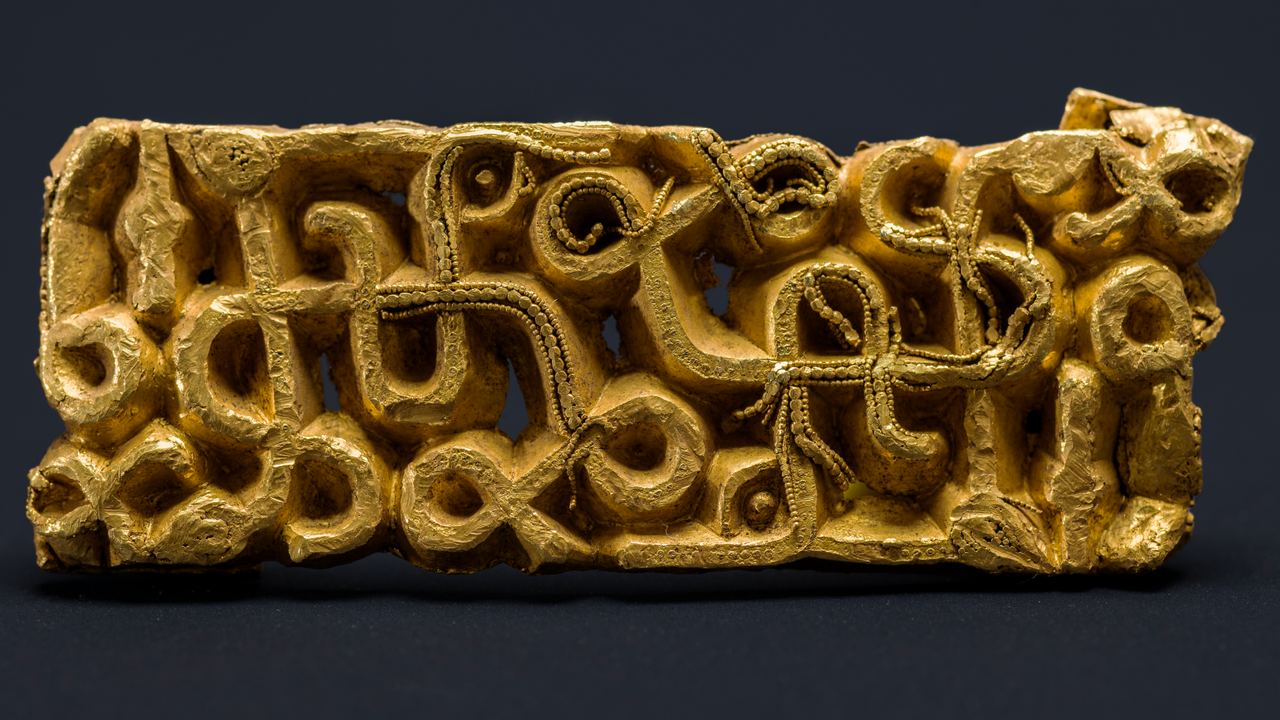
A Norwegian hiker uncovered a rare gold scabbard ornament while exploring beneath a fallen tree, revealing new details about ritual practices among elite warriors during the Migration period roughly 1,500 years ago.
The discovery suggests the artifact was deliberately deposited as a sacrifice rather than lost accidentally. Archaeological evidence indicates that wealthy Germanic tribes of the era frequently made ritual offerings of valuable metalwork at sacred sites, often near water sources or beneath notable landscape features. The gold ornament's condition and placement support this interpretation.
The scabbard piece belongs to a category of grave goods and ritual deposits found across Scandinavia from roughly 400 to 600 CE. During this period, warrior elites demonstrated status and piety through conspicuous destruction or dedication of precious items. Such practices reflected both religious beliefs and social hierarchies in early Germanic societies.
Gold and silver metalwork served practical and symbolic functions. Elite warriors wore decorated scabbards as insignia of rank, and the craftsmanship required to produce such pieces demonstrated mastery of metalworking. Depositing them represented a meaningful sacrifice of accumulated wealth and craftsmanship.
The find contributes to understanding Migration period burial customs and ritual behavior. Similar discoveries across Scandinavia, Denmark, and northern Europe reveal patterns in how communities honored their leaders and appeased their deities. The practice declined with Christianization, which transformed religious practices and eliminated such pagan ritual deposits.
Archaeologists note that accidental discoveries by hikers remain valuable for research. Systematic excavation of the site will likely reveal additional context about the scabbard's age, origin, and religious significance. The artifact's gold composition and decorative style will help specialists date the deposit and identify the warrior group responsible.
This discovery emphasizes how landscape features like ancient trees mark sacred spaces in pre-Christian Scandinavian culture. Such locations served as repositories for ritual wealth, functioning as