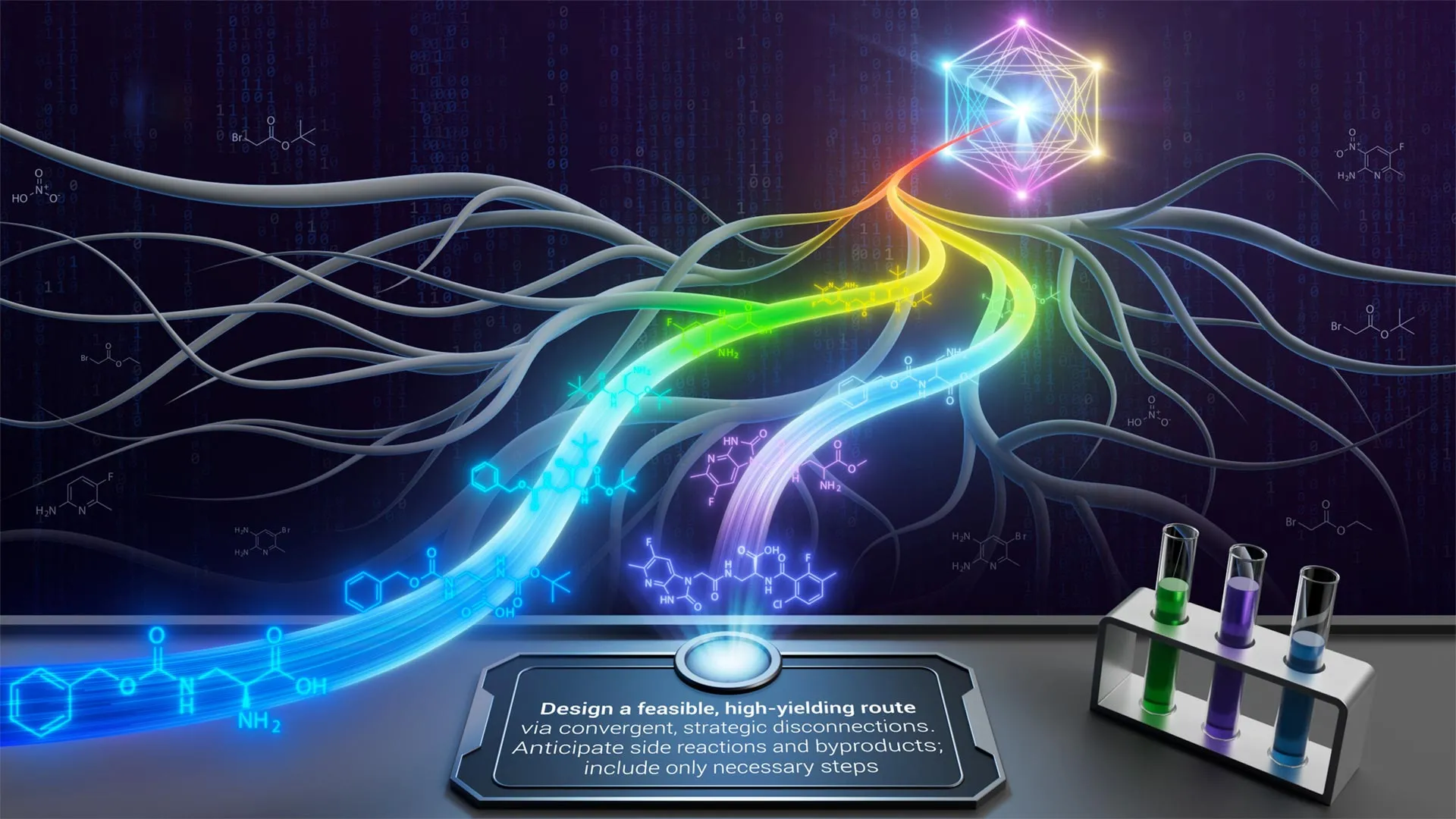
Synthegy, a new artificial intelligence system, enables chemists to design molecular synthesis routes by describing them in plain language rather than relying solely on traditional chemical expertise and trial-and-error methods. The platform combines natural language processing with computational chemistry algorithms to generate, evaluate, and rank possible synthetic pathways.
The system works by accepting chemist-authored descriptions of desired molecules and target outcomes. Synthegy's algorithms then propose multiple synthesis routes and scores each pathway based on feasibility, cost, and efficiency. The AI explains its reasoning, helping chemists understand why certain routes outperform others rather than presenting a black-box recommendation.
Traditional chemical synthesis demands years of training and experience. Chemists must navigate complex decision trees involving reactant selection, reaction conditions, and intermediate product handling. Each choice cascades into consequences affecting subsequent steps. Synthegy automates much of this planning, democratizing access to sophisticated synthetic design.
The platform represents a shift from purely generative AI toward interpretable, reasoning-based systems. Rather than simply predicting outcomes, Synthegy articulates the logic behind pathway rankings. This transparency proves essential in chemistry, where understanding the "why" behind recommendations enables human chemists to refine or reject suggestions based on practical laboratory constraints the AI may not fully capture.
The system's limitations center on training data quality and scope. AI models trained on published chemistry literature inherit biases toward well-known reactions and established methodologies. Novel or specialized chemistry domains may receive weaker guidance. Additionally, the platform still requires human validation. Chemists must confirm that proposed routes work in practice, accounting for variables like solvent effects, temperature sensitivity, and equipment availability.
Synthegy accelerates early-stage molecular design and could expedite drug discovery timelines. In pharmaceutical development, faster synthetic route planning reduces time from target identification to laboratory testing. The system also reduces entry barriers for chemistry students and researchers in resource-limited settings who