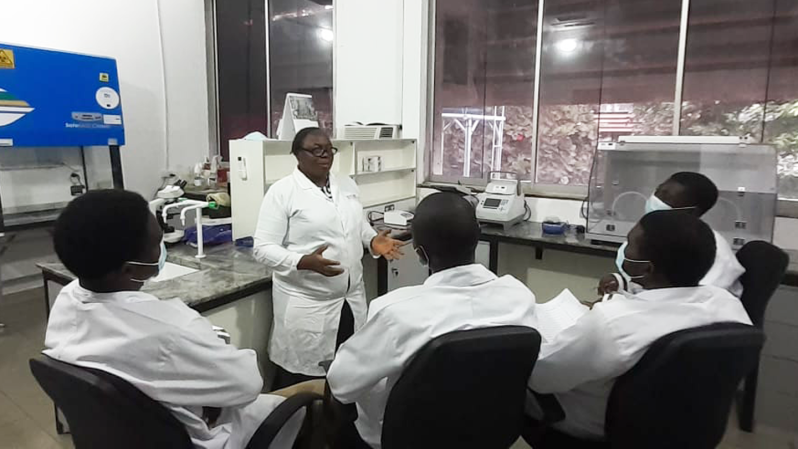
Nigerian virologist Margaret Oluwatoyin Japhet developed a rapid bedside test for rotavirus, a leading cause of severe diarrhea in children under five across Africa and South Asia. The test provides results within minutes, addressing a critical gap in low-resource settings where delayed diagnosis costs lives.
Rotavirus kills approximately 258,000 children under five annually, with 90 percent of deaths occurring in developing nations. Current diagnostic methods require laboratory infrastructure, trained personnel, and multiple days for results. By then, children often suffer severe dehydration and complications.
Japhet's test operates as a lateral flow assay, similar to rapid COVID-19 tests. Healthcare workers can perform it at clinics or homes without electricity or specialized equipment. The platform uses immunological detection to identify rotavirus antigens in stool samples within 15 to 20 minutes.
The innovation addresses Nigeria's healthcare challenges directly. The country faces limited laboratory capacity and high childhood mortality rates from preventable diseases. Early detection enables prompt treatment with oral rehydration therapy and zinc supplementation, preventing progression to life-threatening dehydration.
The test's low cost makes it accessible in contexts where families cannot afford expensive diagnostics. Traditional laboratory testing in Nigeria often costs patients directly out-of-pocket, deterring diagnosis among impoverished populations.
Japhet's work aligns with WHO recommendations for improved rotavirus surveillance in high-burden countries. While vaccines exist, vaccination coverage remains incomplete across sub-Saharan Africa. Rapid diagnosis bridges this gap by enabling faster intervention when infection occurs.
Validation studies demonstrate the test's accuracy comparable to laboratory methods, though specific sensitivity and specificity figures require verification through larger trials. Scaling manufacturing and integrating the test into Nigeria's health system present ongoing challenges.
The innovation represents targeted science addressing real-world health inequities. Rather than developing technology for wealthy markets,