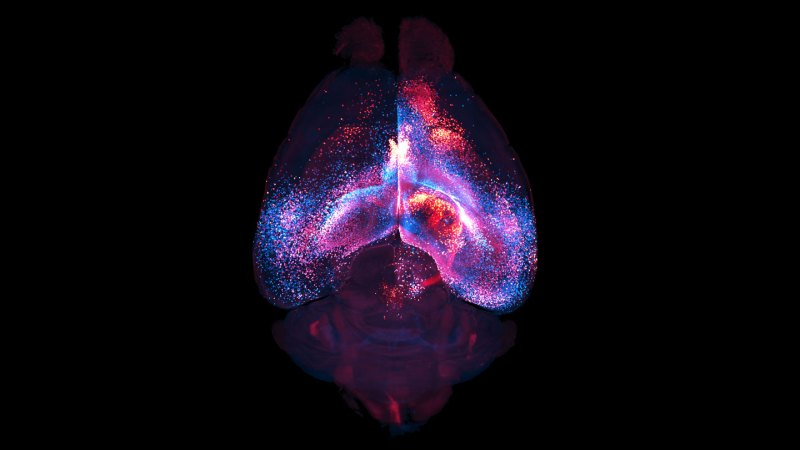
Researchers have discovered that star-shaped brain cells called astrocytes form flexible networks linking distant brain regions in mice, revealing a previously unknown communication pathway separate from neurons.
The study, detailed in recent neuroscience research, shows astrocytes extend long processes that connect to multiple brain areas simultaneously. Unlike neurons, which communicate through fixed synaptic connections, astrocytes appear to form dynamic networks that reorganize based on neural activity.
These networks function through calcium signaling, a chemical communication system where astrocytes release neurotransmitters and ions that influence nearby neurons. The flexibility of astrocytic networks allows brain regions that lack direct neural connections to coordinate their activity indirectly. This mechanism could explain how disparate brain areas synchronize during complex behaviors and cognitive tasks.
The finding challenges the traditional view of the brain's communication hierarchy, which emphasized neurons as the primary signaling units. Astrocytes, comprising roughly 25 percent of brain cells, have long been considered support cells that merely maintained the environment around neurons. Recent work increasingly demonstrates their active role in neural computation.
The mouse brain model provides a controlled system for mapping these networks with precision. Researchers used advanced imaging techniques to visualize astrocyte connectivity and track calcium activity across multiple brain regions simultaneously. The data revealed that astrocytes respond to neural signals and coordinate activity across functionally related areas.
This discovery has potential implications for understanding neurological conditions. Disrupted astrocytic networks might contribute to epilepsy, autism, schizophrenia, and neurodegenerative diseases. If astrocytes function as a parallel communication system, dysfunction in this network could impair brain function independently of neural circuit problems.
However, questions remain about how these networks operate in human brains, which are far more complex than mouse brains. The degree to which astrocytic communication contributes to overall brain function compared to neural signaling remains unclear. Future research