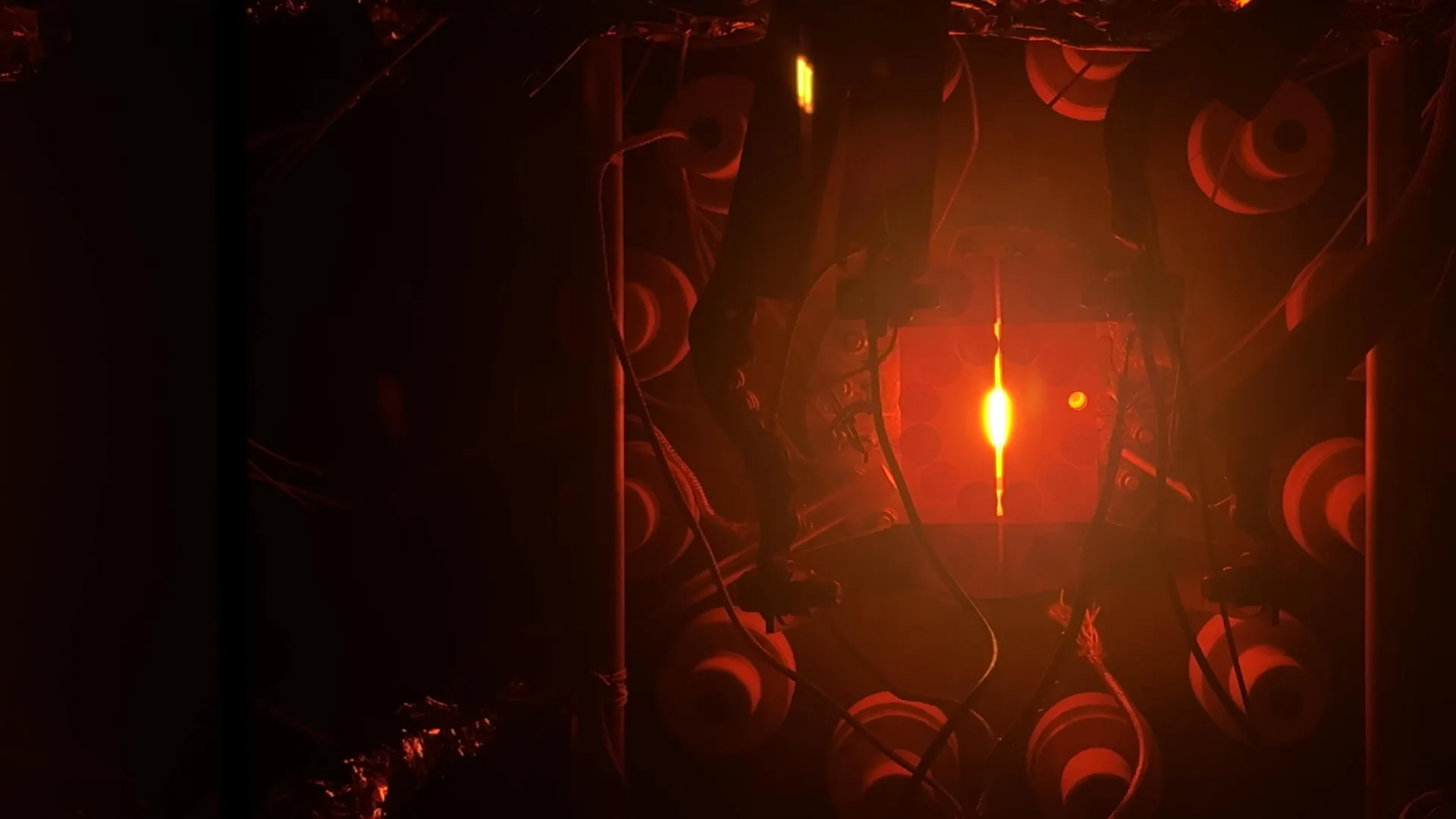
NASA researchers have successfully tested a revolutionary electromagnetic thruster at the Jet Propulsion Laboratory that operates on principles far more powerful than current space propulsion systems. The engine uses lithium vapor as fuel and generates thrust through intense magnetic forces, achieving record-breaking energy levels during the high-energy test conducted in a specialized vacuum chamber.
The thruster reaches temperatures exceeding those of molten lava, demonstrating capabilities well beyond conventional ion drives that propel today's satellites and deep-space probes. This advance addresses a fundamental challenge in human spaceflight: the need for more efficient propulsion systems capable of reducing travel time to distant destinations like Mars.
Current chemical rockets and ion thrusters have inherent limitations for long-duration missions. The electromagnetic approach tested at JPL offers substantially higher thrust and efficiency, potentially cutting travel times significantly while reducing fuel requirements. These improvements become critical for crewed Mars missions, where lower propellant mass means either faster transit or more cargo capacity for life support systems.
The test represents a validation of the thruster's engineering principles and materials performance under extreme operating conditions. Researchers confirmed that the lithium vapor fuel and magnetic containment systems functioned as designed, though the technology remains in early demonstration phases. Several technical hurdles remain before this system reaches operational readiness for actual spacecraft integration.
Development timelines for such advanced propulsion typically span years or decades. NASA and other space agencies continue funding multiple thruster concepts in parallel, recognizing that breakthrough propulsion technology could reshape deep-space exploration capability. The successful test confirms this particular design merits continued investment and further refinement.
The work builds on decades of plasma physics research and demonstrates how advances in materials science and magnetic field engineering enable previously theoretical propulsion concepts to become practical tools.
THE TAKEAWAY: This thruster test validates a promising path toward faster Mars missions, though operational spacecraft deployment remains years away.