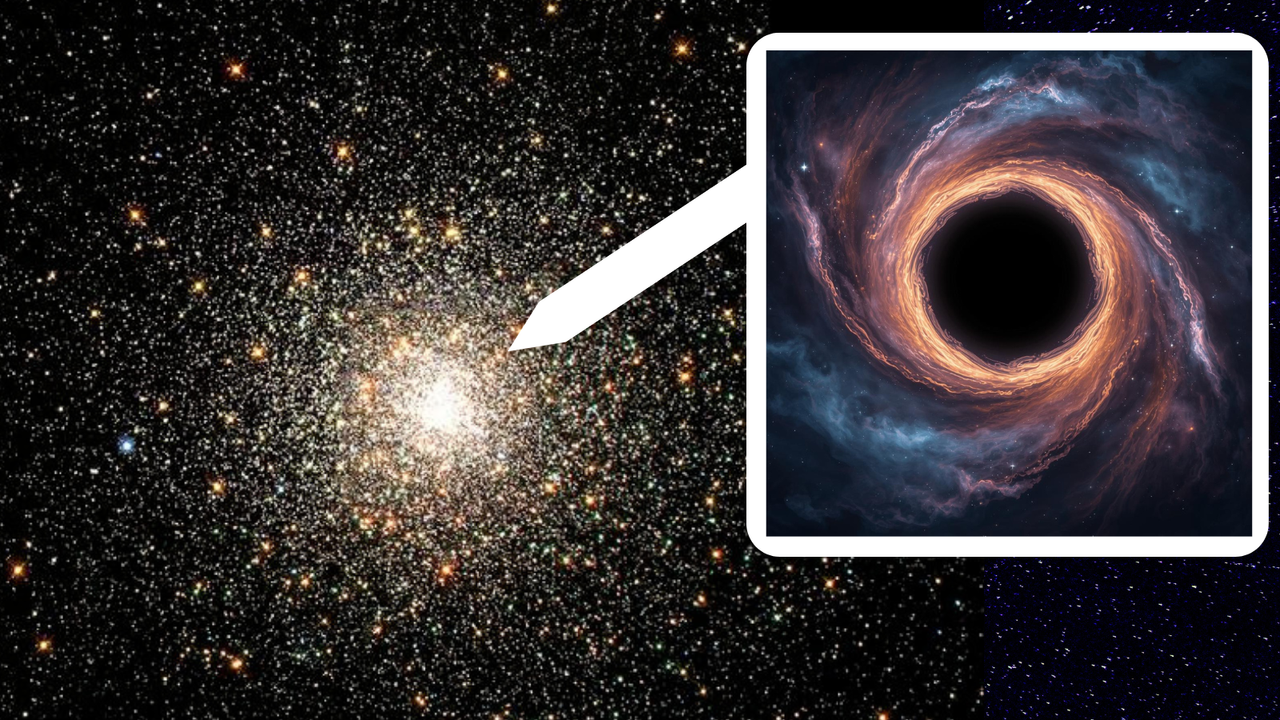
Gravitational wave detections are revealing how supermassive black holes reach billions of times the mass of our sun. When black holes and neutron stars orbit each other before merging, they follow unexpected oval paths rather than the circular orbits predicted by classical physics, according to research analyzing data from the Laser Interferometer Gravitational-Wave Observatory (LIGO) and Virgo detector.
These elliptical trajectories suggest that merging compact objects experience forces not accounted for in standard gravitational models. The discovery challenges assumptions about how the most massive objects in the universe assemble over cosmic time. Black holes detected through gravitational waves typically range from several to tens of solar masses, yet supermassive black holes at galaxy centers contain millions or billions of solar masses. Understanding how smaller objects merge into larger ones provides clues about this scaling puzzle.
The oval orbits indicate that conditions during the inspiral phase, just before merger, differ from theoretical predictions. Relativistic effects near merger points may introduce asymmetries in orbital dynamics. Alternatively, the presence of matter around compact objects, rather than purely empty spacetime, could shape these trajectories in unexpected ways.
LIGO and Virgo have detected over 90 confirmed mergers since the first detection in 2015. Each event produces ripples in spacetime that encode information about the objects involved, their masses, spins, and orbital geometry. The precision of modern gravitational wave detectors allows researchers to measure subtle deviations from general relativity's predictions.
This work matters because it bridges observations of stellar-mass black hole mergers with questions about supermassive black hole formation. If small mergers occur through unexpected mechanisms, cumulative effects could accelerate the growth of larger objects. The findings also test whether Einstein's equations hold precisely under the universe's most extreme conditions, or whether modifications become necessary.
Future detectors like the Einstein