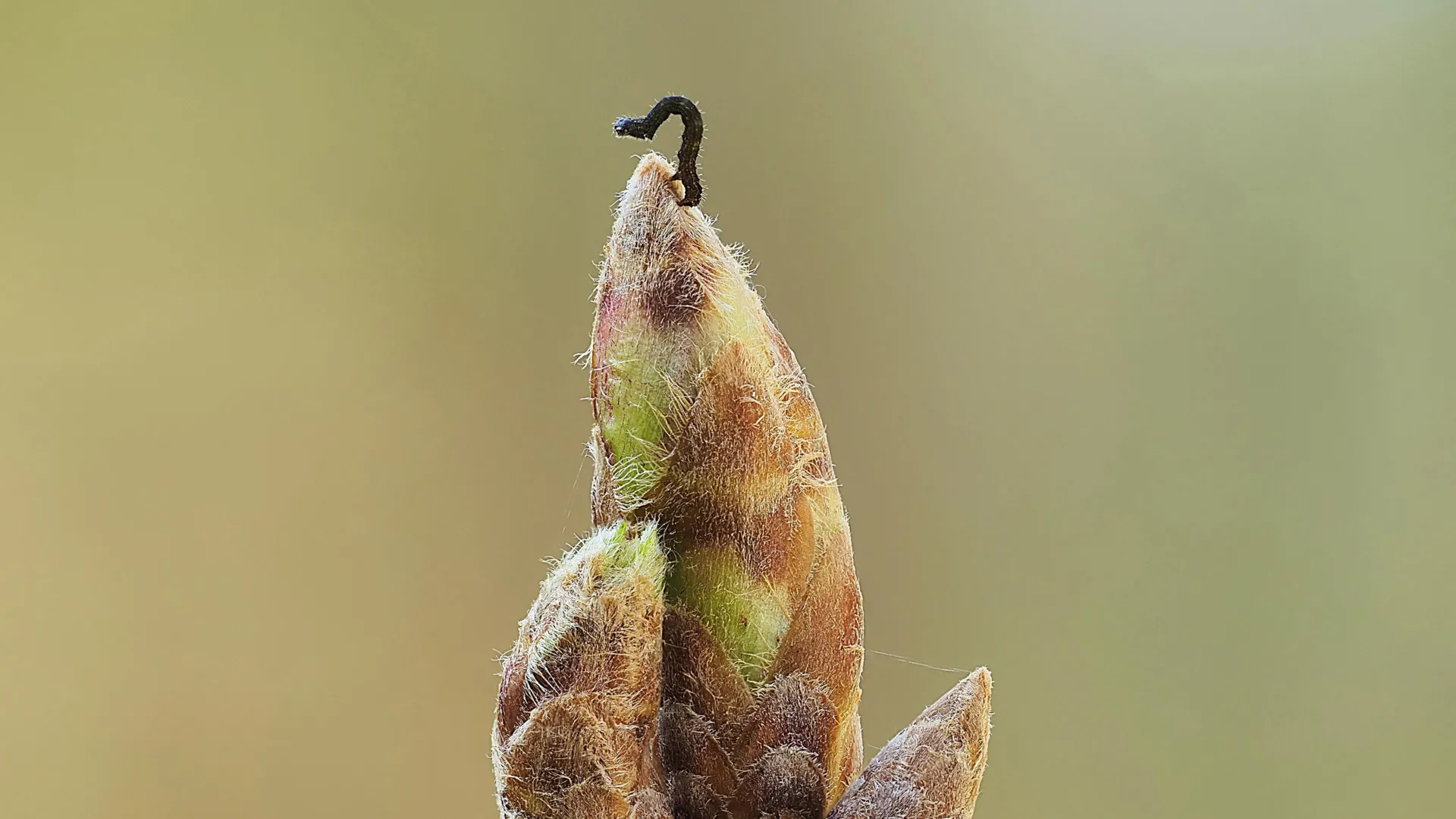
Oak trees employ a cunning defense strategy against caterpillar outbreaks: they delay spring leaf emergence by approximately three days following heavy insect damage. This temporal shift creates a starvation window for newly hatched caterpillars that depend on fresh foliage for survival.
Researchers found that this modest three-day postponement cuts caterpillar survival rates sharply and reduces leaf damage by over 50 percent. The strategy proves more effective than investing in chemical defenses, which require substantial energy expenditure. By timing leaf budbreak to mismatch peak caterpillar emergence, oaks essentially starve their predators into submission.
The discovery reveals an overlooked dimension of plant-insect coevolution. Rather than an arms race of chemical compounds, oak trees exploit phenological mismatch, the timing disconnect between predators and prey. This approach costs far less metabolically than producing toxins or other protective compounds. The trees essentially "remember" heavy attacks from the previous year and respond with adjusted timing the following spring.
This finding has broader implications for understanding how forests respond to climate change. Many caterpillar species depend on precise timing to synchronize with oak leaf emergence. As temperatures shift spring earlier, this synchronization may break down unpredictably. Trees that can adjust their phenology might maintain better survival odds, while caterpillars face growing windows of starvation.
The research also carries practical significance for pest management and forest health. Understanding oak trees' natural defense mechanisms offers clues for predicting insect outbreaks and managing forest ecosystems under changing climate conditions. It demonstrates that survival strategies need not rely on chemical warfare—timing itself becomes a powerful weapon.
Scientists did not identify the specific mechanism triggering this delayed greening response. Whether oaks respond to chemical signals from previous caterpillar feeding, count insect damage directly, or rely on other cues remains unknown