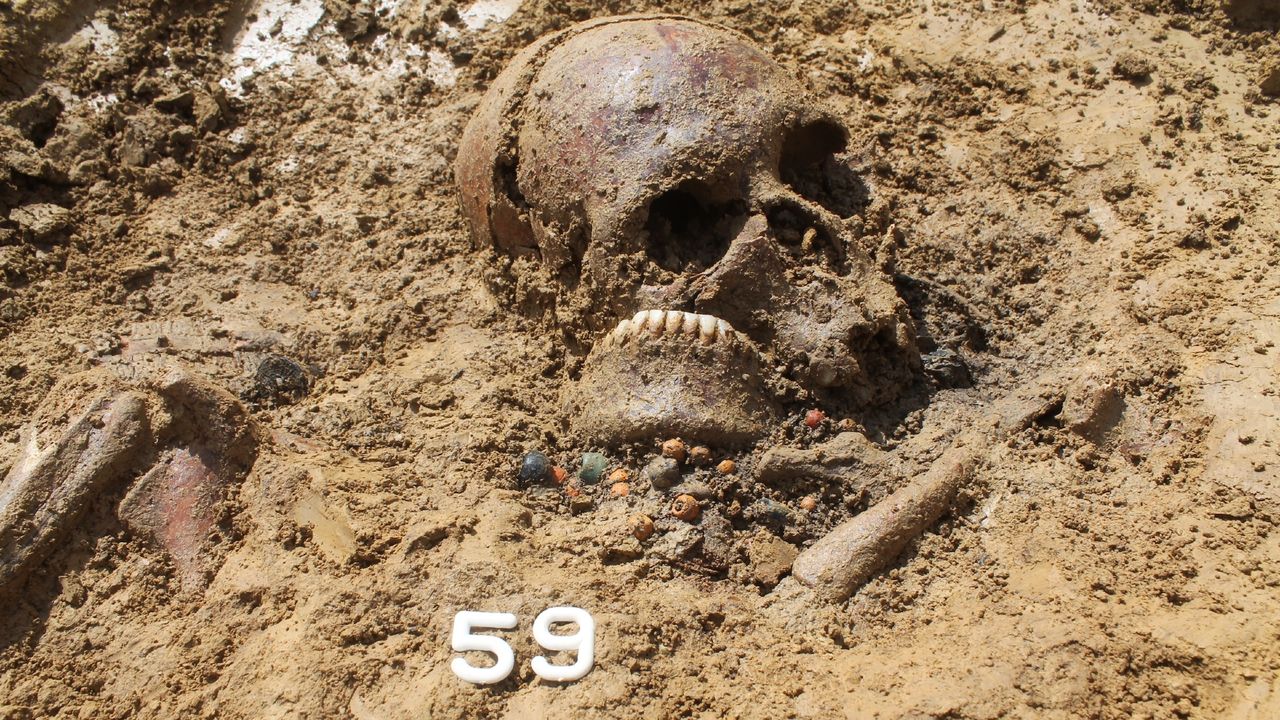
Researchers analyzing ancient DNA from burials on the Roman frontier are reconstructing family structures and social patterns in the post-Roman period. The study examines skeletal remains and genetic material from gravesites spanning the centuries following Rome's collapse, offering direct evidence of how frontier communities reorganized after imperial administration ended.
The DNA analysis reveals unexpected family patterns. Genetic markers show evidence of stable, long-term partnerships among individuals buried together, suggesting "lifelong monogamy" remained a social norm even as political structures fragmented. The presence of what researchers term "half orphans"—children buried with only one biological parent—indicates specific inheritance or guardianship practices shaped community bonds beyond immediate family.
This work moves beyond traditional archaeological interpretation of burial goods and grave positioning. Genetic sequencing provides definitive parentage data, kinship networks, and even hints at mobility patterns as populations shifted across the frontier regions. The findings challenge assumptions that post-Roman societies descended into chaos. Instead, they demonstrate continuity in family organization and social institutions even as larger political systems failed.
The research location matters greatly. Frontier zones experienced unique pressures from military withdrawal, economic disruption, and barbarian migrations. Examining DNA from these border regions offers insights into how ordinary people adapted when empire vanished. Burial practices themselves—who was interred where, with what goods—take on new meaning when corroborated by genetic evidence.
Limitations exist. Ancient DNA extraction remains incomplete for many samples, and degradation increases with age. Researchers must account for contamination and work with fragmentary remains. The specific frontier region examined and the exact time period covered shape which conclusions apply broadly versus locally.
This work contributes to emerging field of paleogenomics applied to social history. Rather than focusing solely on migrations or disease, these researchers use genetics to understand family systems and social bonds in deep historical contexts. The combination of archaeology, burial analysis, and DNA