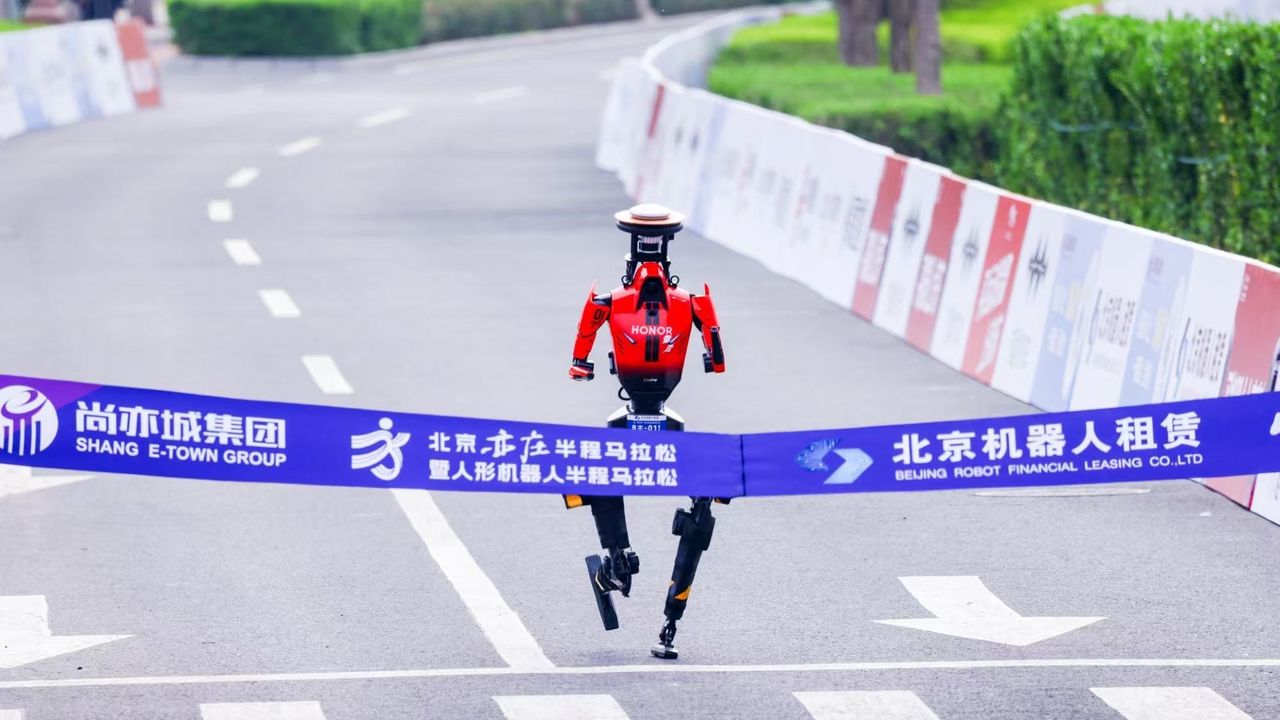
A humanoid robot named D1 has defeated the human half-marathon world record by approximately seven minutes, according to recent reports. The robot was built by a smartphone manufacturer, marking a striking achievement in robotics performance.
This accomplishment demonstrates advances in mechanical engineering, battery efficiency, and motion algorithms. Humanoid robots have historically struggled with sustained locomotion over long distances. The D1's success suggests researchers have solved critical problems around energy consumption, joint stability, and gait optimization.
The robot's ability to maintain consistent speed over 13.1 miles without fatigue represents a fundamental advantage over human physiology. Unlike runners who experience muscle exhaustion and cardiovascular stress, robots can operate at peak efficiency continuously. However, the comparison comes with important caveats. The D1 operated on a controlled surface under ideal conditions, unlike human marathoners who navigate varied terrain, weather, and the psychological demands of competition.
The specific engineering behind the D1 remains partially undisclosed, but such robots typically employ lightweight materials, efficient electric motors, and sophisticated algorithms that calculate optimal stride length and cadence. Battery technology plays a crucial role. Modern lithium-ion systems allow extended operation while keeping total weight manageable.
This development has broader implications for robotics and automation. Success in distance running proves humanoid robots can handle repetitive, endurance-based tasks. Future applications might include search-and-rescue operations, delivery systems, or industrial inspection in hazardous environments where human fatigue becomes a limiting factor.
The achievement also highlights growing investment in humanoid robotics across tech companies. Competition drives innovation in actuators, control systems, and AI-driven motion planning. While the D1 beats a human benchmark, it operates within narrow parameters unlike actual marathon conditions humans face.
The record doesn't diminish human athletic achievement. Rather, it illustrates where robots excel: tasks requiring mechanical consistency and freedom from biological limitations. Human