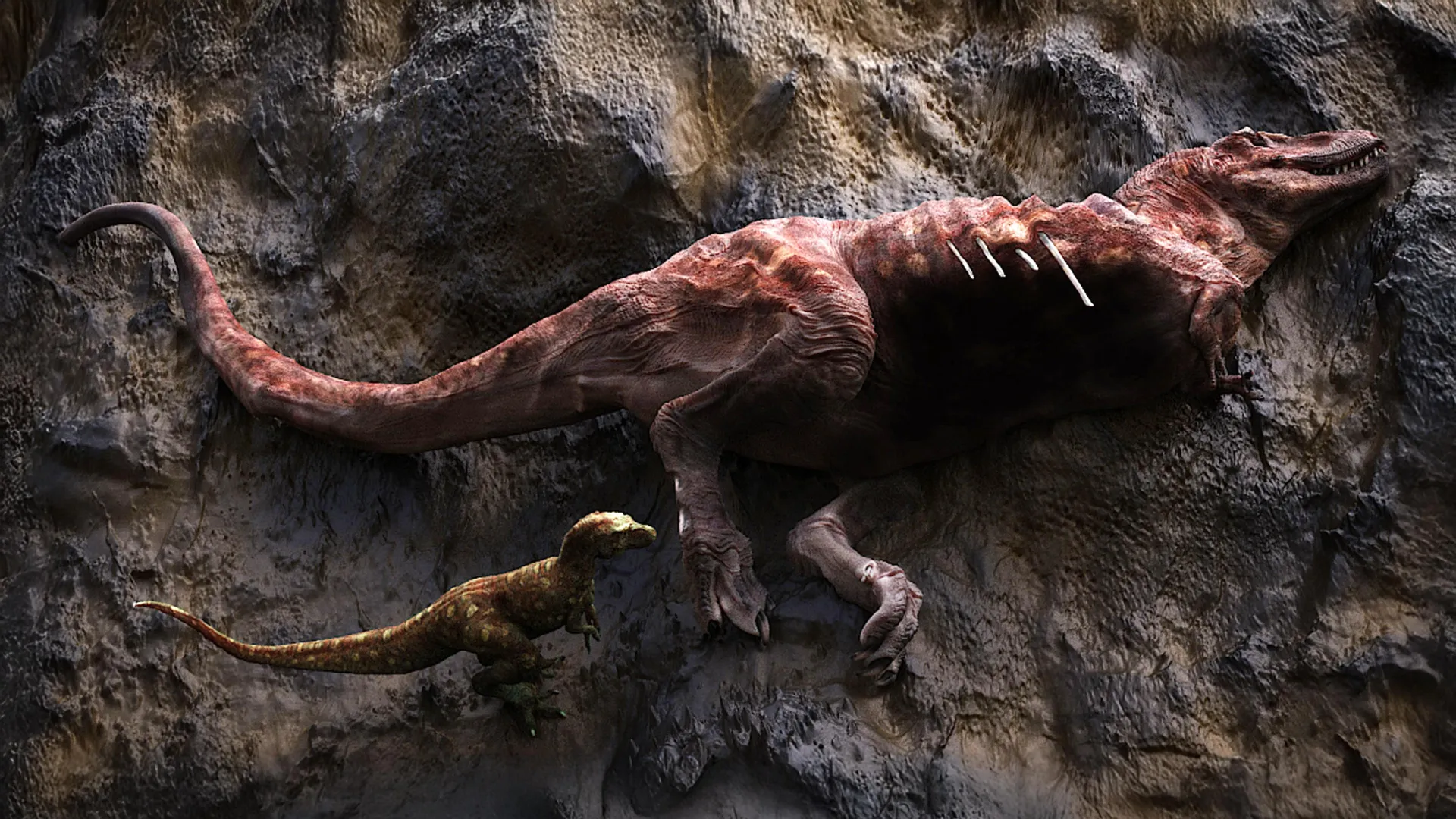
Researchers have discovered evidence of tyrannosaur cannibalism preserved in a 75-million-year-old fossil. Using high-resolution 3D scanning technology, scientists identified distinct bite marks on a massive tyrannosaur foot bone, indicating that a smaller member of the species had fed on the carcass of a much larger relative during the Late Cretaceous period.
The analysis reveals that tyrannosaurs were far more opportunistic feeders than their fearsome apex predator reputation suggests. Rather than hunting only live prey, these animals scavenged and consumed dead members of their own species when the opportunity arose. The bite marks left telltale impressions that allowed researchers to distinguish them from marks made by other predators or environmental damage.
This finding adds nuance to our understanding of tyrannosaur ecology and behavior. While these dinosaurs undoubtedly hunted actively, they were willing scavengers as well, a strategy that would have provided reliable nutrition in a resource-limited environment. Cannibalism among large predators occurs in modern ecosystems too, particularly during times of food scarcity, so the behavior aligns with survival strategies we observe today.
The research demonstrates the power of modern paleontological techniques in uncovering behavioral details from deep time. Traditional fossil examination might have missed these subtle bite marks entirely, but 3D scanning technology can reveal anatomical details with precision impossible through visual inspection alone. This opens new avenues for reconstructing the daily lives and interactions of extinct animals.
The findings carry limitations worth noting. A single specimen provides limited data on how common cannibalism was among tyrannosaur populations or whether it was driven by scarcity or preference. Researchers cannot determine whether the smaller dinosaur actively killed its larger relative or simply found it already dead.
THE TAKEAWAY: Tyrannosaurs were flexible opportunists willing to feed on their own dead