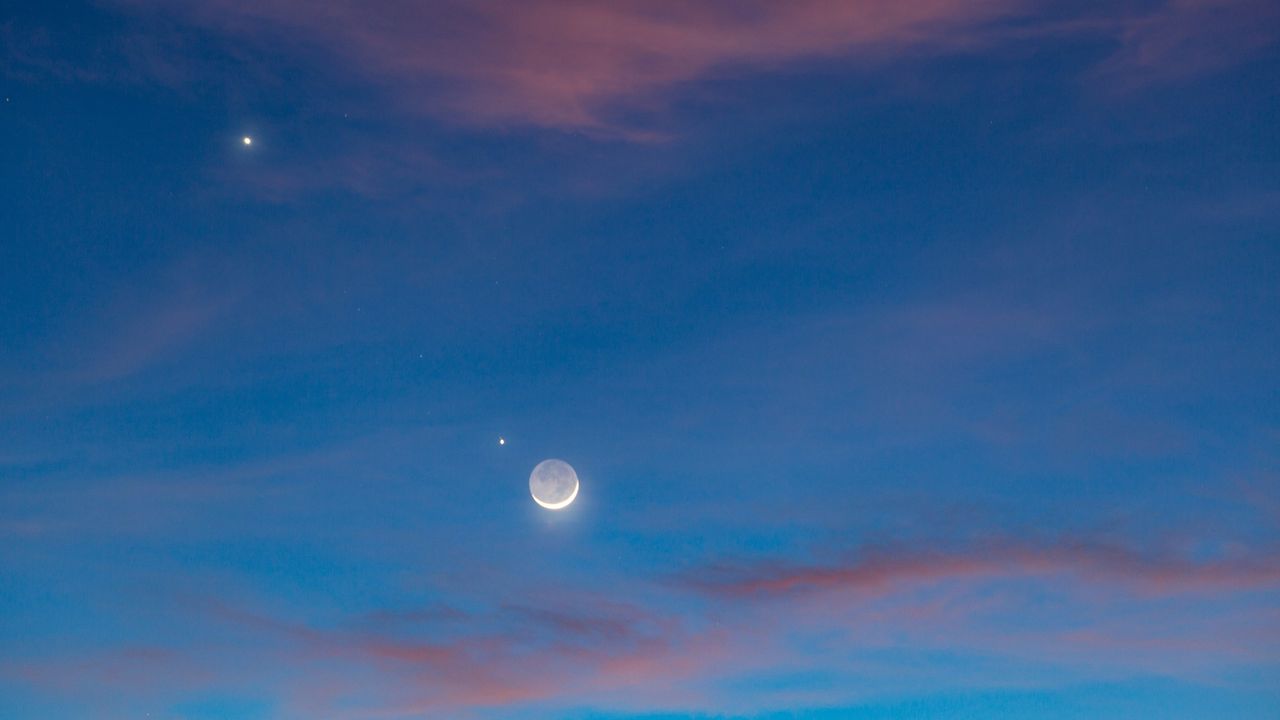
Venus, Jupiter and Mercury will dominate the night sky throughout May, offering stargazers multiple viewing opportunities without binoculars or telescopes.
Venus shines brightest in the western evening sky for most of the month. It reaches its greatest elongation on May 23, when it sits farthest from the sun and becomes easiest to spot shortly after sunset. Look low on the western horizon about 45 minutes after the sun dips below the horizon.
Jupiter appears in the pre-dawn eastern sky during early May but gradually shifts lower toward the horizon as the month progresses. The gas giant fades from view by late May as it approaches the sun in its orbit.
Mercury presents the month's trickiest target. The swift planet appears in the western sky after sunset, but only briefly and low on the horizon. Best viewing comes around May 28, when Mercury reaches its greatest eastern elongation. Hunt for it within 30 minutes of sunset using binoculars to locate it first, then switching to naked-eye observation.
The moon enhances the display on multiple nights. On May 22, a crescent moon passes near Venus in what skywatchers call a conjunction. The pairing creates a striking sight as the thin lunar crescent hangs below the brilliant planet. Similar lunar encounters occur throughout the month, offering photo opportunities.
The three-planet display occurs when all three bodies occupy the same general region of sky simultaneously, though exact alignment varies by location and date. No special equipment is needed for Venus and Jupiter, though light pollution reduction improves viewing quality for all objects.
Cloud cover and atmospheric conditions at your specific location affect visibility. Checking weather forecasts before heading outside prevents wasted trips. Apps like Stellarium provide real-time sky maps showing exact positions and rise/set times for your coordinates.
May offers ideal conditions for casual skywatchers and serious astronomers alike.