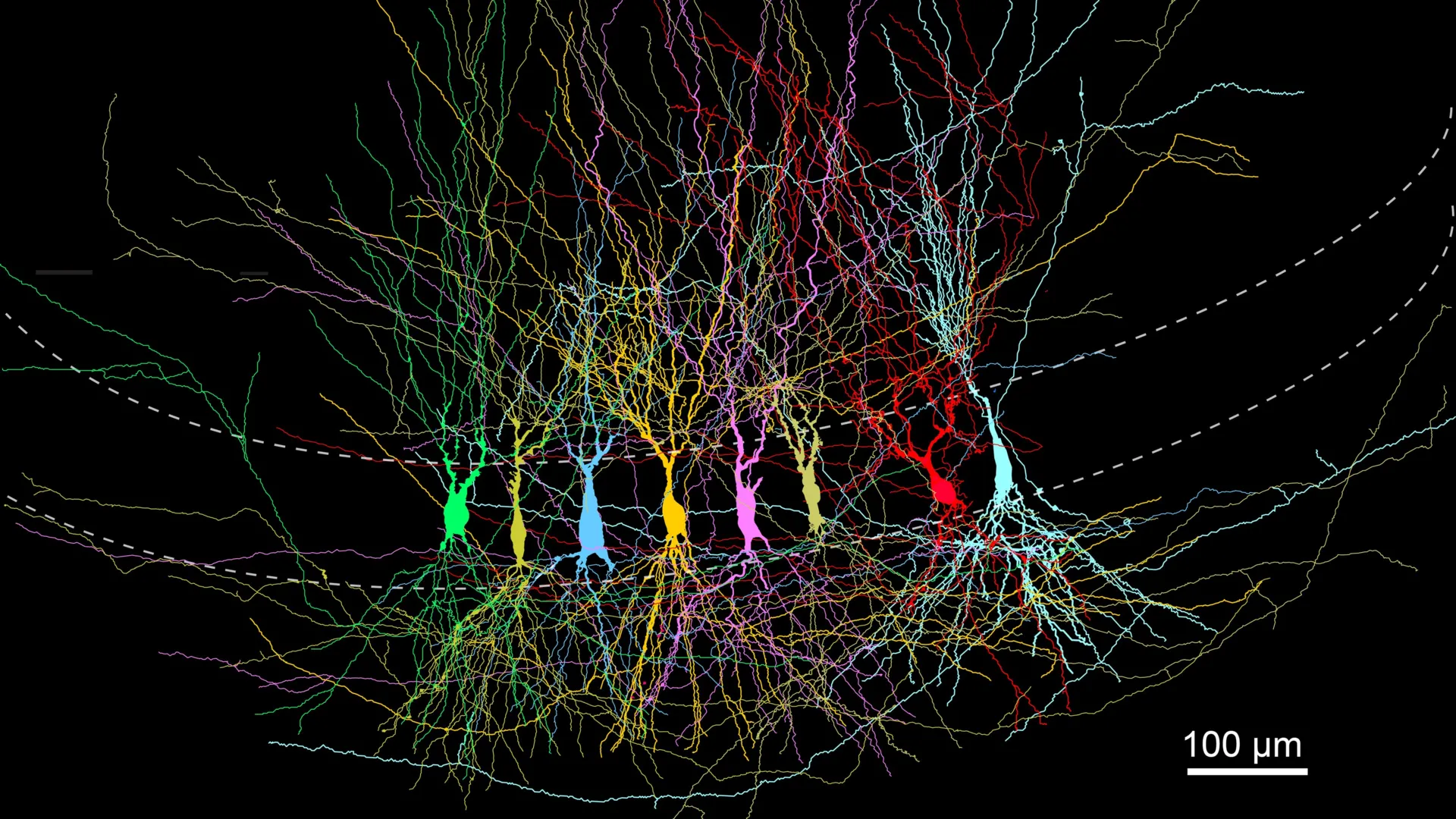
Researchers have overturned a foundational assumption about brain development. The hippocampus, the brain's memory hub, does not begin as a blank slate but rather as a densely interconnected network that becomes refined through selective pruning.
The discovery emerged from studies examining early neural development in the hippocampus. Scientists found that newborn brains contain abundant, seemingly random connections between neurons. Over time, the brain eliminates unnecessary pathways while strengthening critical ones. This pruning process transforms the initial chaos into an organized, efficient system capable of linking experiences and encoding memories.
The research challenges the traditional model of memory formation, which assumed the brain accumulated connections progressively. Instead, the brain appears to start with an overabundance of potential links and systematically removes the weak or irrelevant ones. This reverse engineering approach produces a faster and more efficient memory system than building connections from nothing would allow.
The findings have implications for understanding normal development and potentially for neurodevelopmental disorders where pruning mechanisms may malfunction. Conditions like autism and schizophrenia have been associated with abnormal synaptic pruning patterns, suggesting this process plays a critical role in healthy brain function.
The research builds on decades of neuroscience work examining how experience shapes the developing brain, but it reframes the fundamental architecture present at birth. Rather than a tabula rasa awaiting information, the brain arrives pre-wired with redundancy and flexibility. Development then refines these networks through a process of selective elimination.
This mechanism may explain why early childhood experiences remain formative. The brain's openness to pruning during critical developmental windows suggests that environmental input determines which connections survive and which disappear. Early neglect or enrichment literally sculpts neural architecture by influencing which pathways get pruned.
Understanding this pruning process could inform interventions for developmental disorders and guide educational approaches during sensitive periods. The research emphasizes