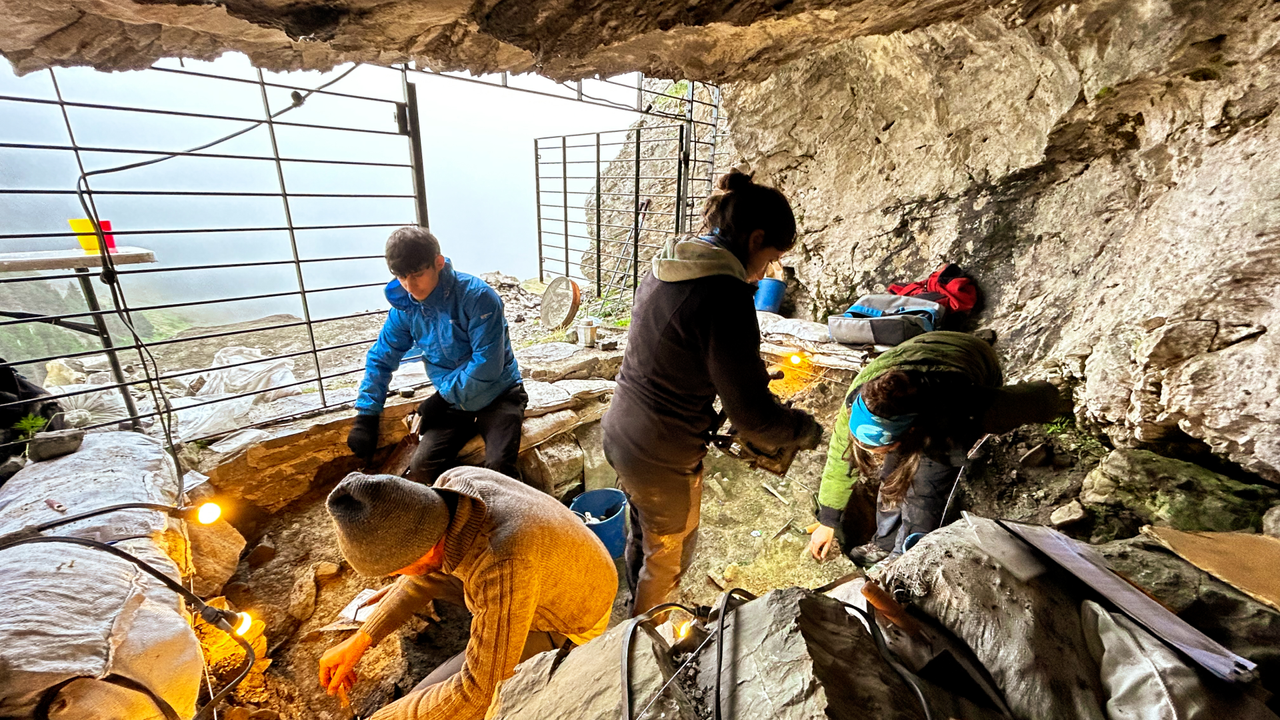
Archaeologists have discovered dozens of bright-green rocks in a Pyrenees cave that suggest prehistoric people smelted copper there continuously for approximately 4,000 years, beginning around 7,000 years ago.
The green rocks, likely copper ore or byproducts from copper processing, were found during excavations at the cave site. Their presence indicates sustained metallurgical activity during the Neolithic and Early Bronze Age periods, far earlier than previously documented copper working in Europe.
Copper smelting represents a major technological achievement. The process requires heating ore to temperatures exceeding 1,000 degrees Celsius to extract pure metal. The discovery pushes back the timeline for when European communities mastered this complex skill, challenging assumptions about prehistoric technological development in the region.
The Pyrenees location offers strategic advantages for ancient metallurgists. Copper deposits occur naturally in the mountains, and caves provided shelter and protection for high-temperature operations. The sustained presence of these green rocks suggests this was not an isolated experiment but an established practice passed down through generations.
The finding raises questions about how copper knowledge spread across prehistoric Europe and whether other caves contain similar evidence of early metallurgy. It also highlights the Pyrenees as a crucial center for technological innovation during the prehistoric period, rivaling better-known sites in the Mediterranean and Near East.
However, researchers must confirm the exact nature and origin of the green rocks through chemical analysis and dating. Additional excavation may reveal tools, furnace structures, or other artifacts that would clarify the scope and sophistication of prehistoric copper working at the site.
This discovery contributes to a growing body of evidence showing that Neolithic and Early Bronze Age communities possessed advanced technical knowledge and engaged in specialized craft production and trade networks, reshaping our understanding of prehistoric European societies.
WHY IT MATTERS: This finding reveals that European metallurgical traditions began thousands of years earlier