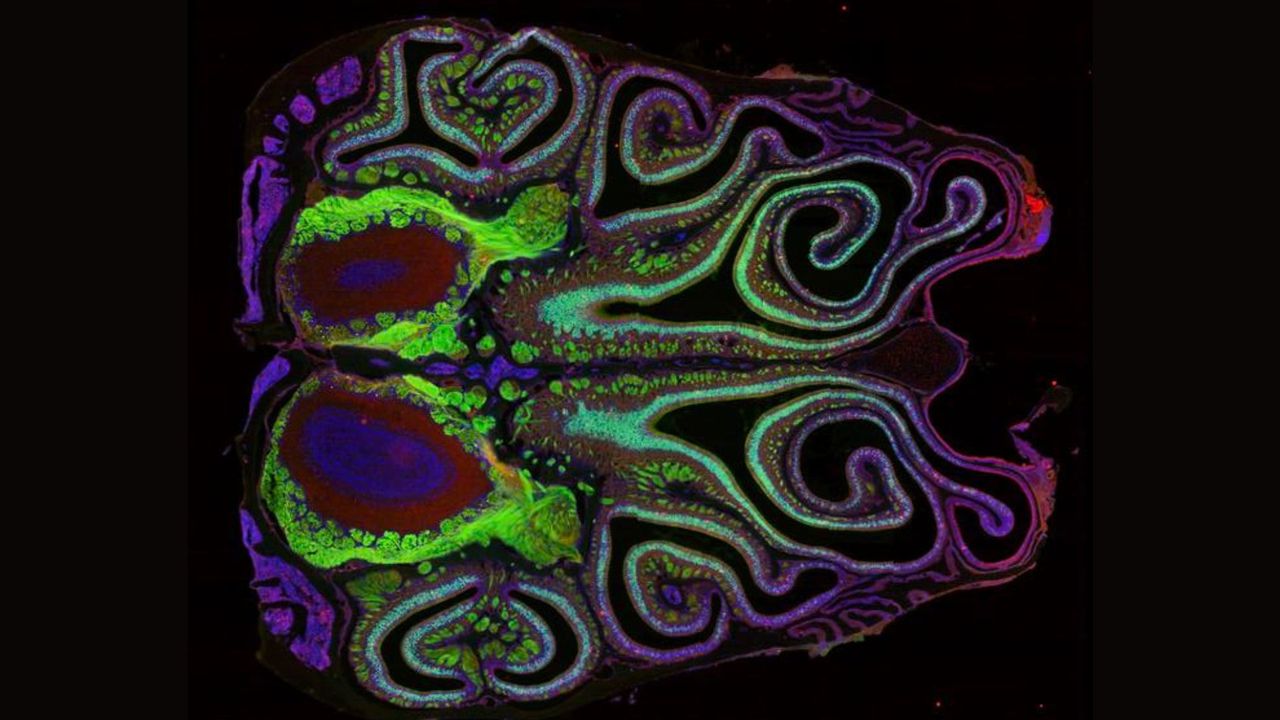
Researchers have created the first comprehensive spatial map of smell receptors in the mouse nose, revealing an unexpected organizational structure that challenges previous understanding of how olfaction works.
The study, conducted by scientists studying the olfactory epithelium (the tissue lining the nasal cavity), found that smell receptors cluster into distinct bands organized by receptor type rather than scattering randomly throughout the tissue. Each band contains receptors that respond to similar chemical compounds, creating what amounts to a sensory sorting system within the nose itself.
This organization suggests the mouse olfactory system processes odors more systematically than researchers previously believed. Rather than a chaotic arrangement, the nose appears to have evolved a precise layout that groups similar receptors together. This spatial organization could help the brain more efficiently interpret chemical signals and distinguish between different smells.
The findings come from detailed imaging and genetic analysis of receptor distribution in the olfactory epithelium. Researchers identified which receptors occupy which regions of the nose, then matched this spatial data with the receptors' chemical sensitivities. The tight banding pattern emerged as the most striking result.
This discovery has implications beyond basic biology. Understanding how the mouse nose organizes its sensory apparatus could inform research into human olfaction and conditions affecting the sense of smell, including loss of smell associated with aging or infection. The organized structure may also help scientists develop better artificial smell sensors or understand how the brain processes olfactory information.
Mice are standard models for studying how mammalian sensory systems work, making this map potentially applicable to understanding human smell. However, the exact organization may differ between species. Future research will determine whether human noses follow similar banding patterns and what role this structure plays in our ability to detect and distinguish odors.
WHY IT MATTERS: This anatomical discovery rewrites how scientists understand olfactory processing and could lead to treatments for smell loss affecting millions of people