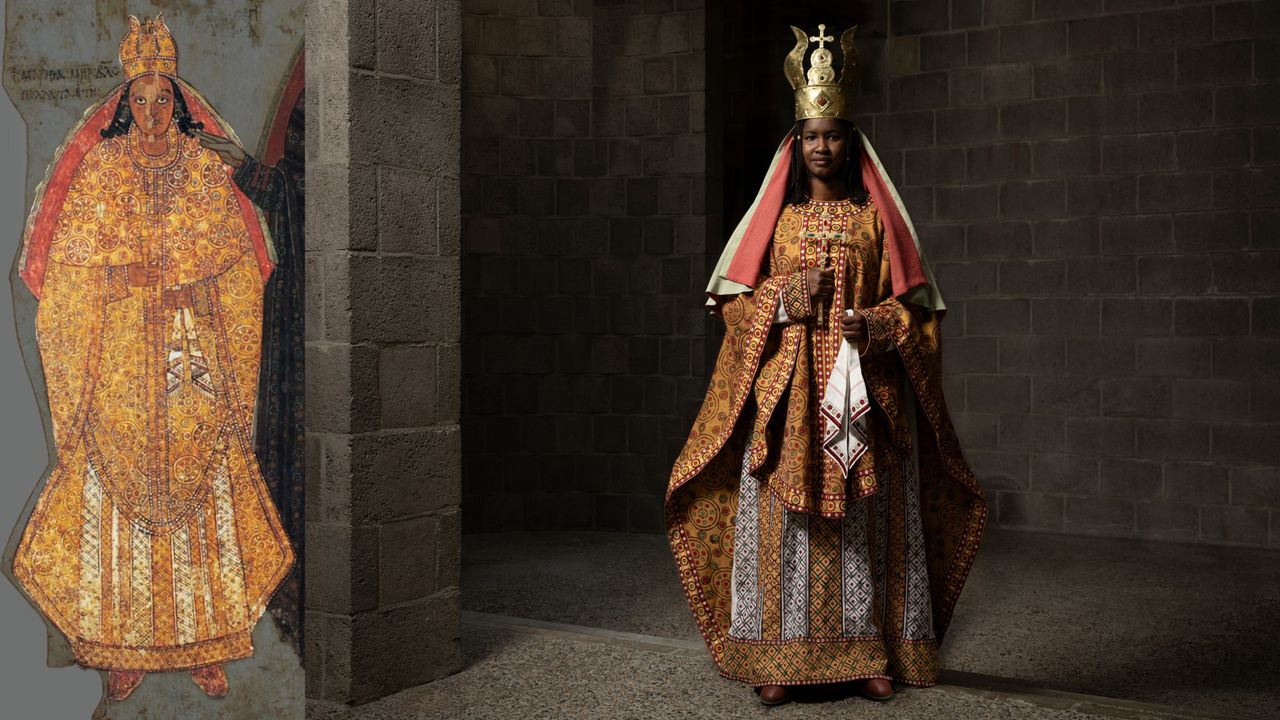
A fashion designer has reconstructed garments worn in medieval Christian Nubia by studying centuries-old murals preserved in archaeological sites. The recreated clothes, displayed on models in a performance piece, moved audiences emotionally with their historical authenticity and visual beauty.
The project draws from murals discovered in Nubian churches dating back to the medieval period, when Christian kingdoms flourished in what is now Sudan and southern Egypt. These wall paintings contain detailed depictions of clothing worn by royalty, clergy, and everyday people, offering a rare visual record of fashion from this understudied civilization.
The reconstruction involved careful analysis of textile patterns, dyes, construction methods, and silhouettes visible in the ancient artwork. Designers translated these two-dimensional images into wearable garments, paying attention to fabric draping, embellishment techniques, and color palettes consistent with dye sources available in the Nubian region during medieval times.
The live performance featuring models wearing these reconstructed garments created a visceral connection between past and present. Observers responded emotionally to seeing these historical clothes worn and animated by living people, transforming static museum knowledge into embodied experience.
This work addresses a significant gap in fashion history scholarship. Nubian Christian civilization, which thrived from roughly the fourth to the fifteenth centuries, remains largely absent from mainstream fashion narratives dominated by European and Asian traditions. By centering Nubian textile arts and clothing practices, the project expands understanding of global fashion history and highlights the sophisticated aesthetic achievements of African societies.
The murals themselves represent invaluable cultural documentation. They survive in churches scattered across Sudan and Egypt, though many face deterioration from environmental exposure and human activity. Using these artworks as source material for fashion reconstruction simultaneously creates new appreciation for their preservation and interprets them as living historical documents rather than artifacts confined to academic study.
This approach demonstrates how fashion scholarship and reconstruction can serve as a