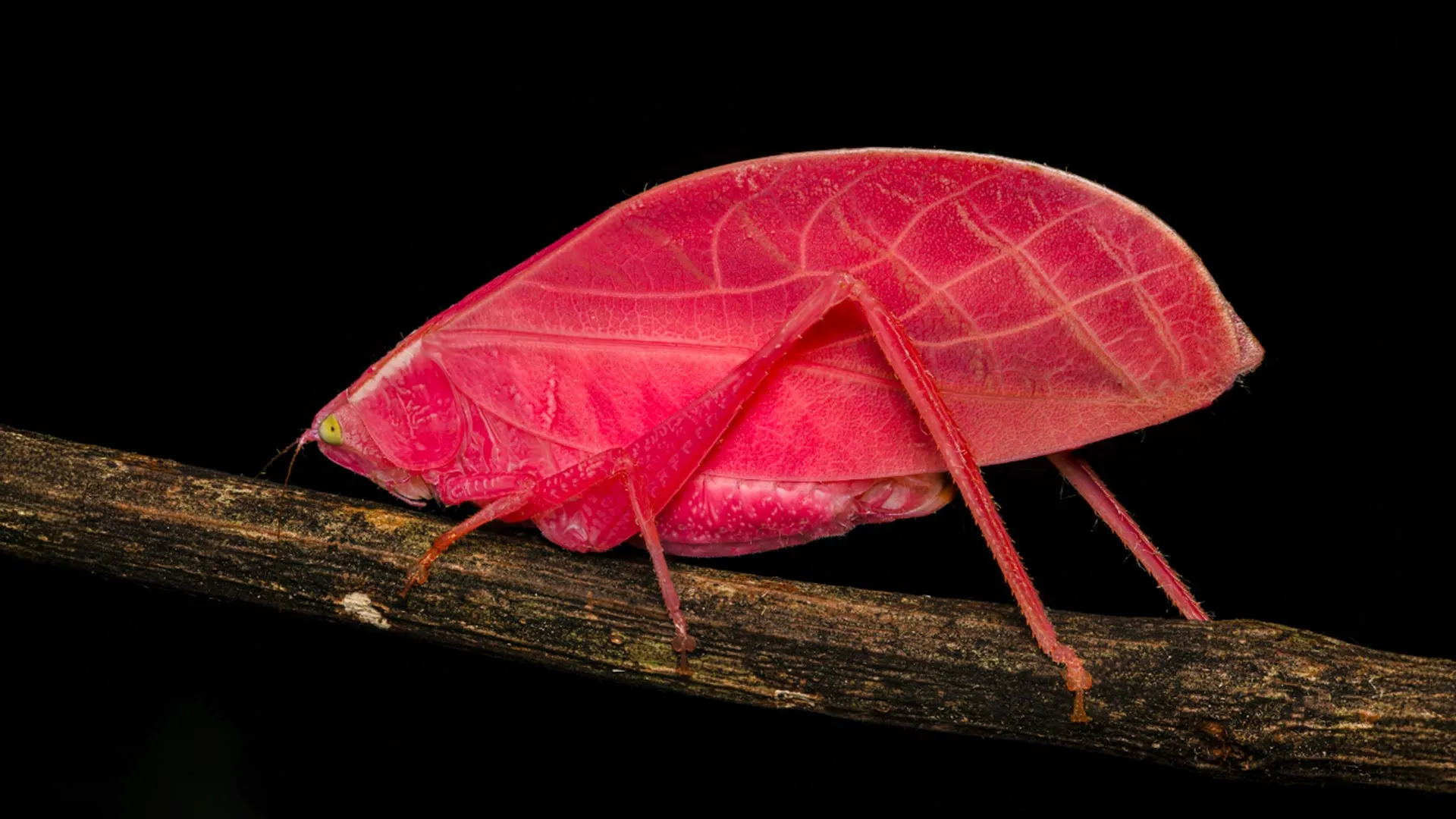
Researchers studying a katydid in Panama documented a remarkable color transformation that overturns assumptions about how insects adapt to their environment. The pink katydid shifted to green over 11 days, synchronizing its appearance with the natural color cycle of tropical leaves in the rainforest.
The insect's transformation tracks the leaves it inhabits. Young rainforest foliage emerges pink before gradually maturing to green. The katydid mirrors this progression, camouflaging itself against its background as conditions change. This shifts the transformation from a random genetic anomaly to a deliberate survival mechanism.
Scientists had previously dismissed such color shifts in insects as uncommon genetic quirks without evolutionary purpose. This katydid challenges that view by demonstrating that color change directly enhances survival. An insect matching pink leaves remains hidden from predators during one stage, then shifts to match green leaves as they mature. Breaking this camouflage cycle exposes the insect to predation.
The finding illuminates how insects in tropical environments finely tune their appearance to exploit seasonal and developmental changes in vegetation. Rather than static coloration, the katydid employs dynamic camouflage that evolves with its surroundings.
The research reveals how insects can track environmental shifts through physiological changes linked to their habitat. The timing matters. An insect that changed color too slowly or too quickly relative to leaf maturation would lose its camouflage advantage.
Other insects employ color-change strategies, but few documented cases track such precise environmental synchronization. The katydid's mechanism remains unexplained. Researchers need to determine whether light wavelengths trigger the change, whether internal timing governs it, or whether chemical compounds in the plant material influence pigment production.
Future work should examine whether multiple katydid species employ similar strategies and whether this represents a widespread adaptation in rainforest ecosystems. Understanding the physiological