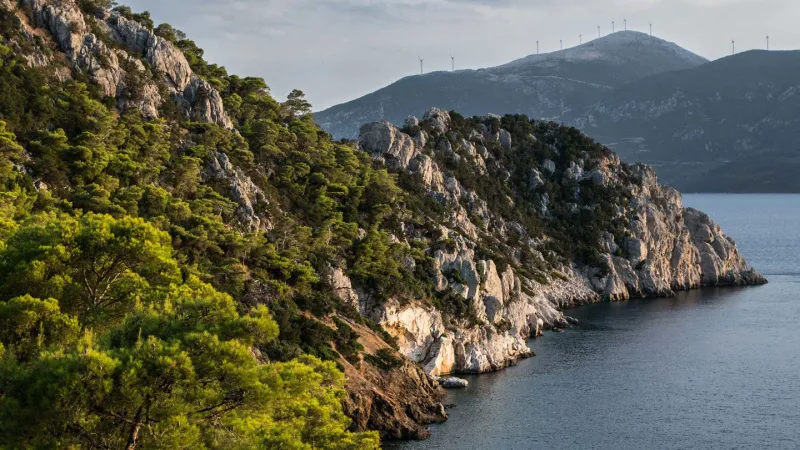
Scientists studying volcanic crystals from a supposedly extinct Greek volcano have discovered evidence that dormant peaks could still pose eruption risks, overturning assumptions about volcanic safety.
Researchers examined microscopic crystals from Methana, a volcano on Greece's Peloponnese peninsula that last erupted around 1700 BCE. The team found that these crystals retained signs of recent magma activity occurring well after the volcano's final documented eruption thousands of years ago.
The crystals, particularly olivine and feldspar minerals, contained chemical signatures indicating that hot magma had moved through the volcano's subsurface relatively recently in geological terms. This contradicts the traditional view that once a volcano enters a dormant phase lasting centuries or millennia, it becomes geologically "dead" underground.
"What the crystals show us is that magma can continue to mobilize and differentiate in the subsurface long after surface eruptions stop," explains the research team. This process involves fresh, hot magma rising and mixing with older material underground, potentially building pressure that could eventually lead to eruption.
The discovery carries practical implications for volcanic hazard assessment. Thousands of supposedly extinct volcanoes dot populated regions worldwide, from the Mediterranean to the western United States. If these mountains retain active magmatic systems, current risk models that classify them as stable may need revision.
However, the research has limitations. Methana's specific geology may not represent all dormant volcanoes. Additionally, detecting ongoing underground activity requires detailed crystal analysis that most ancient volcanic sites lack. Scientists cannot yet predict when or if such subsurface magma movement translates into actual eruptions.
The findings prompt volcanologists to reassess monitoring protocols for supposedly extinct peaks near population centers. Future work will focus on establishing whether underground magma activity correlates with eventual surface eruptions, and which dormant volcanoes warrant heightened surveillance.
WHY IT