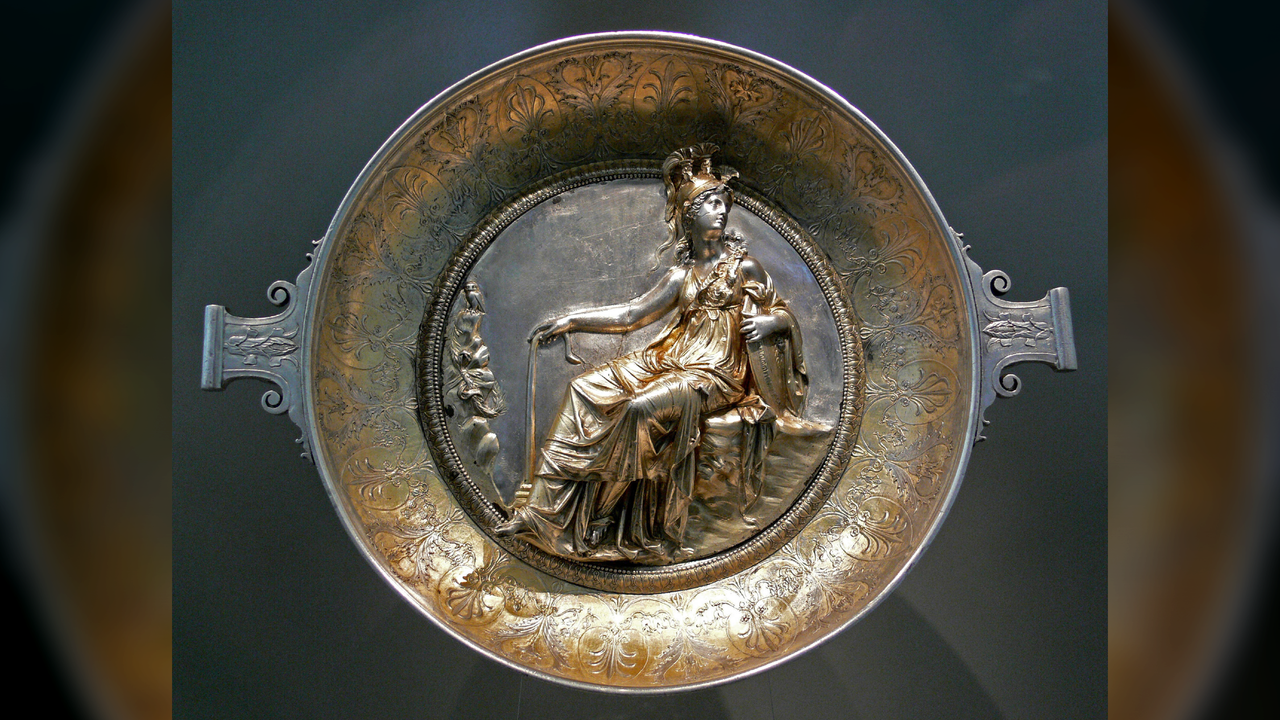
Archaeologists working in a German forest have uncovered an exquisitely crafted silver and gold bowl depicting the goddess Athena and her owl, dating back approximately 2,000 years. The vessel emerged as part of a larger hoard containing dozens of pieces of ancient Roman tableware.
The discovery represents a rare find of high-quality Roman metalwork from the 1st or 2nd century CE. The bowl features intricate decorative elements showcasing Athena, the Greek goddess of wisdom, alongside her symbolic companion, the owl. Such vessels typically served as luxury dining ware for wealthy Roman households or were used in ceremonial contexts.
The broader hoard suggests this cache belonged to an affluent Roman family or was buried for safekeeping during a period of upheaval, possibly during times of military conflict or political instability. Metal hoards like this one offer archaeologists valuable insights into Roman trade patterns, artistic preferences, and domestic life during the imperial period.
German forest discoveries of Roman artifacts remain relatively uncommon, as much of the region lay beyond the Rhine frontier during Rome's greatest territorial expansion. Finds in this area typically indicate either Roman military presence along border regions or the reach of Roman commerce into Germanic territories.
The condition and craftsmanship of the Athena bowl demonstrate the technical skill of Roman metalworkers and the high value placed on decorated tableware among the elite. Such vessels often traveled long distances through trade networks, making their presence in a German forest an archaeological prize that illuminates connections between distant regions of the ancient world.
The hoard requires further study to determine its exact composition, dating, and the circumstances of its burial. Future analysis may reveal whether other pieces in the collection originated from specific workshops or provide clues about the identity of its original owner.
WHY IT MATTERS: This discovery reveals how Roman luxury goods penetrated territories beyond Rome's direct control and provides tangible evidence